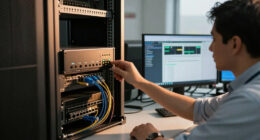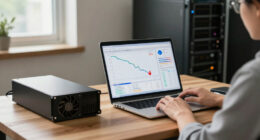

Environmental sensors help you prevent server room surprises by providing real-time data on temperature, humidity, and air quality. They quickly detect issues like fire, overheating, or airflow problems, allowing you to take action before they escalate. Sensors also optimize cooling systems and support proactive maintenance, reducing downtime and energy costs. By continuously monitoring the environment, you can stay ahead of potential disasters. To discover how these tools can safeguard your servers, keep exploring further.

Get business pricing on networking and server gear
- Business-only prices and quantity discounts
- Tax-exempt purchasing
- Multiple users, one account, clear invoices
Key Takeaways
- Provide real-time alerts on temperature, humidity, and air quality to detect issues early.
- Identify fire or overheating risks promptly, enabling swift emergency responses.
- Optimize airflow and cooling systems to prevent hotspots and reduce energy use.
- Support proactive maintenance through continuous data analysis of environmental conditions.
- Detect patterns and trends to prevent failures and improve overall server room safety.
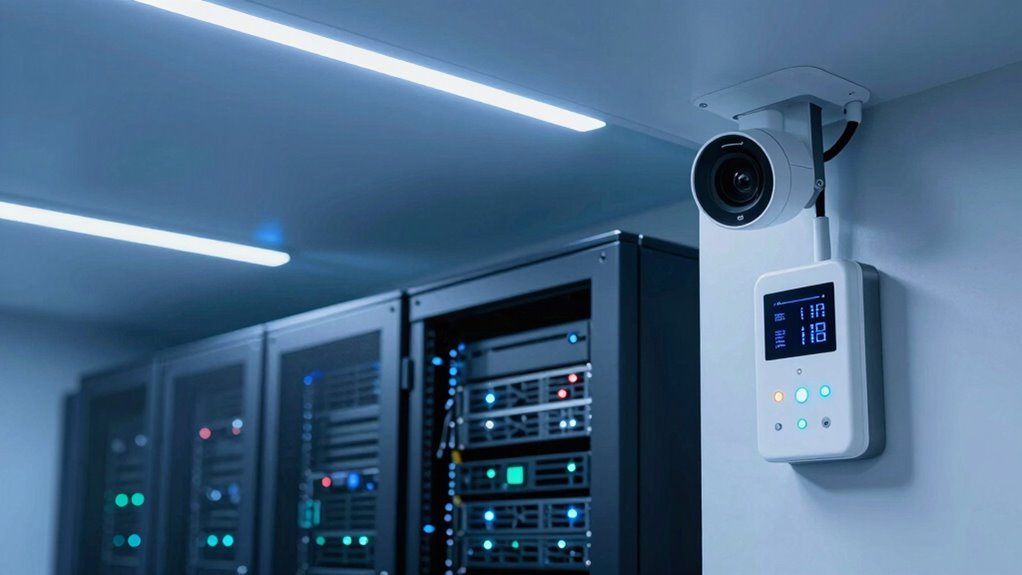
Environmental sensors are transforming server room management by providing real-time data that helps prevent costly surprises. These sensors monitor essential parameters like temperature, humidity, and air quality, giving you immediate insights into the environment’s condition. When it comes to fire suppression, sensor data can be a game-changer. Smoke detectors and heat sensors work together to identify early signs of fire or overheating, enabling swift action before a small issue escalates into a disaster. You won’t be caught off guard by a sudden blaze or equipment failure because these sensors constantly alert you to danger, allowing for rapid response and minimizing damage.
Airflow management is another critical aspect where environmental sensors deliver significant benefits. Proper airflow ensures that your servers stay cool and operate efficiently. Sensors placed strategically within the room provide data on airflow patterns and temperature hotspots, helping you optimize cooling systems and prevent overcooling or hotspots that can damage equipment. With this information, you can fine-tune your HVAC systems, reducing energy consumption and extending the lifespan of your hardware. Better airflow management also means you’re less likely to experience thermal shutdowns, which can cause costly downtime and data loss. Environmental data collection allows for more precise adjustments and proactive maintenance. Additionally, understanding the importance of environmental monitoring can help you implement more comprehensive strategies to safeguard your server infrastructure. Regularly reviewing sensor data can lead to improved operational decisions and increased system reliability. Incorporating sensor technology into your overall management approach can further enhance your ability to respond to environmental shifts quickly. In addition, ongoing data analysis helps identify patterns that might indicate underlying issues before they become critical.
Products Worth Considering

DJI Osmo Pocket 3 Vlogging Camera with 1-Inch CMOS Sensor and 4K/120fps Video

LG UltraGear 34G600A-B 34-Inch Curved WQHD Gaming Monitor, 160Hz

Samsung Odyssey OLED G5 27-Inch QHD Gaming Monitor
As an affiliate, we earn on qualifying purchases.
Frequently Asked Questions
How Do Environmental Sensors Integrate With Existing Server Room Infrastructure?
You can seamlessly integrate environmental sensors into your server room by focusing on wireless integration, which eliminates the need for complex wiring. Proper sensor placement is vital—you should position sensors near heat sources, airflow paths, and vulnerable equipment. This setup allows real-time data collection, helping you monitor temperature, humidity, and other conditions efficiently, ensuring your server environment stays stable and preventing surprises before they happen.
What Are the Initial Costs of Installing Environmental Sensors?
Installing environmental sensors is like planting a safety net; initial costs vary based on size and features. You’ll want to perform a thorough cost analysis, factoring in sensor types and installation expenses. Vendor selection plays a vital role, as different providers offer diverse pricing and support. Expect to spend a few hundred to several thousand dollars initially, but the protection they provide often outweighs the upfront investment.
Can Sensors Detect All Types of Environmental Hazards?
Sensors can’t detect all environmental hazards, but they do a great job with liquid detection and airflow monitoring. You’ll get alerts for water leaks that could damage equipment and airflow issues that could cause overheating. However, they may miss hazards like dust buildup or electrical faults. To guarantee full protection, you should combine sensors with regular inspections and other monitoring tools. That way, you cover more potential risks effectively.
How Often Should Environmental Sensors Be Calibrated?
You should calibrate your environmental sensors at least once a year to maintain ideal sensor accuracy. Some sensors may require more frequent calibration if they’re exposed to harsh conditions or show signs of drifting. Regular calibration ensures reliable readings, helping you catch potential issues early. Don’t overlook calibration frequency; it’s vital for preventing false alarms or missed hazards, giving you peace of mind that your server room stays safe and secure.
What Is the Maintenance Required for Environmental Sensor Systems?
You need to regularly check your environmental sensor systems to guarantee sensor durability and maintain data accuracy. This involves cleaning sensors to prevent dust buildup, inspecting connections for wear, and replacing any faulty components promptly. Calibration should be performed as recommended to guarantee precise readings. Keeping sensors in good condition prevents malfunctions, ensuring your server room stays monitored effectively and surprises are avoided.
Conclusion
By monitoring your server room with environmental sensors, you prevent costly surprises like overheating or power failures. It’s easy to think of sensors as simple tools, but they’re your first line of defense, almost like a vigilant guard. Without them, you risk chaos in a room full of precision equipment. So, while sensors may seem small, their impact is enormous—turning potential disaster into peace of mind, all before the first sign of trouble even appears.