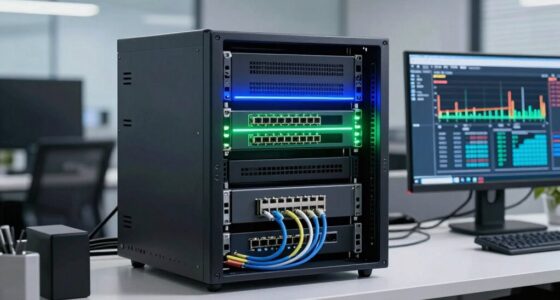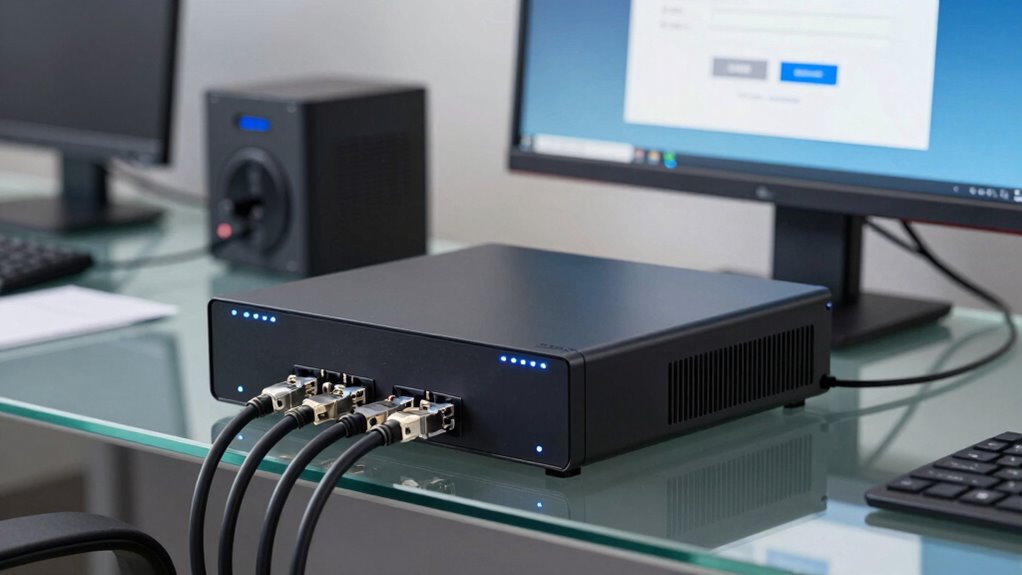

SSL VPN appliances are designed for quick, easy remote access through web browsers or simple apps, so you won’t need complex setup or dedicated software. They focus on user-friendly, secure connections suitable for flexible, ad hoc sessions from various devices like laptops or smartphones. Unlike traditional VPN gear that’s more suited for site-to-site links and lengthy install processes, SSL VPNs prioritize simplicity and speed. Keep exploring to discover more about their unique features and benefits.
Key Takeaways
- SSL VPN appliances offer quick, browser-based remote access, unlike traditional VPNs that often require dedicated client software.
- They emphasize ease of deployment and minimal configuration, suitable for ad hoc remote sessions.
- SSL VPNs utilize SSL encryption for secure, flexible connections accessible from various devices.
- They focus on user-friendly interfaces and granular access controls for simplified security management.
- General VPN gear typically involves more complex setup, often used for site-to-site or network-to-network connections.
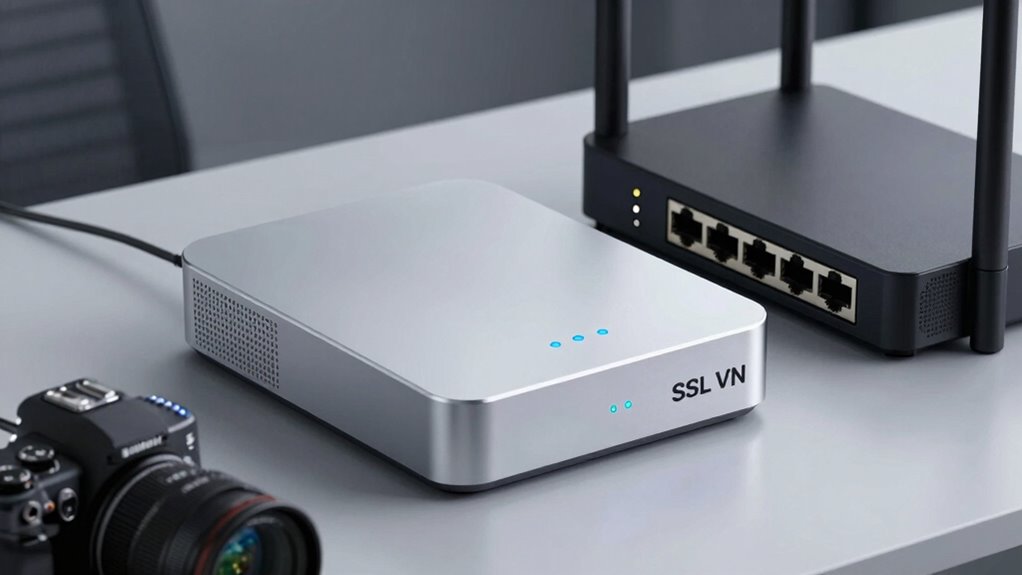
When choosing between SSL VPN appliances and general VPN gear, understanding their core differences can help you make a more informed decision. SSL VPN appliances are designed primarily to provide secure remote access to private networks, often through web browsers or simple client applications. This focus makes them ideal for users who need quick, easy access from various locations without extensive setup. They typically support device compatibility across a broad range of devices, including laptops, smartphones, and tablets, ensuring you can connect regardless of your device type. This flexibility is essential if your team uses different operating systems or devices, as SSL VPN appliances often require minimal configuration to work seamlessly.
SSL VPN appliances enable quick, device-agnostic remote access with minimal setup for seamless connectivity.
In contrast, general VPN gear tends to be more versatile but also more complex. Traditional VPNs, such as IPsec or L2TP, usually require dedicated client software and might involve more intricate setup procedures. While they also support remote access, they often do so with a focus on site-to-site connections or securing entire networks rather than individual user access. This means they can be more suitable for organizations that need to establish secure links between multiple offices or data centers. However, for individual remote workers, setting up and maintaining these VPNs can be more cumbersome and less flexible, especially when trying to connect from various device types.
Another key difference is how these VPN solutions handle security. SSL VPN appliances leverage secure socket layer (SSL) encryption, which is highly effective at protecting data transmitted over the internet. Because SSL is widely supported and easy to implement, it often provides a more straightforward, user-friendly experience for remote access. General VPN gear, depending on the protocol used, can offer comparable security but might require more configuration and maintenance. They’re often better suited for long-term, high-security connections within a controlled environment rather than quick, ad hoc remote access. Security protocols play a significant role in ensuring the robustness of these solutions. Furthermore, SSL VPN appliances tend to be more adaptable to evolving security standards, making them a better choice for organizations prioritizing security adaptability. Additionally, SSL VPNs often incorporate granular access controls, which enhance their security features and allow organizations to better manage user permissions.
Additionally, SSL VPN appliances tend to prioritize ease of use and quick deployment. They are often designed for organizations that need to get remote users online fast, with minimal disruption. They typically feature web-based portals that grant users access to applications and resources without installing extensive software or making significant changes to their devices. Furthermore, because SSL VPNs focus on secure remote access, they are generally easier for non-technical users to operate effectively. They often include user-friendly interfaces, which simplify the process of connecting and managing remote sessions. Conversely, general VPN gear may require more administrative effort to configure and manage, making them less ideal for rapid deployment but better for consistent, high-throughput enterprise environments.
As an affiliate, we earn on qualifying purchases.
Frequently Asked Questions
Can SSL VPNS Support Mobile Device Connectivity Effectively?
Yes, SSL VPNs support mobile device connectivity effectively. They offer excellent mobile compatibility, allowing you to securely access your network from smartphones and tablets. With integrated device management features, you can control access and guarantee security across various devices. This flexibility makes SSL VPN appliances ideal for remote workers, enabling seamless and safe connectivity without compromising security or user experience.
Are SSL VPN Appliances More Cost-Effective Than Traditional VPN Solutions?
Think of SSL VPN appliances as the sleek sports car of remote access—cost-effective and easy to handle. They usually offer a better cost comparison because they require less costly infrastructure and maintenance. Plus, their deployment complexity is lower, making setup quicker and less resource-intensive. Overall, if you’re seeking an affordable, straightforward VPN solution, SSL VPN appliances often save you money and hassle compared to traditional VPN gear.
How Do SSL VPNS Handle User Authentication Differently?
You’ll find that SSL VPNs handle user authentication differently by relying heavily on web-based credential management and encryption protocols. They typically use certificates or single sign-on (SSO) systems to verify identities, making authentication seamless and secure. Unlike traditional VPNs, SSL VPNs often integrate with centralized credential management systems, simplifying user access and enhancing security. This approach guarantees that user authentication remains robust, flexible, and easy to manage across various devices.
Do SSL VPNS Require Specialized Hardware or Software for Deployment?
Think of SSL VPN appliances as a well-choreographed dance, seamlessly integrating with your existing setup. You don’t need specialized hardware; general hardware compatibility usually suffices. Instead, focus on software integration, ensuring your SSL VPN aligns with your network’s security protocols. This smooth compatibility allows quick deployment and flexibility, making SSL VPNs a practical choice for secure remote access without the need for complex hardware investments.
What Are the Best Practices for Maintaining SSL VPN Security?
To maintain SSL VPN security, you should regularly update encryption protocols to stay ahead of vulnerabilities. Keep user access controls strict, granting permissions only to necessary resources. Implement multi-factor authentication and monitor login activities consistently. Educate users on security best practices, and confirm your SSL certificates are valid and renewed on time. By following these steps, you enhance protection against threats and safeguard sensitive data effectively.
As an affiliate, we earn on qualifying purchases.
Conclusion
In the end, SSL VPN appliances and general VPN gear serve different needs. While traditional VPNs often require dedicated clients and complex setups, SSL VPN appliances offer seamless, browser-based access, making security more accessible. It’s like comparing a sturdy, specialized tool to a versatile everyday device—you choose based on your needs. Both protect your data, but SSL appliances make remote access feel effortless, contrasting sharply with the more technical, hands-on approach of standard VPN gear.
As an affiliate, we earn on qualifying purchases.
As an affiliate, we earn on qualifying purchases.