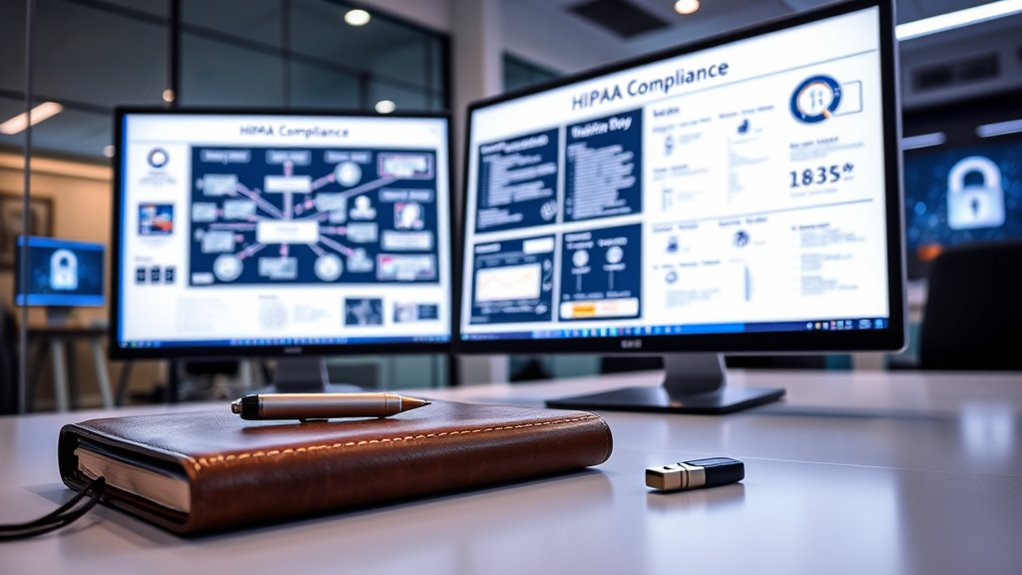

To host protected health information securely according to HIPAA, you must implement thorough safeguards across physical, technical, and administrative areas. This includes establishing policies for access controls, regular risk assessments, and staff training. You also need secure physical environments with controlled access, proper environmental protections, and surveillance. Technical measures like encryption, role-based access, audit trails, and multi-factor authentication are essential for data security. Keep detailed documentation to demonstrate compliance and quick response plans for breaches. Continuing ensures you understand how to fully meet HIPAA’s requirements.

Get business pricing on networking and server gear
- Business-only prices and quantity discounts
- Tax-exempt purchasing
- Multiple users, one account, clear invoices
Key Takeaways
- Implement comprehensive security management policies to identify, assess, and mitigate risks to ePHI during hosting.
- Enforce physical safeguards like controlled access, secure data centers, and environmental protections to prevent unauthorized physical access.
- Use technical safeguards such as role-based access controls, encryption, audit logs, and multi-factor authentication to protect data integrity and confidentiality.
- Conduct regular risk assessments and vulnerability management to identify and address potential threats to hosted ePHI.
- Maintain detailed documentation, monitoring, and incident response procedures to ensure compliance and quick recovery from breaches.
HIPAA compliant data center security equipment
As an affiliate, we earn on qualifying purchases.
As an affiliate, we earn on qualifying purchases.
Key Components of the HIPAA Security Rule for PHI Management

What are the essential elements you need to implement for effective PHI management under HIPAA? First, establish thorough security management processes that identify, assess, and reduce risks to ePHI. Appoint dedicated security personnel responsible for developing and enforcing policies. Enforce strict access controls based on roles, granting permissions only as needed, and regularly train your workforce to stay compliant. Conduct ongoing risk assessments to evaluate your security measures’ effectiveness and address vulnerabilities promptly. Implement technical safeguards like unique user identification, audit controls, encryption, and automatic logoff features. Maintain detailed documentation of policies, procedures, and risk assessments. Regularly monitor threats and update safeguards accordingly. Understanding cookie management and privacy policies can also support your compliance efforts. Being aware of color accuracy and its impact on image quality can help you better tailor security protocols to protect sensitive information. Additionally, staying informed about personality traits can enhance your approach to employee training and security awareness initiatives. These components form the core of HIPAA’s security requirements, helping you protect ePHI effectively. Incorporating security awareness training into your routine can further strengthen defenses against potential breaches.
biometric access control systems for server rooms
As an affiliate, we earn on qualifying purchases.
As an affiliate, we earn on qualifying purchases.
Essential Physical Safeguards in Data Hosting Environments

Effective physical safeguards are essential for protecting ePHI in data hosting environments, guaranteeing that only authorized personnel access sensitive areas and equipment. You should implement access control systems like key cards, biometric locks, or security badges to restrict entry. Lock doors and install alarm systems in data centers and server rooms for added security. Surveillance cameras help monitor sensitive areas. Establish clear policies for granting access and managing visitor entry, requiring sign-ins and badges with escorts. Ensure workstations are positioned away from high-traffic zones, use automatic log-off features, and restrict functions based on user roles. Maintain an accurate hardware inventory, track media movement, and securely dispose of devices containing ePHI. Protect data centers with fire suppression, temperature controls, backup power, and water damage prevention measures. Incorporating space management strategies can further enhance physical security by optimizing the layout of equipment and access points and ensuring compliance with HIPAA regulations. Additionally, implementing access controls ensures that only authorized individuals can reach sensitive areas, reducing the risk of unauthorized access. Regular security assessments and monitoring of physical security measures are also crucial to identify and address potential vulnerabilities proactively.
encryption hardware for protected health information
As an affiliate, we earn on qualifying purchases.
As an affiliate, we earn on qualifying purchases.
Implementing Robust Technical Safeguards for Data Security

Implementing robust technical safeguards is essential for maintaining the confidentiality and integrity of ePHI in data hosting environments. You should enforce role-based access control (RBAC) to limit data access based on job roles, using unique user IDs to track activity. Automatic logoff or session timeout reduces risks when users are inactive. Multi-factor authentication (MFA) adds an extra layer of security, especially for remote access. Regularly review audit logs to detect unauthorized activity and secure them against tampering. Use checksum, digital signatures, and hashing to verify data integrity during storage and transmission. Here’s a quick overview:
| Access Control | Audit & Monitoring | Data Integrity |
|---|---|---|
| Role-based access | Detailed audit logs | Checksums & signatures |
| Unique user IDs | Automated alerts | Hashing methods |
| Session timeouts | Regular analysis | Data validation |
Additionally, implementing security best practices can help ensure compliance with HIPAA requirements and protect sensitive health information from evolving threats. Ensuring proper encryption methods are in place for data at rest and in transit further enhances security. Incorporating continuous monitoring practices helps in early detection of potential vulnerabilities and enhances overall data security.
surveillance cameras for data centers
As an affiliate, we earn on qualifying purchases.
As an affiliate, we earn on qualifying purchases.
The Role of Encryption in Protecting Ephi

How does encryption play a vital role in safeguarding ePHI in healthcare environments? Encryption transforms sensitive data into unreadable code, making it useless if accessed without authorization. Under HIPAA, encryption is mandated for all ePHI, covering data at rest, in transit, and stored in the cloud. Using standards like AES-256 for stored data, TLS 1.3 for transmissions, and RSA-2048 for key exchanges ensures robust protection. With the 2025 updates, healthcare providers must fully implement these encryption standards to avoid penalties. Proper encryption minimizes the risk of data breaches, especially if devices are stolen or compromised. Additionally, secure key management, often via Hardware Security Modules, is essential to prevent unauthorized access to encryption keys, maintaining the confidentiality and integrity of your patient data. AI Security developments emphasize the importance of continuous monitoring and updating encryption protocols to address emerging vulnerabilities, including evolving encryption standards. Moreover, ongoing encryption audits are crucial for ensuring compliance and identifying potential security gaps.
Access Control Strategies and User Authentication Protocols

To safeguard protected health information (PHI), healthcare organizations must establish robust access control strategies and user authentication protocols. You should implement unique user logins, ensuring no sharing occurs, and assign access based on roles with the principle of minimum necessary information. When access is no longer needed, revoke it promptly. You need to verify user identities with multi-factor authentication, biometric systems, or access cards, and develop clear policies for changing or revoking credentials. Imagine:
- Users logging in with fingerprint scans or facial recognition
- Physical barriers like secure entry doors and security guards
- Firewalls and intrusion detection systems monitoring network activity
- VPNs enabling secure remote access
- Audit trails tracking every user action for compliance.
These measures help keep PHI protected and maintain HIPAA compliance. Incorporating Watering Tips for Indoor Plants principles can also improve environmental controls, ensuring secure premises that support health and safety. Regular security assessments are essential to identify vulnerabilities and adapt security measures accordingly. Additionally, access control policies should be regularly reviewed and updated to adapt to emerging threats and organizational changes.
Responsibilities of Business Associates Under HIPAA

Business associates play a critical role in safeguarding PHI when they perform functions or provide services on behalf of covered entities. Your responsibilities include complying with HIPAA regulations like the Privacy, Security, and Breach Notification Rules. If you create, receive, maintain, or transmit PHI, you’re directly liable for protecting it and can face penalties for violations, including civil and financial sanctions. You must sign a Business Associate Agreement (BAA) that clearly defines your permitted uses, safeguards, breach response, and cooperation with investigations. When subcontractors handle PHI, you’re responsible for securing BAAs with them to ensure HIPAA compliance downstream. Maintaining safeguards, implementing policies, and promptly reporting breaches are essential to fulfilling your obligations and avoiding enforcement actions. Additionally, understanding the importance of Vetted – Mad Tasting can help you stay informed about best practices for data security and compliance. Staying updated on HIPAA regulations is crucial for maintaining ongoing compliance and protecting sensitive information, especially as technology advances and new security threats emerge.
Conducting Risk Assessments and Managing Data Security Risks

To effectively manage data security risks, you need to identify vulnerabilities across all systems handling ePHI. Implementing targeted risk management strategies helps reduce potential threats and bolster your safeguards. Regularly monitoring and updating these measures ensures your security stays aligned with evolving threats and compliance requirements. Staying aware of emerging cybersecurity threats, such as those highlighted by recent incidents like the Microsoft Outage Impact, can help inform your security improvements. Incorporating Kia Tuning insights into your security practices can also provide innovative approaches to system optimization and resilience. Additionally, understanding spoiled lemon juice can serve as a reminder of the importance of maintaining data integrity and freshness in your security protocols.
Identifying Vulnerabilities Effectively
Effective identification of vulnerabilities is essential for maintaining HIPAA compliance and safeguarding PHI. You need to pinpoint “reasonably anticipated” threats such as hacking, theft, or human error, and document weaknesses like outdated software or weak passwords. Use historical incidents, audit logs, and staff interviews to uncover potential risks. Consider natural disasters, insider threats, and environmental hazards that could impact your data. Prioritize risks based on their likelihood and potential impact on confidentiality, integrity, and availability. Your focus should be on accurately mapping vulnerabilities to prevent gaps that could expose PHI. Incorporate vulnerability assessment techniques such as penetration testing and security audits to identify hidden weaknesses more comprehensively. Visualize weak points in your systems, like unpatched software or unsecured devices. Imagine unauthorized access due to poor password policies. Think of data loss from natural disasters or power outages. Recognize staff errors or insider threats as hidden vulnerabilities. Envision gaps in existing security controls that leave PHI exposed. Incorporate live music venues and entertainment options that could introduce additional security considerations into your risk assessments. Additionally, reviewing celebrity event security protocols can provide insights into managing large-scale security risks effectively.
Implementing Risk Management Strategies
Implementing risk management strategies begins with conducting thorough risk assessments that identify where ePHI is stored, received, or transmitted. You need to evaluate all potential threats and vulnerabilities across administrative, physical, and technical safeguards. This includes evaluating current security measures and determining their effectiveness in protecting ePHI. Document all risks, including human, natural, and environmental hazards, and analyze their likelihood and potential impact. Prioritize risks based on this analysis to focus your mitigation efforts. Once risks are identified, you must implement appropriate controls like encryption, access controls, and policies. Any unresolved or accepted risks should be documented with justifications and ongoing monitoring plans. Regularly updating your risk management strategies ensures you stay ahead of emerging threats and system changes, maintaining compliance and security.
Monitoring and Updating Safeguards
Monitoring and updating safeguards are essential to maintaining HIPAA compliance and protecting ePHI. Continuous oversight helps you detect vulnerabilities, track security incidents, and respond swiftly to emerging threats. Regular risk assessments reveal where protections need strengthening, guiding your corrective actions. You’ll implement patches, update software, and refine access controls based on these insights. Managing risks isn’t just about technology; it involves monitoring employee practices and third-party partners too. Tools like the HHS SRA Tool make ongoing risk tracking easier. Keep your policies current by reviewing and revising them regularly, reflecting changes in your environment. Proper documentation of these efforts demonstrates compliance and readiness for OCR audits. Staying proactive ensures your safeguards evolve with threats and maintain the confidentiality, integrity, and availability of ePHI.
- Visualize real-time alerts for suspicious activity
- Imagine systematic vulnerability scans running overnight
- Picture staff receiving updated security training
- Envision software patches being applied promptly
- Consider a dashboard tracking all security incidents
Maintaining Documentation for Compliance and Auditing

Maintaining thorough and accurate documentation is essential for ensuring HIPAA compliance and preparing for audits. You need to keep records of all security measures, including policies, procedures, and employee training. Regular risk assessments should be documented to identify vulnerabilities and track corrective actions. Audit trails are crucial for monitoring system activity and demonstrating accountability. It’s important to review and update security policies consistently to stay compliant. Additionally, maintaining detailed audit reports helps identify areas for improvement and provides evidence during reviews. Assigning a compliance officer ensures oversight of your efforts. Proper documentation not only supports ongoing compliance but also streamlines the audit process, showing that you’ve taken proactive steps to protect PHI and meet regulatory standards.
Physical Security Measures for Data Centers and Workspaces

You need to guarantee controlled access to your data centers and workspaces by using badge systems, biometric authentication, and mantraps to prevent unauthorized entry. Securing hardware involves strict protocols for device use, tracking media movement, and proper disposal of sensitive equipment. Maintaining workspace confidentiality requires physical barriers, clear sightlines, and policies that limit physical access based on roles.
Controlled Facility Access
How can organizations effectively safeguard their data centers and workspaces from unauthorized physical access? You need strict controls that limit entry to authorized personnel only. Use badge or card access systems to restrict entry, and enhance security with biometric verification like fingerprint or facial recognition. Keep detailed logs of all access events for audits and investigations. Implement visitor management practices requiring pre-authorization, escorts, and temporary badges. Design physical entry points with mantraps and turnstiles to prevent tailgating and piggybacking. Imagine:
- Badge or card readers at all entry points
- Biometric scanners verifying identities
- Visitor logs with timestamps
- Turnstiles preventing unauthorized entry
- Security personnel patrolling perimeter zones
Hardware Security Protocols
Implementing robust hardware security protocols is essential for protecting data centers and workspaces from physical threats. You should install sturdy, tall perimeter fencing and crash-proof barriers to prevent unauthorized access. Enhance visibility with high-resolution 360-degree surveillance and clear lighting, complemented by landscaping that minimizes hiding spots. Maintain 24/7 security personnel to monitor the area continuously. Control device access by requiring multi-factor authentication, logging all attempts, and issuing unique credentials to prevent sharing. Keep detailed inventory logs and track hardware movements, conducting regular audits to identify unauthorized transfers. When disposing of media containing ePHI, follow strict procedures using certified methods, documenting each event. Regularly update security hardware, monitor systems in real-time, and address vulnerabilities proactively to guarantee ongoing physical security.
Workspace Confidentiality Measures
Maintaining workspace confidentiality requires strict physical security measures that restrict unauthorized access and protect sensitive information. You must implement controls to prevent unapproved personnel from entering data centers and workspaces. Use access control systems like key cards, badges, or biometric scanners to monitor entry, and keep detailed logs for accountability. Physical barriers such as fences, walls, and crash-proof barriers secure the perimeter, while mantraps or secure vestibules prevent tailgating at entrances. Inside, position monitors away from public areas and require users to lock screens when unattended. Limit access to authorized personnel only, and conduct regular training on confidentiality practices. Continuous video surveillance and environmental controls, like fire suppression and backup power, further safeguard your workspace and ensure PHI remains protected.
Technical Measures Beyond Encryption to Safeguard PHI

Beyond encryption, there are essential technical measures you can take to protect PHI effectively. You should assign unique user IDs and passwords to all authorized personnel, ensuring accountability and traceability. Implement role-based access control (RBAC) to limit data access based on necessity, and require multifactor authentication (MFA) for system login to strengthen verification. Automatic logoff mechanisms help reduce unauthorized access by ending sessions after inactivity, while emergency access procedures ensure quick access during urgent situations, all with proper audit trails. Deploy software that logs and monitors access, regularly review audit trails for suspicious activity, and keep tamper-evident logs to prevent unauthorized alterations. These steps enhance PHI security beyond encryption, addressing potential vulnerabilities proactively.
Frequently Asked Questions
How Often Should HIPAA Security Risk Assessments Be Conducted?
You should conduct HIPAA security risk assessments regularly, ideally at least once a year, to identify vulnerabilities and guarantee safeguards stay effective. Additionally, perform focused reviews quarterly for high-risk systems or after major changes like system upgrades or breaches. It’s vital to do ad hoc assessments when significant events occur. Continuous monitoring and documentation of your risk management efforts help demonstrate compliance and protect patient information effectively.
What Are the Consequences of Non-Compliance With HIPAA Hosting Requirements?
Think of non-compliance as leaving your front door wide open—you risk intruders stealing your valuables. If you ignore HIPAA hosting rules, you face hefty fines from $100 to over $2 million per violation, criminal charges, and even jail time. Your reputation could suffer irreparable damage, causing loss of trust and patients. Plus, operational disruptions and lawsuits can drain resources, threatening your organization’s very survival.
How Can Hosting Providers Ensure Continuous Monitoring of PHI Access?
You can guarantee continuous monitoring of PHI access by implementing real-time insights and alert systems that notify your team of suspicious activities. Maintain detailed logs of all access events and use centralized dashboards to oversee multiple systems. Conduct periodic risk assessments to identify vulnerabilities, and leverage automated compliance tools to streamline monitoring efforts. Regularly review access patterns and respond promptly to any anomalies to maintain security and compliance.
What Training Is Required for Staff Handling PHI in Data Centers?
You need to guarantee your staff handling PHI receive thorough HIPAA training covering privacy, security, breach notification, and enforcement rules. This includes practical scenarios, safeguards, and reporting procedures. All new hires must complete initial training before accessing PHI, with regular refresher courses for updates or policy changes. Keep detailed records of sessions to demonstrate compliance, and ensure roles with direct PHI access get role-specific, ongoing education to prevent breaches.
Are There Specific Encryption Standards Mandated by HIPAA for PHI Storage?
HIPAA doesn’t specify exact encryption standards, but you should follow NIST guidelines to protect PHI storage. Use AES encryption with at least 128-bit keys, and stronger options like AES 256-bit are encouraged. Implement full-disk encryption, secure key management, and role-based access controls. Regularly assess your security measures, document your practices, and stay updated on evolving standards to guarantee compliance and safeguard patient data effectively.
Conclusion
By understanding and implementing these HIPAA requirements, you build a fortress around your PHI, guarding it fiercely against threats. Think of your data security measures as a shield that adapts and strengthens over time, ensuring compliance and trust. Stay vigilant, keep your safeguards updated, and remember that a well-protected data environment isn’t just a requirement—it’s the foundation of your patients’ confidence and your organization’s integrity.
Fall Picks
fall essentials
As an affiliate, we earn on qualifying purchases.