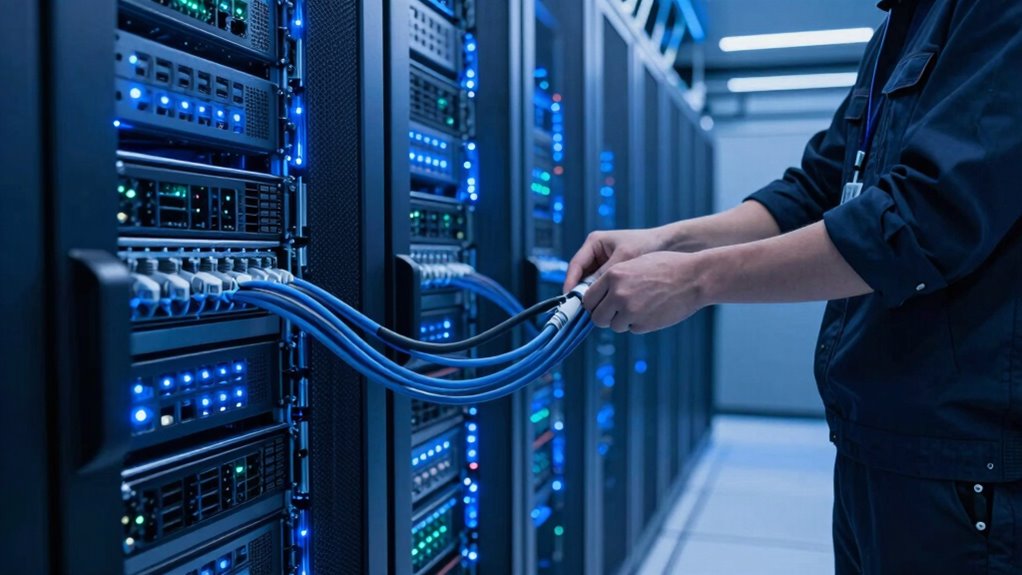
Cloud egress fees often catch teams off guard, turning expected savings into unexpected costs. Data transfer costs add up quickly, especially with large movement to local or third-party services, and rates vary depending on destination, provider, and region. Many underestimate these expenses, assuming they’ll stay minimal. Without careful analysis and ongoing management, egress fees can silently erode your cloud budget. Staying vigilant can help you avoid surprises—keep exploring to uncover how to better control these hidden costs.
Key Takeaways
- Egress fees are complex, variable, and often underestimated, leading to unexpected cloud cost surges.
- Teams typically focus on storage and compute costs, neglecting significant data transfer expenses.
- Lack of transparency and confusing pricing structures obscure the true impact of data egress costs.
- Changes in data movement patterns or scale can rapidly inflate egress charges beyond initial estimates.
- Regular monitoring, optimization, and understanding of billing are essential to prevent hidden egress costs.

Many cloud providers advertise their services as cost-effective, but if you’re not careful, egress fees can quickly turn those savings into unexpected expenses. When you move data in and out of the cloud, data transfer costs add up faster than you might expect. This often catches teams off guard because, unlike storage or compute costs, egress fees are less transparent and seem relatively small at first. However, as your usage grows, these fees can become a substantial part of your overall cloud bill.
Understanding how data transfer contributes to your costs is essential for effective cost management. It’s tempting to focus on the advertised low prices for cloud resources, but neglecting egress fees means you’re only seeing part of the picture. For example, if your team frequently pulls large datasets from the cloud to local environments or third-party services, those data transfer charges can skyrocket. The more data you move, the higher your costs become, often unexpectedly. That’s why many underestimate the impact of data transfer on the total cloud expenditure. Additionally, the layered structure of cloud pricing and cost transparency complicates cost prediction, making it even easier to overlook these charges until they become significant.
The reason teams underestimate these costs is partly due to the way cloud providers structure their pricing and how they communicate it. Egress fees are usually charged per gigabyte, and the rates can vary depending on the destination, cloud provider, and region. This layered complexity makes it harder to predict your bills accurately. Many teams rely on initial estimates or overlook egress costs altogether, assuming they’ll be minimal or manageable. But once your project scales or your data transfer patterns change, those costs can spiral out of control. Implementing tools that automatically analyze and alert you to high data transfer volumes can help prevent unexpected surges. Moreover, understanding cloud billing and leveraging cost management tools can help teams stay ahead of these hidden expenses. A clear understanding of your data movement patterns can help you identify opportunities to optimize and reduce transfer costs.
To master cost management, you need to include data transfer in your budgeting process from the outset. Track your data egress carefully, and look for patterns or activities that generate high transfer volumes. Implementing strategies like data caching, compression, or limiting data movement can greatly reduce your egress costs. Additionally, consider choosing cloud providers or regions with more favorable data transfer rates for your specific needs. Furthermore, understanding the contrast ratio and how it impacts image clarity across different projectors can help you optimize your hardware choices and reduce unnecessary data transfers when streaming high-quality visuals.
Ultimately, managing data transfer costs requires ongoing vigilance. Regularly review your cloud bills, monitor your data transfer patterns, and adjust your architecture accordingly. By being proactive and understanding the true impact of egress fees, you prevent those hidden charges from eroding your budget. Remember, effective cost management isn’t just about controlling storage and compute—it’s about understanding every element, including data transfer, that influences your overall cloud expenses. Keeping an eye on cost management strategies can help sustain your cloud budget over time. Incorporating data transfer analysis into your routine can further assist in identifying high-cost activities before they escalate.
cloud data transfer cost management tools
As an affiliate, we earn on qualifying purchases.
As an affiliate, we earn on qualifying purchases.
Frequently Asked Questions
How Are Cloud Egress Fees Calculated Exactly?
You’re charged for data transfer when you move data out of the cloud, and the fees depend on the amount of data egressed, usually measured in gigabytes or terabytes. Cloud providers calculate these costs based on the egress volume and sometimes the destination. To manage expenses, monitor your data transfer patterns closely, optimize data flow, and implement cost management strategies to avoid unexpected charges.
Do Egress Fees Vary Between Cloud Providers?
Yes, egress fees vary between cloud providers because of differences in their data transfer policies and pricing models. You need to take into account these variations when planning your data transfer strategy to optimize costs. By understanding each provider’s rates and limits, you can better manage data transfer costs, avoid unexpected charges, and improve your overall cost optimization efforts. Always compare provider rates to ensure you’re making the most economical choices.
Can Egress Fees Be Negotiated With Providers?
You might think egress fees are set in stone, but surprisingly, vendor negotiations can lead to some flexibility. While cloud providers usually have standard rates, engaging in contract discussions can sometimes lower these costs or include discounts, especially for long-term or large-scale commitments. Don’t hesitate to push for contract flexibility—your persistence may just tip the scales in your favor and save you money down the line.
What Cost-Saving Strategies Exist for Reducing Egress Fees?
To reduce egress fees, focus on data transfer and cost optimization strategies. You can minimize costs by consolidating data transfers, limiting unnecessary egress, and choosing providers with favorable egress terms. Implementing caching and data compression also helps reduce transfer volumes. Regularly monitoring your data flow enables you to identify and address cost spikes promptly. These tactics help you manage cloud expenses more effectively while maintaining seamless access to your data.
How Do Egress Fees Impact Long-Term Cloud Migration Plans?
Egress fees considerably impact your long-term cloud migration plans by increasing data transfer costs over time. As your data grows, these fees can escalate, making cost optimization more challenging. You need to plan for efficient data transfer strategies, like reducing unnecessary egress and choosing cloud providers with lower fees. Staying aware of these costs helps you avoid surprises and guarantees your migration remains financially sustainable in the long run.
cloud egress fee monitoring software
As an affiliate, we earn on qualifying purchases.
As an affiliate, we earn on qualifying purchases.
Conclusion
So, next time you think about data transfer costs, remember there’s more lurking beneath the surface. Cloud egress fees might seem manageable now, but underestimate them at your peril. Are you truly prepared for the hidden charges that could surprise your budget? Stay vigilant, stay informed, because one overlooked fee could change everything. The real question is—are you ready to face what’s coming when those costs start to add up? The answer might just surprise you.

Cloud FinOps: Collaborative, Real-Time Cloud Value Decision Making
As an affiliate, we earn on qualifying purchases.
As an affiliate, we earn on qualifying purchases.

USB Power and Data Cable for Texas Instruments Calculators, TI-84 Plus CE, TI-84 Plus C Silver Edition, TI 89 Titanium, TI Nspire CX/TI Nspire CX CAS Graphing Calculators
USB cable for TI 84 Plus, TI 84 Plus C Silver Edition, TI 89 Titanium, TI Nspire CX…
As an affiliate, we earn on qualifying purchases.
As an affiliate, we earn on qualifying purchases.