In production environments, sidecar containers run alongside your main applications to handle essential tasks like logging, monitoring, security, and resource management. They extend and enhance your app’s capabilities without changing its core code, making deployment easier and more modular. By sharing resources and working within orchestrated systems like Kubernetes, they guarantee better performance, scalability, and resilience. If you want to discover how they keep systems agile and secure, keep exploring their role in modern architecture.
Key Takeaways
- Sidecar containers extend core application functionality without modifying the main code, handling tasks like logging, monitoring, and security.
- They optimize resource use by running dedicated processes, preventing contention and improving overall system efficiency.
- In orchestration platforms, sidecars coordinate with primary containers for scaling, updates, and maintaining application state.
- They simplify deployment, enabling quick addition of features and reducing bugs through modular, isolated components.
- Sidecars enhance observability, security, and system resilience by managing auxiliary functions independently within the container ecosystem.
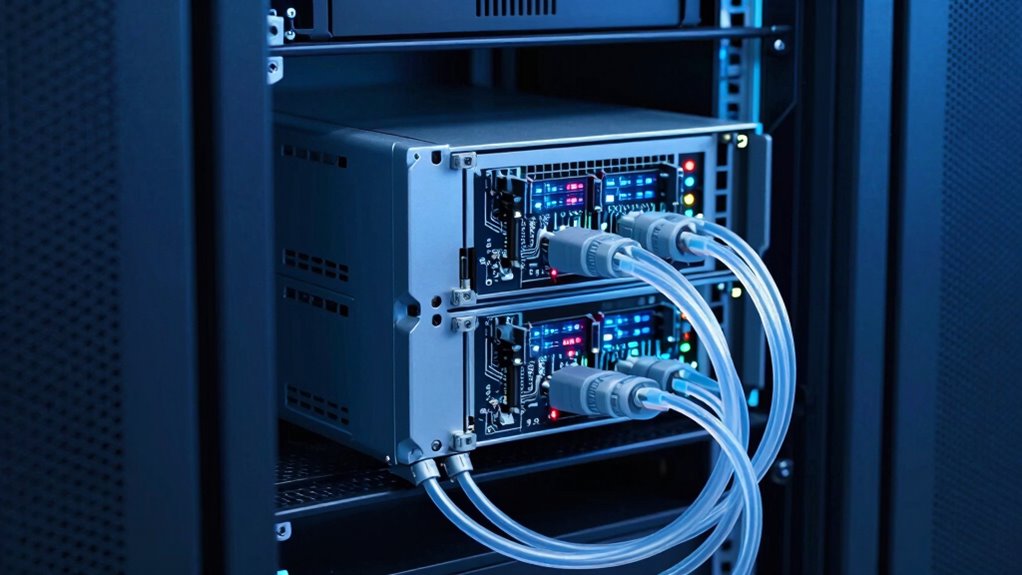
Sidecar containers have become an indispensable component in modern production environments, enabling you to extend and enhance your application’s capabilities without altering its core code. They work alongside your primary application container, sharing resources and infrastructure to provide additional functionalities seamlessly. In the context of container orchestration, sidecars are crucial for managing complex, distributed systems because they allow you to offload auxiliary tasks—like logging, monitoring, or security—without disrupting your main application. This separation of concerns simplifies deployment and maintenance, making your system more resilient and easier to scale. Moreover, container orchestration tools like Kubernetes facilitate resource management, ensuring that sidecar containers are efficiently integrated into your deployment. Resource optimization is one of the key benefits of using sidecar containers. Instead of embedding all functionalities directly into your main application, you can deploy dedicated containers that handle specific tasks more efficiently. For instance, a sidecar managing logging can be optimized independently, ensuring it consumes only the necessary CPU and memory. This approach prevents resource contention and ensures your primary application runs smoothly, even under heavy load. Additionally, by centralizing auxiliary functions into sidecar containers, you reduce redundancy and streamline resource utilization across your deployment environment. As systems become more complex, container orchestration tools like Kubernetes further facilitate managing multiple containers—such as your main app and associated sidecars—within a single pod, coordinating their lifecycle, updates, and scaling automatically. This orchestration ensures that sidecar containers are always synchronized with your application’s state, maintaining high availability and consistent performance. You can also deploy multiple pods with identical configurations, leveraging orchestration to balance load and optimize resource distribution across your infrastructure. You’ll find that sidecars simplify the addition of new functionalities. When you need to introduce a new feature, instead of modifying your application’s codebase, you deploy a new sidecar container optimized for that purpose. This modular approach reduces the risk of introducing bugs into your core application and accelerates deployment cycles. Additionally, sidecars facilitate better observability and security, since you can isolate monitoring or security tools into dedicated containers, reducing attack surfaces and simplifying compliance. As the complexity of your systems grows, understanding container orchestration capabilities becomes essential for efficient management and scalability. Leveraging these capabilities allows you to better manage resources, ensuring your deployment remains efficient and adaptable to changing demands. Implementing automation tools further enhances the management process, enabling quicker updates and more reliable scaling. In short, sidecar containers are a powerful tool for modern production environments. They leverage container orchestration to streamline management and resource optimization, letting you extend your application’s capabilities without sacrificing stability or performance. As your system grows more complex, these auxiliary containers help you maintain agility, maximize resource efficiency, and keep your deployment architecture clean and modular.

Kubernetes Software – Powerful Container Orchestration Tools Pullover Hoodie
Kubernetes is an open platform that automates container orchestration, enabling seamless deployment, automatic scaling, self-healing, and efficient management…
As an affiliate, we earn on qualifying purchases.
As an affiliate, we earn on qualifying purchases.
Frequently Asked Questions
How Do Sidecars Impact Application Performance and Latency?
Sidecar containers can impact your application’s performance and latency by consuming additional resources, which might lead to resource allocation challenges. They add complexity, potentially causing dependencies that slow down responses if not managed properly. However, when optimized, sidecars improve functionality without significant latency increase. You should monitor resource use closely and guarantee dependency management is streamlined to maintain application performance.
What Are Common Security Concerns With Sidecar Containers?
Your security is only as strong as your weakest link—sidecars can introduce vulnerabilities if not managed carefully. Common concerns include inadequate access control, which might allow unauthorized access, and insufficient data encryption, risking data breaches. To protect your environment, make certain proper access controls are in place and encrypt sensitive data. Regular updates, security patches, and monitoring help mitigate risks associated with sidecar containers in production.
How Do Sidecars Handle Scaling During Traffic Spikes?
During traffic spikes, sidecar containers handle scaling by dynamically adjusting their resource allocation and traffic management. You can configure them to automatically spin up additional sidecars or allocate more resources to existing ones, ensuring seamless handling of increased load. This flexibility helps maintain performance, reduces latency, and prevents service disruption, allowing your application to adapt quickly to changing traffic patterns without impacting the core container.
Can Sidecars Be Used With Serverless Architectures?
Think of sidecars as the trusty co-pilots in your serverless journey, enhancing capabilities like logging, security, or networking. You can definitely use sidecar orchestration with serverless architectures; it’s like adding a GPS to your ride, guiding and managing functions seamlessly. Many cloud providers support this integration, ensuring your serverless apps stay agile and resilient while benefiting from sidecar features, making your deployment more dependable and scalable.
What Are Best Practices for Managing Sidecar Container Updates?
To manage sidecar container updates effectively, you should use container orchestration tools like Kubernetes to automate rolling updates, minimizing downtime. Guarantee proper resource allocation so your main container and sidecars don’t compete for CPU or memory. Test updates in staging environments first, then deploy gradually. Regularly monitor performance and logs to catch issues early, maintaining stability and security during the update process.

Sharps Container Small – Sharps Containers for Home Use and Labs – Portable Needle Disposal and Travel Size Biohazard Bin – 2 Quart (Pack of 1)
Durable Design: Crafted from puncture-resistant thermoplastic for a reliable, safe, and secure sharps disposal solution.
As an affiliate, we earn on qualifying purchases.
As an affiliate, we earn on qualifying purchases.
Conclusion
As you witness a sidecar container seamlessly working alongside your main application, it’s like watching a well-rehearsed dance in perfect harmony. The coincidence of its quiet support—handling logging, security, or monitoring—ensures your system runs smoothly without a hitch. In this synchronized flow, every component plays its part, silently enabling your app’s success. So, next time you see a sidecar in action, remember it’s the unseen partner making everything just work.

The Ultimate Docker Container Book: Build, ship, deploy, and scale containerized applications with Docker, Kubernetes, and the cloud
As an affiliate, we earn on qualifying purchases.
As an affiliate, we earn on qualifying purchases.
logging solutions for Docker containers
As an affiliate, we earn on qualifying purchases.
As an affiliate, we earn on qualifying purchases.