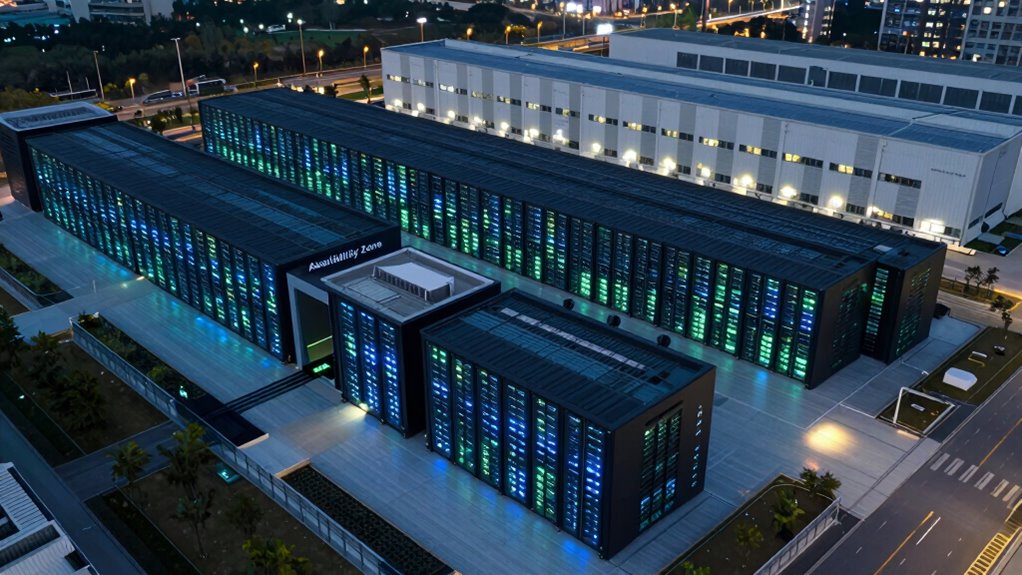
Availability zones are virtual, geographically dispersed resource groups that work with cloud providers to improve fault tolerance and resilience, while regular data centers are physical facilities housing servers and hardware in fixed locations. Zones allow you to spread resources across regions, reducing risks from failures or disasters. Data centers serve as central hubs for traditional hardware. Knowing the difference helps you build more reliable systems—keep going to explore how these concepts work together for modern infrastructure.
Key Takeaways
- Data centers are physical facilities; availability zones are virtual, geographically distributed resource groups within cloud regions.
- Data centers provide centralized hardware, while availability zones spread resources across multiple locations for resilience.
- Availability zones are designed for fault tolerance and high availability, unlike traditional data centers vulnerable to localized failures.
- Cloud providers use availability zones to enhance scalability and support edge computing, unlike fixed physical data centers.
- Availability zones enable geographic distribution, reducing operational risks compared to a single, localized data center.
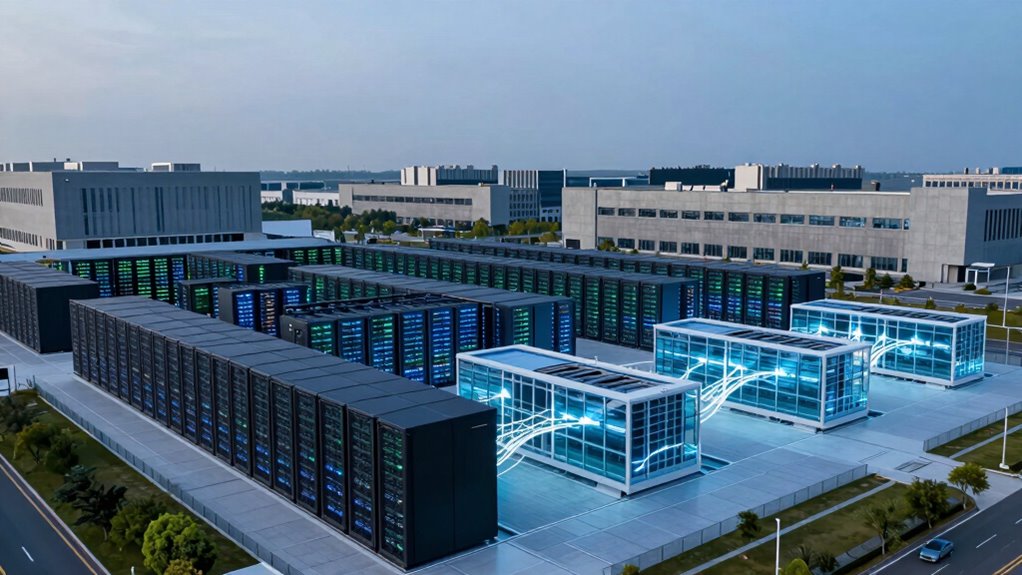
When designing a robust IT infrastructure, understanding the difference between availability zones and data centers is essential. This knowledge helps you optimize for resilience, scalability, and performance. Data centers are physical facilities that house servers, storage, and networking equipment. They serve as the backbone of traditional IT setups, providing a centralized location for your hardware. In contrast, availability zones are a newer concept introduced by cloud providers to enhance fault tolerance across broader regions. Instead of relying on a single data center, availability zones distribute resources geographically, ensuring that an issue in one zone doesn’t cripple your entire system.
Availability zones distribute resources geographically, enhancing fault tolerance beyond traditional data center limitations.
As you build your cloud infrastructure, you’ll notice that availability zones are designed to work seamlessly with edge computing. Edge computing pushes data processing closer to the source, reducing latency and improving responsiveness. By deploying resources across multiple availability zones, you ensure that edge devices and applications can operate reliably, even if one zone experiences outages. This setup is particularly valuable for applications that require real-time data analysis or critical decision-making, such as IoT networks or autonomous vehicles. Using availability zones, you can design a resilient architecture that maintains high availability without sacrificing the benefits of cloud infrastructure.
While data centers are often centralized and physically controlled by your organization or a hosting provider, availability zones are inherently more flexible and scalable. They allow you to spread your resources across different locations within a region, reducing risk and increasing fault tolerance. When deploying applications, you can distribute workloads across multiple zones, ensuring continuous operation if one zone encounters a problem. This geographic distribution is a key advantage over relying solely on a single data center, which might be vulnerable to natural disasters, power failures, or other localized issues. Additionally, fault tolerance is a critical aspect that availability zones help improve by distributing resources across multiple locations. The ability to geographically distribute resources is a fundamental feature that sets availability zones apart from traditional data centers.
In essence, data centers are the physical foundation of traditional IT, but availability zones extend that foundation into a virtual, distributed environment. They are integral to modern cloud infrastructure, enabling you to architect systems that are both resilient and scalable. This distinction is crucial when planning your infrastructure, especially if you’re incorporating edge computing solutions or aiming for high availability. By understanding how these concepts interrelate, you can design a more robust, flexible, and future-proof IT environment that meets your organization’s evolving needs. Furthermore, a thorough grasp of geographic distribution can help you maximize the benefits of availability zones in your architecture. Recognizing the interplay between physical and virtual environments is essential for creating resilient infrastructure in today’s cloud-centric world.
cloud availability zone hardware
As an affiliate, we earn on qualifying purchases.
As an affiliate, we earn on qualifying purchases.
Frequently Asked Questions
How Do Availability Zones Impact Disaster Recovery Strategies?
Availability zones greatly enhance your disaster recovery strategies by improving disaster resilience and redundancy planning. By distributing your resources across multiple zones, you reduce the risk of a single point of failure during outages or disasters. This setup guarantees continuous operations, quick recovery, and data protection. You can confidently build resilient systems knowing that even if one zone encounters issues, your services remain unaffected and recover quickly.
Can Data Centers Span Multiple Regions?
Think of data centers as castles guarding your digital treasures. Yes, they can span multiple regions, connecting separate castles across vast landscapes. This setup relies on robust physical infrastructure and layered security measures to guarantee safety and resilience. By distributing data centers geographically, you create a fortress that withstands regional disruptions, giving your systems the strength to stay operational no matter where trouble strikes.
What Are the Cost Differences Between Zones and Data Centers?
The cost comparison between availability zones and data centers varies, with zones often costing less due to shared infrastructure and economies of scale. However, deploying across multiple zones can increase infrastructure complexity, potentially raising expenses. You might save on initial setup by using zones, but managing latency, redundancy, and compliance across zones can add to your operational costs. Consider these factors carefully to balance cost and infrastructure complexity.
How Do Latency and Performance Vary Between Zones and Data Centers?
You notice that latency and performance are generally better within the same availability zone than across different zones or data centers, thanks to optimized network topology. When you incorporate edge computing, you bring data closer to users, reducing latency even further. Zones, being physically closer or interconnected more efficiently, offer lower latency and higher performance, making them ideal for real-time applications. Data centers farther apart tend to introduce delays and variability in performance.
Are Availability Zones a Feature Exclusive to Cloud Providers?
Availability zones aren’t exclusive to cloud providers; they can also exist in edge computing and traditional data centers. These zones are designed for redundancy, enhancing physical security and minimizing latency. When you deploy across multiple zones, you improve reliability and performance, especially in edge environments where proximity matters. So, whether in cloud infrastructure, edge setups, or data centers, availability zones help you guarantee continuous service and better security.
As an affiliate, we earn on qualifying purchases.
Conclusion
So, next time you think about your data’s safety and speed, remember—availability zones and data centers aren’t just random terms. It’s a coincidence how they work together to keep your services running smoothly, no matter what. By understanding their differences, you can make smarter choices for your infrastructure. After all, in the world of tech, the smallest details can make the biggest difference—like knowing where your data actually lives.
fault tolerant cloud infrastructure
As an affiliate, we earn on qualifying purchases.
As an affiliate, we earn on qualifying purchases.

Mobile Edge Computing (Simula SpringerBriefs on Computing Book 9)
As an affiliate, we earn on qualifying purchases.
As an affiliate, we earn on qualifying purchases.