
Lithium UPS models are gaining attention in modern racks because they offer better energy efficiency, longer lifespan, and advanced safety features, making them cost-effective and reliable. Their lightweight, compact design allows flexible installation, while faster charging keeps your systems running smoothly after outages. These benefits help reduce maintenance costs and improve system resilience. If you want to learn more about these innovative batteries and how they can enhance your setup, keep exploring these promising options.

Get business pricing on networking and server gear
- Business-only prices and quantity discounts
- Tax-exempt purchasing
- Multiple users, one account, clear invoices
Key Takeaways
- Longer lifespan and reliability reduce replacement frequency and downtime in modern rack systems.
- Higher energy efficiency lowers operational costs and supports sustainable infrastructure.
- Compact, lightweight design simplifies installation and enhances flexibility in modern rack configurations.
- Advanced safety features and thermal management improve durability and system stability.
- Growing industry adoption driven by performance benefits and evolving infrastructure demands.
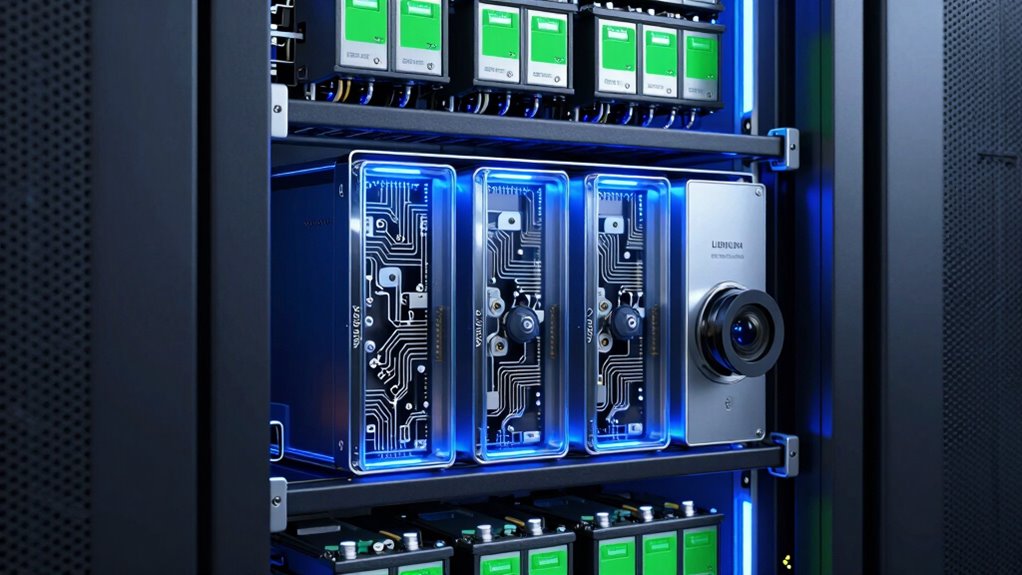
As data centers and server rooms evolve, lithium UPS models have become essential components in modern racks due to their superior performance and reliability. One of the main reasons you’ll find these models gaining popularity is their remarkable battery longevity. Unlike traditional lead-acid UPS batteries that degrade quickly over time, lithium batteries maintain their capacity much longer, often lasting for 10 years or more with proper maintenance. This extended lifespan means you won’t need to replace batteries as frequently, reducing downtime and ensuring your systems stay protected without interruption. Longer-lasting batteries also mean you save on replacement costs and avoid the hassle of frequent maintenance, making lithium UPS models a smart investment for the long haul.
Lithium UPS batteries last over 10 years, reducing replacements and downtime for reliable system protection.
Cost efficiency is another critical factor driving their adoption. Although lithium UPS units tend to have a higher initial price than lead-acid counterparts, they quickly prove their worth through lower total cost of ownership. You spend less on replacements because lithium batteries last longer and have fewer maintenance requirements. Additionally, these batteries charge faster, meaning your backup system is ready to go sooner after a power outage. Faster charging translates into increased uptime and fewer disruptions, which is essential for maintaining business operations and protecting sensitive data. Moreover, their energy efficiency helps reduce overall operational costs while supporting sustainable practices. The lightweight design of lithium UPS units also allows for easier installation and relocation, making them more adaptable to evolving infrastructure needs.
Lithium UPS models also contribute to overall cost savings by offering better energy efficiency. They operate at higher efficiencies, consuming less power during regular operation, which lowers your energy bills over time. This efficiency doesn’t come at the expense of performance; instead, it enhances reliability, ensuring your equipment remains protected during outages. Plus, their compact, lightweight design allows for more flexible rack configurations, saving space and reducing infrastructure costs. Incorporating advanced battery technology further enhances their safety and longevity, making them an increasingly preferred choice for critical systems. Additionally, ongoing innovations in thermal management have further improved their safety profiles, ensuring stable operation even under demanding conditions. Furthermore, the development of solid-state batteries has started to influence the industry, offering even greater safety and durability benefits.
As an affiliate, we earn on qualifying purchases.
Frequently Asked Questions
How Do Lithium UPSS Compare in Cost to Traditional Models?
You’ll find lithium UPS models generally cost more upfront than traditional lead-acid batteries due to their advanced battery chemistry and higher power efficiency. While the initial investment is higher, you save money over time because lithium batteries last longer, require less maintenance, and offer better energy efficiency. This balance makes lithium UPSs a smarter choice for modern racks seeking reliable, long-term power solutions.
What Are the Safety Concerns With Lithium-Based UPS Systems?
Think of lithium-based UPS systems as a blazing torch—they shine brightly but pose fire safety risks if mishandled. You should be aware of potential thermal runaway, which can lead to fires, and guarantee proper ventilation. Additionally, consider the environmental impact, as lithium batteries contain materials that require careful disposal. Being cautious with storage and handling minimizes safety hazards, helping protect both your equipment and the environment.
How Long Is the Typical Lifespan of a Lithium UPS?
You can expect a lithium UPS to last around 8 to 15 years, depending on usage and maintenance. Proper thermal management prevents overheating, extending its lifespan. When it’s time to replace the battery, responsible battery recycling minimizes environmental impact. Regular monitoring ensures peak performance, and taking care of thermal conditions helps avoid premature failure, keeping your system reliable and efficient throughout its service life.
Are Lithium UPSS Compatible With Existing Rack Infrastructure?
You’ll find that lithium UPS models often are compatible with existing rack infrastructure, thanks to standard form factors and power connections. Coincidentally, their advanced thermal management helps prevent overheating, making integration smoother. When considering upgrades, keep in mind battery recycling protocols and proper thermal management to guarantee safe, efficient operation, and to extend their lifespan. This synergy allows for seamless compatibility without major modifications, fitting nicely into your current setup.
What Maintenance Is Required for Lithium UPS Models?
You need minimal maintenance with lithium UPS models, mainly focusing on thermal management to prevent overheating and ensuring proper airflow. Regularly monitor battery health and performance, and when batteries reach end-of-life, prioritize responsible battery recycling. Unlike traditional lead-acid batteries, lithium units require less frequent checks, but staying vigilant about thermal conditions and recycling practices helps extend their lifespan and maintains reliable backup power.
As an affiliate, we earn on qualifying purchases.
Conclusion
As you consider upgrading your racks, think of lithium UPS models as the engine that keeps your data center running smoothly. Their lightweight design, fast charging, and longer lifespan make them the fuel that sustains your system’s reliability and efficiency. Just like a well-tuned engine, these models ensure you’re always prepared to power through any challenge. Embracing lithium UPS technology is like upgrading from a bicycle to a sports car — a move that speeds up your success.
As an affiliate, we earn on qualifying purchases.
As an affiliate, we earn on qualifying purchases.
Fall Picks
fall essentials
As an affiliate, we earn on qualifying purchases.