

Managed databases are more appealing because they handle routine tasks like updates, performance tuning, and security for you, so you can focus on your core applications. They scale easily to handle growth and traffic spikes without manual intervention. Plus, they come with built-in security features and ongoing maintenance, reducing downtime and costs. This means less hassle and more reliable performance. Keep exploring to discover more benefits that can transform your database management approach.
Key Takeaways
- Managed databases handle routine maintenance and updates, reducing the need for in-house expertise and ongoing management efforts.
- They offer seamless scalability, allowing resources to adjust effortlessly during growth or traffic spikes.
- Built-in security features and compliance updates lower the risk of data breaches and simplify regulatory adherence.
- Proactive monitoring and automated backups enhance reliability and minimize downtime.
- Cost efficiencies are achieved through optimized data management and reduced infrastructure and staffing expenses.
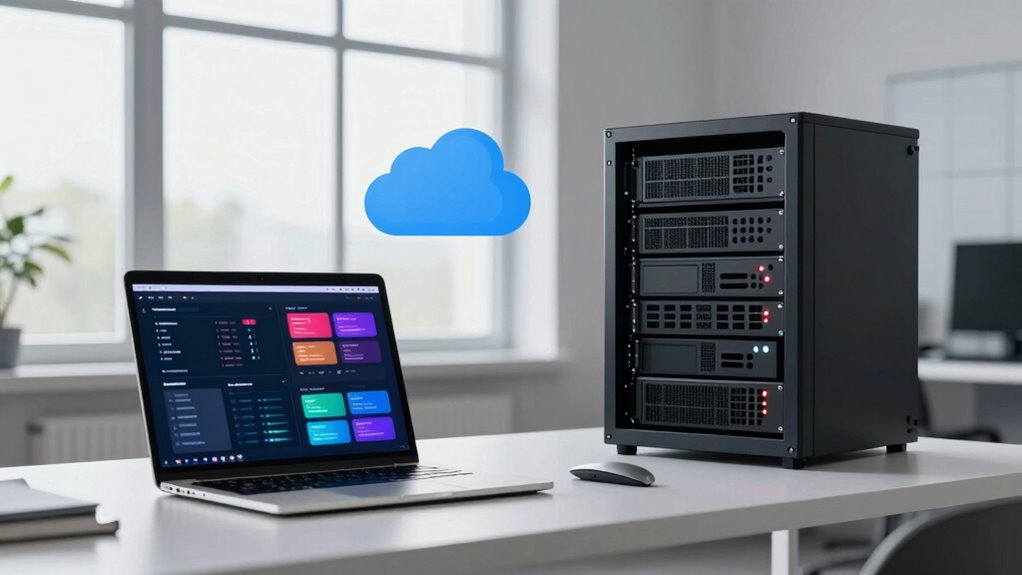
Choosing between managed and self-hosted databases can considerably impact your project’s efficiency and control. When you opt for a managed database, you’re fundamentally handing over many operational responsibilities to a specialized provider, freeing you to focus more on your application’s core features. A significant advantage here is cloud scalability. Managed database services are designed to effortlessly handle growth, allowing you to scale resources up or down based on demand without the hassle of manual configuration or hardware upgrades. This flexibility ensures your project remains responsive and capable of accommodating sudden spikes in traffic or data volume, without risking downtime or performance issues.
Managed databases reduce operational burdens, enhance scalability, and ensure reliable performance for growing projects.
Security management is another critical aspect where managed databases shine. When you run your own database, you’re solely responsible for implementing security protocols, updates, and patches. That can be intimidating, especially if you’re not an expert in cybersecurity. Managed services, on the other hand, come with built-in security features that are regularly updated and maintained by the provider. They often include automated backups, encryption, and compliance with industry standards, reducing your risk of data breaches or data loss. This level of security management not only protects your sensitive information but also helps you meet regulatory requirements more easily. Additionally, leveraging database technology can significantly improve your data handling capabilities and overall performance.
Additionally, managed databases simplify maintenance tasks. You don’t need to worry about routine operations like software updates, hardware failures, or performance tuning. The service provider handles these behind the scenes, ensuring your database remains optimized and reliable. This reduces downtime and minimizes the need for in-house expertise, which can be costly and time-consuming to develop. The ease of management allows you to allocate your resources towards developing features or improving user experience instead of troubleshooting infrastructure issues. Moreover, understanding data management best practices can help you optimize how your data is stored and accessed, further enhancing efficiency. Furthermore, the cost structure of managed services often includes features like automated monitoring and alerting systems, which can help detect and resolve issues proactively, maintaining system health without manual intervention.
managed database service subscription
As an affiliate, we earn on qualifying purchases.
As an affiliate, we earn on qualifying purchases.
Frequently Asked Questions
How Do Managed Databases Handle Data Privacy and Compliance?
Managed databases prioritize data privacy and compliance by implementing data encryption both at rest and in transit, ensuring your data stays secure. They also stay updated with compliance standards like GDPR, HIPAA, and SOC 2, simplifying your adherence process. Because experts manage these aspects, you can trust that your data complies with regulations, reducing your workload and minimizing risks associated with data breaches or non-compliance.
Can Managed Databases Be Customized for Specific Business Needs?
Imagine a tailor-made suit—that’s how managed databases adapt to your business needs. You can customize options to fit your specific workflows and leverage integration flexibility with various tools and platforms. Managed databases offer robust customization options, allowing you to fine-tune performance, security, and features without hassle. This flexibility guarantees your database aligns perfectly with your unique requirements, making it easier to innovate and scale confidently.
What Is the Cost Comparison Over the Long Term?
Over the long term, managed databases often prove more cost-efficient than self-hosted ones because of pricing transparency and reduced maintenance costs. You avoid unexpected expenses by knowing exactly what you’ll pay monthly, and you save on hardware, staffing, and downtime. While initial costs might be higher, managed services streamline operations and minimize unforeseen costs, ensuring better budget control and reliability for your business.
How Do Managed Databases Ensure Data Security?
Like the shield of Achilles, managed databases safeguard your data through robust security measures. They use data encryption both at rest and in transit, making unauthorized access nearly impossible. Plus, they enforce strict user authentication protocols, ensuring only authorized personnel can access sensitive information. This proactive protection minimizes risks, giving you peace of mind. With managed services, you benefit from continuous security updates, keeping your data safe against evolving threats.
Are There Any Limitations on Scalability With Managed Solutions?
Managed solutions do have some scalability restrictions, like potential performance limitations during peak loads or when handling extremely large datasets. These restrictions can affect how quickly you can grow your database resources. However, providers usually offer flexible plans and auto-scaling options to mitigate these issues. Still, you should assess your specific needs, as unmanaged, self-hosted databases might offer more granular control over scalability if you have the technical capacity.
As an affiliate, we earn on qualifying purchases.
Conclusion
When weighing the wonders of managed databases against self-hosted solutions, it’s clear that convenience, cost-effectiveness, and continuous support make managed options truly tempting. You get hassle-free hosting, heightened security, and hands-off updates that keep your data dependable. So, if you’re seeking simplicity, speed, and superior security, switching to a managed database could be your smartest move. Make the switch, save stress, and see your system soar — simplicity, security, and success await!
cloud database security features
As an affiliate, we earn on qualifying purchases.
As an affiliate, we earn on qualifying purchases.
scalable managed database solutions
As an affiliate, we earn on qualifying purchases.
As an affiliate, we earn on qualifying purchases.