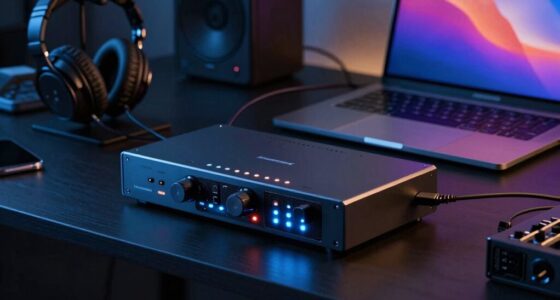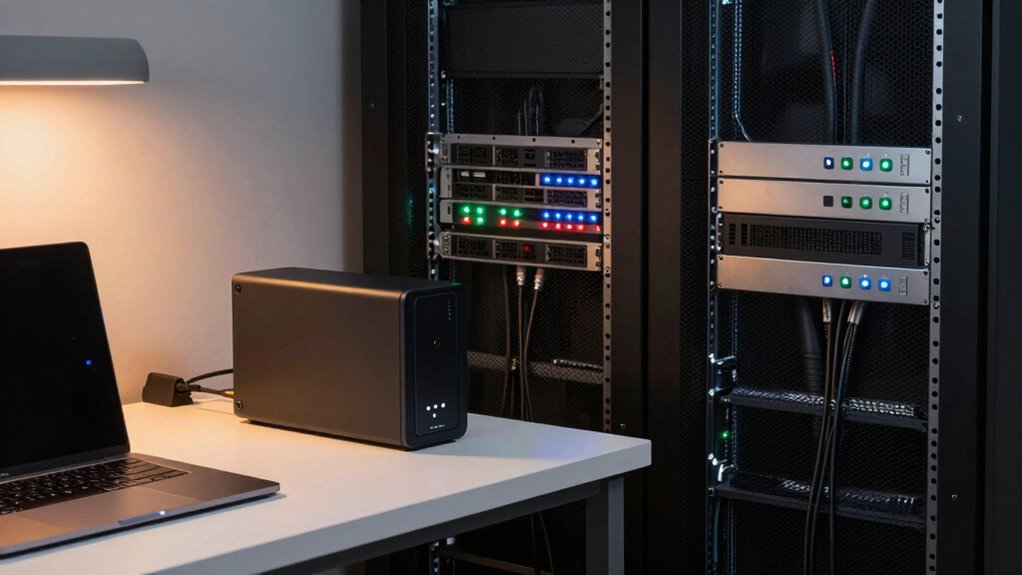

When selecting a home office UPS, you should focus on simplicity, ease of maintenance, and capacity for powering essential devices like your computer and monitor. Unlike rack UPS planning, which involves scalable systems, complex batteries, and professional servicing, home office units are straightforward with user-replaceable batteries. They are designed for quick setup and easy upkeep. To guarantee your needs are met efficiently, understanding these differences can help you choose the right backup system—more details await if you keep exploring.

Get business pricing on networking and server gear
- Business-only prices and quantity discounts
- Tax-exempt purchasing
- Multiple users, one account, clear invoices
Key Takeaways
- Home office UPSs focus on smaller capacity (600-1500 VA) for basic devices, while rack UPSs support larger, more complex hardware setups.
- Home UPS units prioritize simplicity and easy maintenance, unlike rack systems that often require professional servicing.
- Battery management in home UPSs centers on straightforward replacement and monitoring, whereas rack systems may have complex battery configurations.
- Capacity planning for home UPSs emphasizes runtime for safe shutdown and data protection, unlike rack UPSs which support extensive, prolonged power needs.
- Home UPSs are designed for user-friendly operation, with minimal technical oversight, contrasting with the more specialized setup of rack UPS systems.
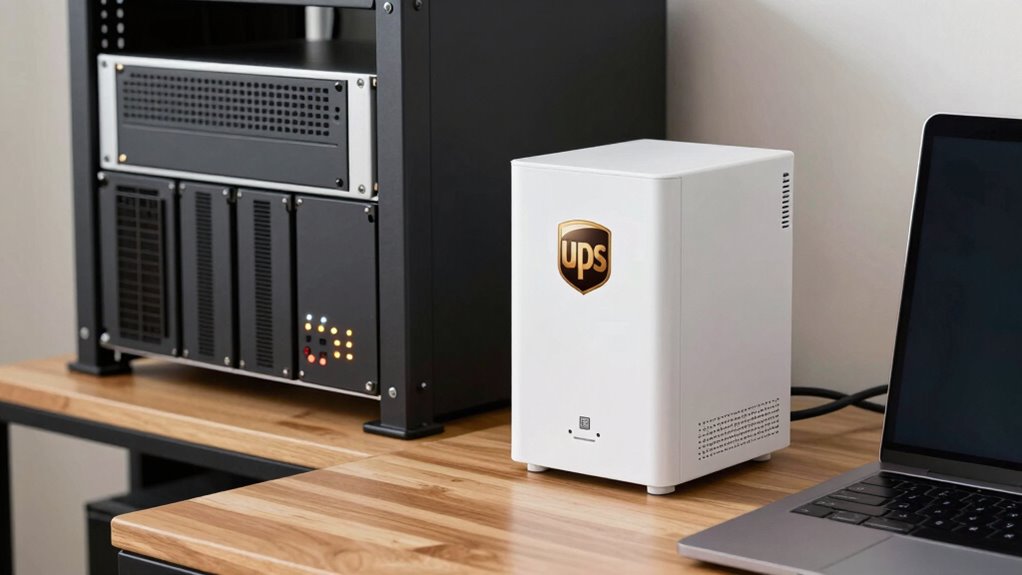
Are you unsure how to choose the right UPS for your home office? Selecting a UPS tailored to your needs involves understanding its purpose and how it differs from larger, rack-mounted systems used in data centers or professional environments. When considering a home office UPS, the primary goal is to guarantee reliable power backup so your work isn’t interrupted during outages. Unlike rack systems, which often support extensive hardware setups, a home office UPS is designed for smaller loads like a computer, monitor, and maybe a few peripherals. This means you need to focus on the capacity that provides enough runtime to save your work and shut down safely, rather than massive power delivery.
Choosing a home office UPS means prioritizing reliable power backup for smaller loads and safe shutdown during outages.
Power backup is the core feature you should evaluate. For a home setup, a UPS with a capacity of around 600 to 1500 VA usually suffices, depending on your equipment. You want a system that offers enough runtime to finish your tasks or at least save your files before the power completely cuts out. When selecting, consider the total wattage your devices consume and choose a UPS that exceeds this to avoid overloads. Unlike rack UPS planning, where redundancy and scalability are often prioritized, a home office UPS needs to be straightforward, compact, and easy to maintain. Additionally, understanding the battery lifespan of your UPS can help you plan for replacements before failure occurs, ensuring long-term reliability. Regularly monitoring your battery health can also help prevent sudden failures. Proper battery management can also extend the lifespan of your system and prevent unexpected outages.
Battery maintenance is another critical aspect. Smaller UPS units in homes tend to have simpler battery systems that are easier to replace. You should look for models with user-replaceable batteries and check the manufacturer’s recommendations for maintenance. Regular battery checks and timely replacements ensure your UPS remains reliable over time. In contrast to rack solutions that might have complex battery configurations requiring professional servicing, home office UPS batteries are designed for simpler, more accessible upkeep. Being aware of battery replacement intervals can help you schedule maintenance proactively. Keeping the battery healthy prevents unexpected failures, ensuring your power backup is always ready when needed. Having a clear understanding of your power needs and maintaining your battery system will help keep your workspace protected from power interruptions.
As an affiliate, we earn on qualifying purchases.
Frequently Asked Questions
How Do Power Fluctuations Affect Home Office UPS Performance?
Power fluctuations can considerably impact your home office UPS performance. Voltage stability is essential; frequent fluctuations cause your UPS to work harder, risking overload or shutdown. Power surges can damage connected devices and reduce battery life. To protect your equipment, make sure your UPS is rated for your power needs and consider surge protection. This way, you maintain consistent performance and safeguard your devices during voltage instability or surges.
What Are the Maintenance Requirements for Home Office UPS Units?
You need to regularly check your home office UPS, replace the batteries as recommended by the manufacturer, and perform firmware updates to guarantee peak performance. Keep an eye on battery health indicators and replace batteries before they fail. Firmware updates improve functionality and security, so stay current with the latest versions. Regular maintenance helps prevent unexpected outages, prolongs your UPS’s lifespan, and keeps your devices protected during power fluctuations.
Can a Home Office UPS Support Multiple Devices Simultaneously?
Imagine the peace of mind knowing your devices stay powered during unexpected outages. Yes, a home office UPS can support multiple devices simultaneously, provided you consider device compatibility and power capacity. You need to choose a UPS with sufficient wattage to handle your total load. Carefully assess your devices’ power requirements to make certain the UPS can support them all without strain, keeping your workspace reliable and stress-free.
How Does Noise Level Impact Home Office UPS Placement?
Noise level impacts where you place your home office UPS because higher noise can disturb your workspace. You should prioritize noise mitigation by positioning the UPS away from your main work area, such as in a closet or a separate room. Use soundproofing or ventilation strategies if necessary, and consider placement strategies that balance accessibility with noise reduction to keep your environment comfortable and quiet.
What Is the Typical Lifespan of a Home Office UPS?
A typical home office UPS lasts about 3 to 5 years, depending on usage and battery longevity. To maximize lifespan, you should regularly test the unit and keep it cool. Prioritize energy efficiency features to reduce power consumption and prolong battery health. Proper maintenance, including timely battery replacements, guarantees your UPS continues protecting your equipment effectively over time.
As an affiliate, we earn on qualifying purchases.
Conclusion
Choosing the right UPS for your home office is like selecting the perfect brush for a delicate painting—every detail matters. Unlike rack UPS planning, which involves orchestrating a symphony of high-capacity equipment, your home setup demands a more intimate touch. By understanding your unique needs, you guarantee your digital sanctuary stays resilient, like a sturdy oak standing firm against the storm. Remember, a well-chosen UPS is the silent guardian of your daily productivity and peace of mind.
As an affiliate, we earn on qualifying purchases.
As an affiliate, we earn on qualifying purchases.
Fall Picks
fall essentials
As an affiliate, we earn on qualifying purchases.