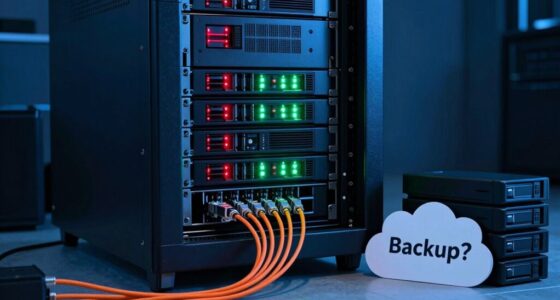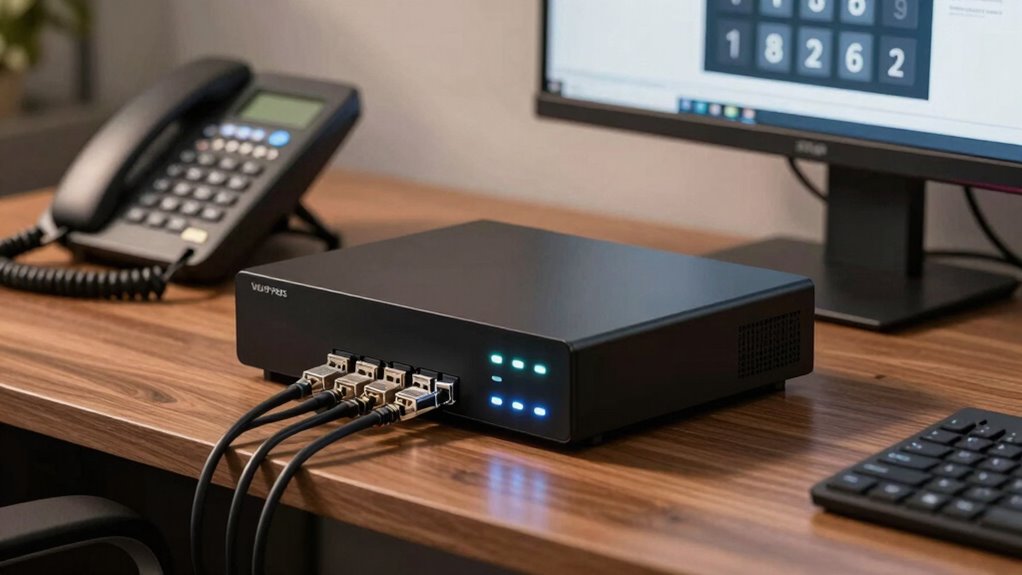

If your team handles sensitive data or faces unreliable internet, a VoIP PBX appliance can be your best choice. It keeps communication on-site, giving you control over security and privacy. You won’t rely on external servers or cloud providers, reducing risks and ensuring consistent call quality even during outages. Plus, it offers customization and hardware control that adapts to your unique needs. Stay with us to explore how this setup can truly impact your communication security and reliability.

Get business pricing on networking and server gear
- Business-only prices and quantity discounts
- Tax-exempt purchasing
- Multiple users, one account, clear invoices
Key Takeaways
- They offer enhanced security and data control for organizations with strict privacy requirements.
- Provide reliable, high-quality calls independent of internet or cloud service stability.
- Allow full customization and integration tailored to specific business processes.
- Enable predictable costs by avoiding ongoing subscription fees.
- Ensure compliance and data sovereignty for regulated industries like healthcare and finance.
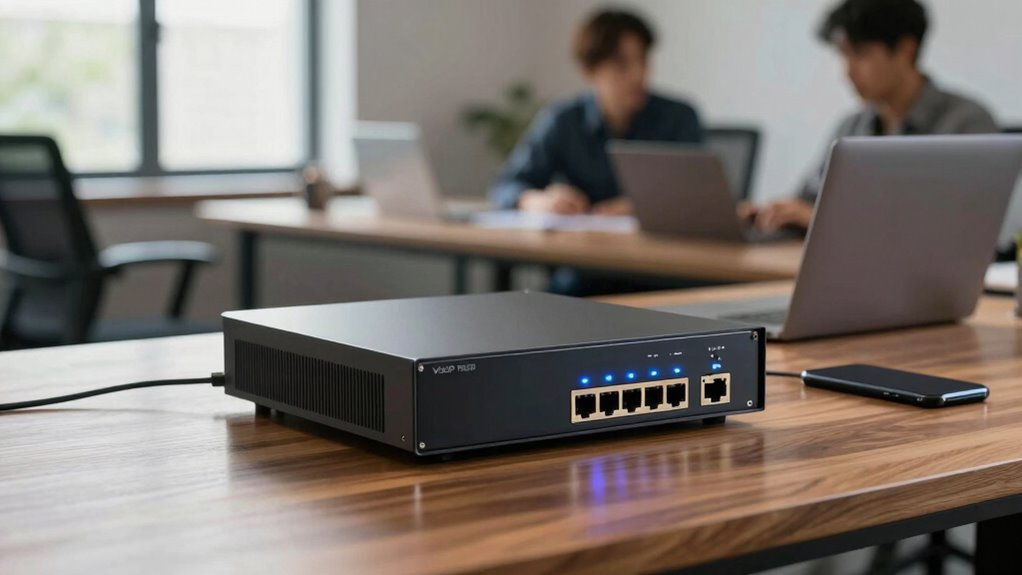
Despite the rise of cloud-based communication solutions, VoIP PBX appliances continue to make sense for many businesses. If your team values control over data and infrastructure, investing in a physical PBX system can be a strategic choice. Unlike cloud options, where your calls and data travel through external servers, a VoIP PBX appliance keeps your communications on-site. This setup often appeals to organizations with strict cloud security requirements because it allows you to manage and secure your data directly. You can implement tailored security measures, control access, and monitor traffic without relying on third-party providers. For teams handling sensitive information—like healthcare, finance, or legal services—this level of control offers peace of mind that their communications remain private and protected. Additionally, hardware reliability is another compelling reason to stick with a VoIP PBX appliance. Cloud-based systems depend on internet stability; if your internet connection experiences disruptions, your communication channels could be compromised or become inaccessible. With a physical appliance, your team can continue working smoothly even if the internet goes down temporarily, as long as your internal network remains operational. This resilience is crucial for businesses that require uninterrupted service, especially during critical operations or emergencies. Furthermore, with proper maintenance and quality hardware, your PBX system can deliver consistent, high-quality call performance without the latency or jitter sometimes associated with cloud solutions. You control the hardware lifecycle, so you can replace or upgrade components as needed, ensuring your system stays current and reliable. Also, on-premises control allows organizations to adapt quickly to changing needs without waiting for external provider updates or changes. In addition, security and privacy concerns play a significant role in why some businesses prefer on-premises solutions, as they can directly oversee their data security measures. Organizations that prioritize data sovereignty find this especially valuable, since it enables them to comply more easily with strict data regulations. Moreover, cost considerations also influence this decision, as upfront hardware investments can sometimes be more economical over time compared to recurring cloud subscription fees. While cloud solutions often operate on subscription models, a VoIP PBX system involves upfront hardware investment but can lead to lower ongoing expenses in the long run. You avoid recurring fees and can better forecast your telecommunications budget. Furthermore, having a dedicated system means you’re not dependent on external providers’ service levels or potential outages, giving you more predictable and stable operational costs. Finally, some organizations prefer the customization and integration capabilities that come with a physical PBX appliance. You can tailor features, integrate with existing business tools, and scale the system based on your unique needs. This flexibility allows you to design a communication infrastructure aligned with your business processes, something that cloud solutions might not always accommodate as seamlessly. In essence, if your team prioritizes data control, hardware reliability, and tailored solutions, maintaining a VoIP PBX appliance remains a practical and effective choice. It offers a level of security, stability, and customization that can outshine cloud alternatives, especially when your business has specific requirements or operates in an environment where uptime and data privacy are paramount.
As an affiliate, we earn on qualifying purchases.
Frequently Asked Questions
Are Voip PBX Appliances Suitable for Small Businesses?
Yes, VoIP PBX appliances are suitable for small businesses. They offer excellent VoIP scalability, allowing you to easily add lines or features as your business grows. Plus, appliance customization lets you tailor the system to your specific needs, ensuring efficient communication without unnecessary costs. This flexibility makes VoIP PBX appliances a practical choice for small teams aiming for reliable, scalable, and customizable phone solutions.
How Secure Are Voip PBX Appliances Against Cyber Threats?
You might worry about security, but with proper measures, VoIP PBX appliances are quite safe. For example, implementing encryption protocols like TLS and SRTP protects your calls from eavesdropping. Threat detection systems further monitor your network for suspicious activity. While no system is invulnerable, regularly updating software and using strong passwords considerably reduce your risk, keeping your communications secure against cyber threats.
What Is the Average Cost of Deploying a Voip PBX Appliance?
The average cost of deploying a VoIP PBX appliance ranges from $1,000 to $10,000, depending on hardware durability and scalability needs. You’ll want to take into account cloud scalability options that allow flexible growth without hefty upfront investments. While initial costs vary, investing in durable hardware ensures longevity, reducing replacement expenses over time. Balancing these factors helps you choose a solution that fits your team’s size and future expansion plans.
Can Voip PBX Appliances Integrate With Existing Business Tools?
Did you know that over 80% of businesses seek seamless communication? VoIP PBX appliances can easily integrate with your existing business tools through cloud integration, enhancing functionality without disrupting workflows. They also boast high hardware reliability, ensuring consistent calls and minimal downtime. This integration streamlines your operations, allowing you to manage calls, emails, and other tools efficiently, making VoIP PBX appliances a smart choice for your team.
What Maintenance Is Required for Voip PBX Appliances?
You need to perform regular maintenance on your VoIP PBX appliances to keep them running smoothly. This includes applying remote firmware updates to fix bugs and enhance security, and scheduling hardware upgrades when components become outdated or fail. Additionally, check system logs, monitor network performance, and make sure backups are up-to-date. Staying proactive with these tasks minimizes downtime, boosts security, and guarantees reliable communication for your team.
As an affiliate, we earn on qualifying purchases.
Conclusion
Even if cloud solutions seem tempting, VoIP PBX appliances still offer reliable, local control that some teams need. Plus, they can be more cost-effective long-term and don’t rely on internet stability. So don’t dismiss them too quickly—if your team values security, customization, or quick access without internet downtime, a VoIP PBX appliance might be just the solution you’re looking for. It’s all about choosing what fits your unique needs best.
As an affiliate, we earn on qualifying purchases.
As an affiliate, we earn on qualifying purchases.
Halloween Picks
halloween
As an affiliate, we earn on qualifying purchases.