
TL;DR

Get business pricing on networking and server gear
- Business-only prices and quantity discounts
- Tax-exempt purchasing
- Multiple users, one account, clear invoices
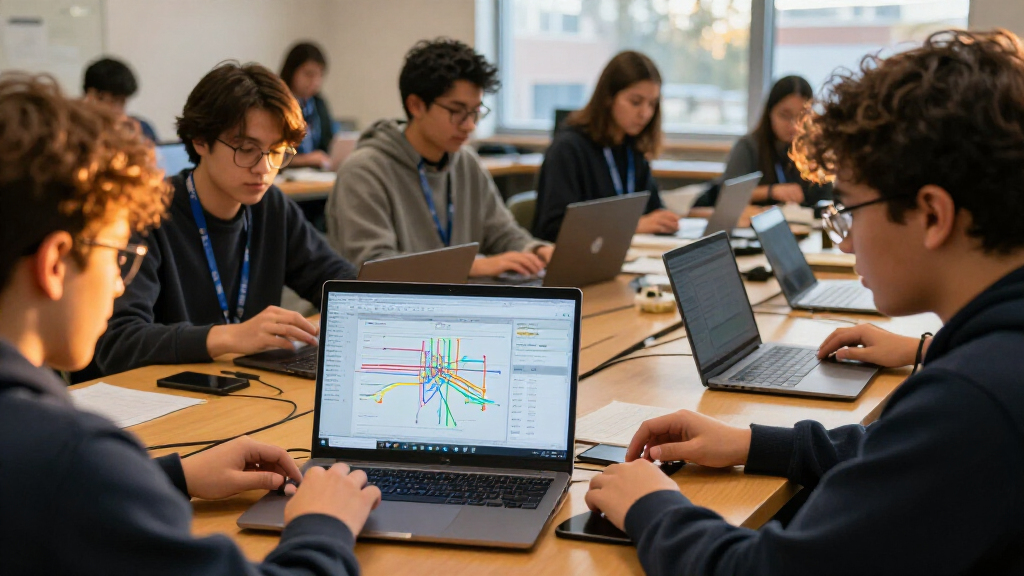
Students at Google’s second annual Colorado Impact Hackathon developed three projects aimed at Colorado’s electric-grid challenges. Google named SolarSnap, Grid Watch and Grid Guard as the first-, second- and third-place projects; the company’s report does not describe implementation plans or independent testing.
Students at Google’s second annual Colorado Impact Hackathon presented projects addressing challenges facing the state’s electric grid, including solar adoption, wildfire-related shutoffs and infrastructure hardening. Google said the event took place at its Boulder offices in partnership with CU Boulder and the Colorado Energy Office, and named three projects as the top finishers.
Google’s report, published October 29, 2026, said participants worked on the question of how to create a clean, secure and resilient electric grid in Colorado. The company listed SolarSnap in first place, Grid Watch in second and Grid Guard in third. The report does not provide the number of students or teams that took part, or explain how the entries were judged.
SolarSnap is described by Google as an AI app that uses a phone camera to help homeowners find a suitable solar-panel setup. Grid Watch is an AI-managed battery network designed to keep power available during wildfire-related shutoffs while reducing electricity costs. Google described Grid Guard as a project that offers predictive capabilities for targeted grid hardening.
Google also said Colorado Attorney General Phil Weiser and CU Boulder Vice Chancellor for Sustainability Andrew Mayock spoke at the event about innovation and the state’s clean-energy future. The company did not include direct quotations from either official in its report.
Student Ideas Target Colorado Grid Risks
The projects focus on practical pressures that can affect households and energy providers: how homeowners assess rooftop solar, how to maintain electricity during wildfire-related shutoffs, and where grid infrastructure may need additional protection. Their selection shows the problems students chose to address, not that the proposed tools have been deployed or shown to work in real-world conditions.
The partnership brought students together with a technology company, a university and a state energy office. That format can give participants a chance to apply technical skills to local problems and put public-sector priorities in front of potential innovators. Google’s account, however, does not detail whether the organizers will support further development, connect teams with utilities or assess the projects after the event.
For Colorado residents, the ideas are relevant because outages and clean-energy decisions can affect home energy costs and reliability. But the available report describes a hackathon and its prize-winning concepts, not a change to grid operations or a new state program.
Products Worth Considering

EcoFlow Smart Home Panel 2 Whole-Home Backup System Hub

Jackery HomePower 3000 Portable Power Station with Two 200W Solar Panels

Anker SOLIX S2000 Portable Power Station, 2,010Wh, 1,500W
As an affiliate, we earn on qualifying purchases.
How the Boulder Hackathon Was Organized
Google called the October gathering its second annual Colorado Impact Hackathon. It was held at the company’s Boulder offices with CU Boulder and the Colorado Energy Office. The event centered on a statewide question about building an electric grid that is cleaner and better able to withstand disruptions.
The three named projects approach that question at different levels. SolarSnap focuses on individual homeowners considering solar panels. Grid Watch proposes coordinating batteries around wildfire-related power shutoffs. Grid Guard focuses on anticipating where grid hardening may be targeted. Google’s short description does not specify the data, equipment or operating arrangements behind those proposals.
In its report, Google connected the event’s themes to wildfire risk and energy backlogs, but did not provide figures or further detail about those issues. That framing comes from the company; the published account primarily documents the event, its partners and the ranked student concepts.
“How can we create a clean, secure, and resilient electric grid in Colorado?”
— Google, describing the hackathon challenge
Project Testing and Follow-Up Remain Unclear
Google’s report does not say whether any of the three concepts are functioning prototypes, plans for future products or early-stage presentations. It gives no technical specifications, test results, cost estimates or evidence that the projects can deliver their stated goals. In particular, the claimed benefits of Grid Watch’s outage support and cost reduction have not been quantified in the report.
The company also does not identify the student teams, provide the number of participants, describe judging criteria or say whether the Colorado Energy Office or CU Boulder will help develop the entries. It remains unclear whether any project will receive funding, be tested with a utility or move beyond the hackathon.
Whether the Winning Concepts Advance
The next public milestone would be any announcement from Google, CU Boulder, the Colorado Energy Office or the student teams about continued development, testing or partnerships. Google’s report does not give a timeline or say that follow-up work is planned. Until more details are released, the confirmed outcome is the event itself and the three projects named as winners, rather than a deployment or policy change.
Key Questions
What was the Colorado Impact Hackathon?
Google described it as its second annual Colorado Impact Hackathon, held at its Boulder offices with CU Boulder and the Colorado Energy Office. Students worked on challenges related to a clean, secure and resilient electric grid.
Which projects placed at the event?
Google named SolarSnap first, Grid Watch second and Grid Guard third. The report does not state how many teams competed or explain the judging process.
What does SolarSnap propose to do?
Google describes SolarSnap as an AI app that uses a phone camera to help homeowners identify a suitable setup for solar panels. The report provides no information about testing or availability.
Will the projects be used on Colorado’s electric grid?
That is not known from Google’s report. It does not announce deployments, funding, utility partnerships or a schedule for further development.
Source: blog.google