
TL;DR

Get business pricing on networking and server gear
- Business-only prices and quantity discounts
- Tax-exempt purchasing
- Multiple users, one account, clear invoices
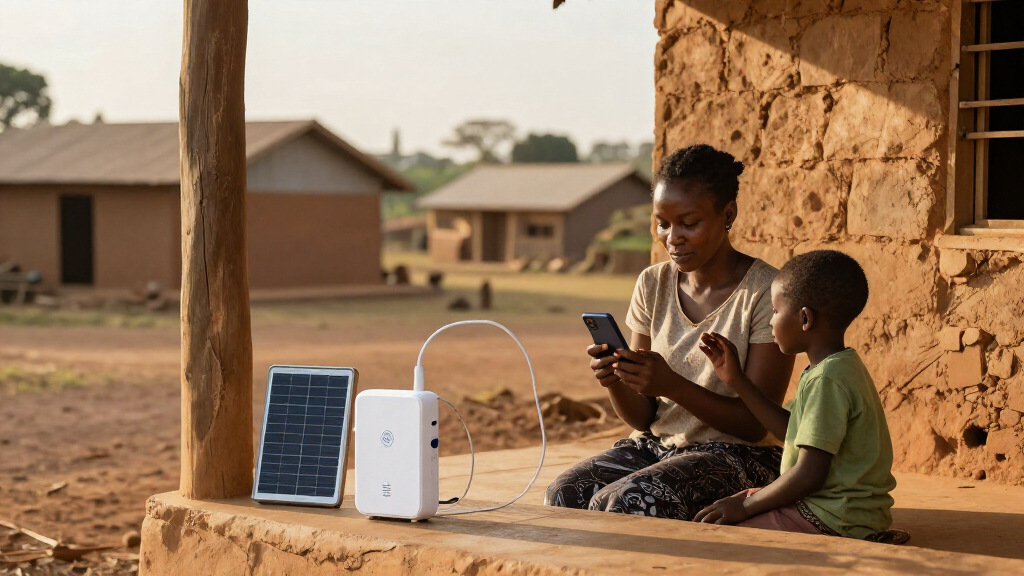
Google and Ignite Energy Access say their three-year collaboration has helped address mapping, routing and supply-chain barriers to delivering off-grid solar in sub-Saharan Africa. Google estimates the partnership enabled more than 160,000 tonnes of CO2-equivalent emissions reductions in the first half of 2026, linked to 3.7 million solar devices delivered across the region since 2023.
Google and Ignite Energy Access say their three-year collaboration has helped tackle mapping and delivery problems that impede off-grid solar deployment in sub-Saharan Africa. Google estimates the partnership enabled more than 160,000 tonnes of CO2-equivalent emissions reductions in the first half of 2026, alongside 3.7 million solar devices delivered across the region since 2023.
The companies’ work targets rural households that may not appear in standard maps and are reached by unmapped dirt paths. Google says its teams combined satellite imagery and its Open Buildings dataset with routing algorithms to help identify households and plan routes. Researchers are also developing geospatial models that incorporate rural paths into routing constraints.
Google says its operations research models help Ignite assess where to place central warehouses and local mini-hubs. The models weigh factors including transport costs, delivery routes, vehicle capacity and inventory expenses. The report does not disclose how much these tools have changed delivery times or costs.
The partnership is also testing computer-vision models to locate small solar installations in satellite images. Google says a rooftop panel can occupy barely one pixel in standard imagery, making large-scale identification difficult. Its researchers are using Gemini for Science models and drone imagery supplied by Ignite to train and test detection methods.
Reaching Homes Beyond Mapped Roads
Off-grid solar can serve households far from established electricity networks, but getting equipment to dispersed homes requires accurate location data and workable delivery plans. The effort described by Google addresses those practical barriers, rather than reporting a new national grid or a completed electrification program.
The potential scale is substantial: Google says more than 600 million people in sub-Saharan Africa live without electricity. The company’s reported emissions estimate and device-delivery count offer indicators of activity, but do not establish how many households gained reliable power, how long systems remain in use, or whether the results can be replicated in other locations.
Better maps of existing solar installations could also help operators identify areas with fewer systems and direct future deployments. That benefit depends on the accuracy of models still being tested, as well as on whether the information is useful to local energy providers and communities.
Products Worth Considering

Logitech MX Master 4 for Mac, Ergonomic Bluetooth Mouse with Haptic Feedback, Ultra-Fast Scrolling, USB-C Charging, for MacOS, iPadOS, Windo

Anker SOLIX C200 DC Portable Power Station, 192Wh, 200W

Jackery HomePower 3600 Plus Portable Power Station, 3584Wh, 3600W
As an affiliate, we earn on qualifying purchases.
Three Years of Mapping and Delivery Work
Google describes the collaboration as part of its Startups for Sustainable Development program. Over three years, Ignite staff worked with Google researchers, engineers and data specialists in more than 100 advisory sessions, according to the company. Ignite’s stated goal is to connect 100 million people across Africa to electricity by 2030; that is an organizational target, not a result reported as achieved.
The report frames the work around three linked obstacles: finding homes without formal addresses, reaching them across difficult terrain, and detecting existing solar systems from space. It says the partnership has delivered 3.7 million solar devices since 2023, but does not break down those deliveries by country, device type or year.
Google also says the partners are beginning to model community microgrids for electric cooking. Such stoves need more power than a single household rooftop kit can provide. The proposed work is at the modeling stage, rather than a reported rollout of operating cooking microgrids.
“In the first half of 2026 alone, we estimate our partnership with Ignite Energy Access has enabled over 160,000 tCO2e in emissions reductions.”
— Google, in its October 26, 2026 report
How the Reported Impact Was Measured
Google characterizes the 160,000-tonne CO2e figure as an estimate. Its report does not explain the calculation, specify a comparison scenario, or say whether an outside body reviewed it. It also does not identify the countries where the 3.7 million devices were delivered or explain how many are active and providing electricity.
The mapping and satellite-detection work is described as ongoing development and testing. Google gives no accuracy scores for the models, and the report does not say when or where they will be deployed at scale. The proposed clean-cooking microgrids are also still being modeled; construction plans, funding and operating timelines are not provided.
Testing Microgrids for Clean Cooking
Google says it and Ignite are preparing a next phase focused on community-level microgrids that could supply enough electricity for clean electric cooking. The companies have not announced a deployment schedule or confirmed a pilot site. The next reported milestones would be details on model testing, field validation and whether the solar-mapping tools guide further deliveries.
For now, the October report presents the collaboration’s reported delivery and emissions figures alongside tools still under development. Further evidence on model performance, household electricity access and the emissions methodology would help clarify the scale and durability of the results.
Key Questions
What did Google and Ignite Energy Access report?
Google says the three-year partnership has helped address mapping and logistics barriers to off-grid solar delivery. It reports 3.7 million devices delivered since 2023 and estimates more than 160,000 tonnes of CO2e reductions in the first half of 2026.
Where were the solar devices delivered?
The report says they were delivered across sub-Saharan Africa, but does not list countries or provide a country-by-country breakdown.
Has the partnership connected 100 million people?
No such result is reported. Google describes connecting 100 million people across Africa by 2030 as Ignite’s goal, not a completed achievement.
Are the clean-cooking microgrids operating?
The report says the partners are modeling community-level microgrids for electric cooking. It does not announce operating systems, pilot locations or a rollout date.
Source: rss