
If you ignore rack cable management for too long, costs quickly add up. Disorganized cables make troubleshooting slow and difficult, leading to more downtime and higher repair expenses. Poorly managed cables can cause physical damage, increasing hardware failures and replacement costs. They also block airflow, causing overheating and increasing energy bills. Over time, the clutter complicates future upgrades and maintenance, making issues even more costly. Keep watching to learn how proper cable management can save you money and headaches.

Get business pricing on networking and server gear
- Business-only prices and quantity discounts
- Tax-exempt purchasing
- Multiple users, one account, clear invoices
Key Takeaways
- Ignoring cable management leads to physical damage, causing costly repairs or replacements over time.
- Disorganized cables obstruct airflow, increasing overheating and hardware failure expenses.
- Unlabeled or tangled cables result in longer troubleshooting, raising labor and downtime costs.
- Poor cable organization complicates future upgrades, increasing long-term maintenance expenses.
- Damage and inefficiencies from neglect escalate energy costs and reduce system lifespan.
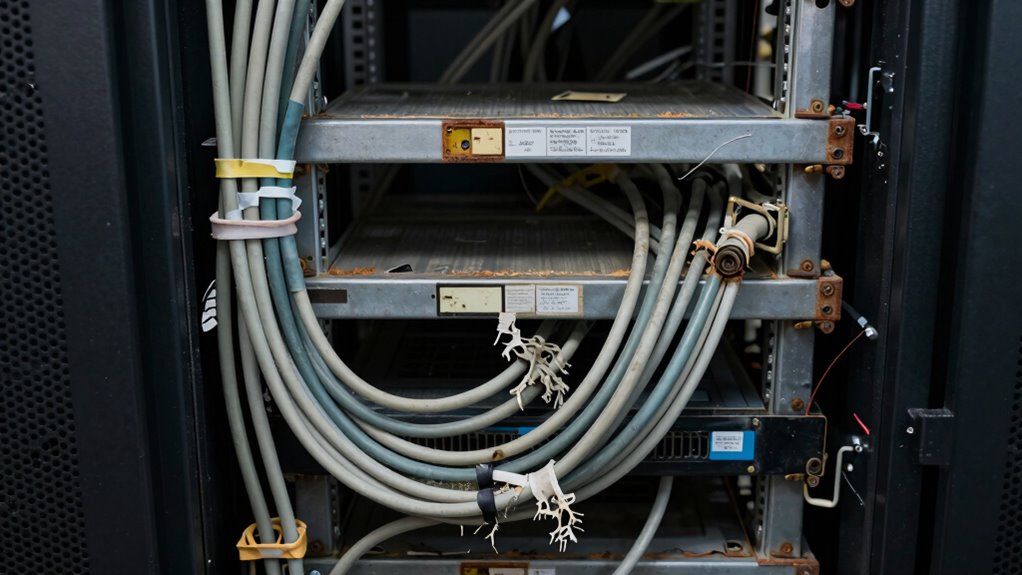
Proper rack cable management might seem like a straightforward task, but over time, neglecting it can lead to escalating costs. When cables become tangled and disorganized, troubleshooting becomes a nightmare, and identifying specific connections can feel like searching for a needle in a haystack. If you haven’t prioritized cable management, you might be missing out on the benefits of wireless alternatives, which can reduce the number of cables clogging your racks. However, even with wireless tech, some cables are unavoidable, making cable labeling indispensable. Without clear labels, you waste time trying to trace connections, and that inefficiency quickly adds up financially.
Ignoring cable management can cause physical damage to your infrastructure. Over time, cables can bend, strain, or even tear if left unmanaged. This not only risks data loss or hardware failure but also means costly repairs or replacements down the line. The more you delay organizing your cables, the more likely you are to encounter these preventable issues. Additionally, poorly managed cables obstruct airflow, leading to overheating and increased energy costs. When your hardware runs hotter, it’s less efficient and more prone to failure, forcing you to spend extra on cooling systems and replacements. All this could have been avoided with a simple, consistent cable management strategy. Proper rack cable management can also improve overall system reliability and lifespan.
Furthermore, neglecting organization increases the risk of accidental disconnections. If cables aren’t properly labeled or secured, someone might inadvertently unplug the wrong device, causing unexpected downtime. This kind of disruption can be extremely costly, especially if it happens during critical operations. Implementing cable labeling from the start helps prevent these issues, making maintenance faster and less disruptive. It’s a small investment that pays off by saving you hours of troubleshooting and minimizing system downtime. Additionally, considering structured cabling can streamline future upgrades and reduce the complexity of managing your setup. Proper organization also helps maintain proper cable routing, which can prevent tangling and minimize wear and tear. A well-planned cabling infrastructure ensures that any future changes or expansions are more manageable and cost-effective. Recognizing that cable management is an ongoing process, rather than a one-time setup, can significantly reduce long-term expenses.
As you consider the long-term costs, think about integrating wireless alternatives where possible. Removing unnecessary cables decreases clutter and reduces the chance of physical damage. Yet, for the remaining wired connections, proper labeling and secure routing are crucial. If you ignore these practices, the costs compound—more time spent on maintenance, higher energy bills, and increased risk of hardware failure. Ultimately, what begins as a simple oversight can turn into a costly problem that’s tough to undo. Staying proactive with cable management keeps your rack organized, reduces expenses, and ensures your system runs smoothly over time.
As an affiliate, we earn on qualifying purchases.
Frequently Asked Questions
How Often Should I Update My Rack Cable Management System?
You should update your rack cable management system every few months, especially if you add new cables or notice clutter. Regularly maintaining a cable tidy prevents tangles and improves airflow. Use organization tips like cable ties, labels, and cable management panels to keep everything neat. Frequent updates help catch issues early, avoid costly repairs, and guarantee your system remains efficient and safe. Staying proactive saves time and money in the long run.
What Are the Signs of Poor Cable Management?
Poor cable management is like a tangled jungle of cable clutter, making your rack look chaotic. Signs include disorganized power distribution, difficulty accessing equipment, and frequent disconnections. Over time, this mess can cause overheating, slowdowns, and even equipment failure. If you notice cables crossing, sagging, or blocking airflow, it’s time to tame the chaos—otherwise, you risk costly repairs and downtime. Keep things neat to avoid these costly pitfalls.
Can Professional Cable Management Save Costs Long-Term?
Yes, professional cable management can save you costs long-term. By using modular systems and wireless alternatives, you reduce the risk of damage and downtime, which can be costly. Proper organization makes maintenance easier and prevents expensive repairs. Investing in quality cable management solutions now means fewer disruptions later, ultimately saving you money and enhancing your system’s reliability. Plus, it keeps your setup clean and efficient.
Are There Affordable Solutions for Small-Scale Rack Management?
Yes, there are affordable options for small-scale rack management. You can start with basic cable ties, Velcro straps, and inexpensive cable management panels. These small-scale solutions are cost-effective and easy to implement, helping you keep cables organized without breaking the bank. Investing in simple tools now prevents costly upgrades later, ensuring your setup stays tidy and functional without overspending.
How Does Cable Management Affect Server Cooling Efficiency?
Think of your server rack as a heartbeat; good cable management keeps the blood flowing smoothly. Proper cable airflow guarantees heat dissipation, preventing hotspots that can cause overheating. When cables are tangled or blocking airflow, heat builds up, making cooling less efficient. Clear, organized cables allow for ideal heat dissipation, maintaining server performance and longevity. Neglecting this can turn a healthy system into a costly repair in disguise.
As an affiliate, we earn on qualifying purchases.
Conclusion
Ignoring rack cable management is like neglecting a garden—you might save time now, but weeds grow wild and choke the beauty later. Over time, tangled cables become a tangled web, trapping your equipment in chaos. When you finally tend to it, the cost and effort skyrocket, like trying to prune thick vines grown wild. Stay proactive, keep it neat, and you’ll prevent the storm before it starts—sowing order before chaos takes root.
As an affiliate, we earn on qualifying purchases.
As an affiliate, we earn on qualifying purchases.
Halloween Picks
halloween
As an affiliate, we earn on qualifying purchases.