TL;DR

Get business pricing on networking and server gear
- Business-only prices and quantity discounts
- Tax-exempt purchasing
- Multiple users, one account, clear invoices
A report published by viceconsole.fyi on October 10, 2026, describes how its author moved a household from streaming platforms to Jellyfin and expanded a home server to run services including budgeting, audiobooks and backups. The setup uses a Beelink Mini PC with 16 GB of RAM, and the author says most services are kept off the public internet and managed with systemd and Podman.
A report published by viceconsole.fyi on October 10, 2026, describes how its author replaced streaming subscriptions with a self-hosted Jellyfin media library and went on to run other household services on a small home server. The account lays out the hardware, software choices and connectivity limits behind the setup, offering a concrete example of what one household can operate without relying on cloud providers for every service.
The author says the shift followed a few years living in India, where streaming subscriptions were less expensive by Western standards. After leaving, the author was reluctant to pay higher prices and wanted more control over what their son watched. Recommendations and automatic playback on streaming services had become a source of household conflict. The author says configuring title limits and autoplay settings separately across services, then maintaining them as apps changed, required too much work.
Jellyfin became the replacement for streaming video, and the author says it led to hosting additional services over the next year and a half. The listed examples include Actual Budget for household expense tracking, Audiobookshelf for audiobooks and podcasts, Automatic Ripping Machine for DVDs, and Backrest to manage Restic backups. The author still uses a cloud service to track investment accounts and does not use Actual Budget’s automatic bank transaction imports, instead importing transactions manually at month end.
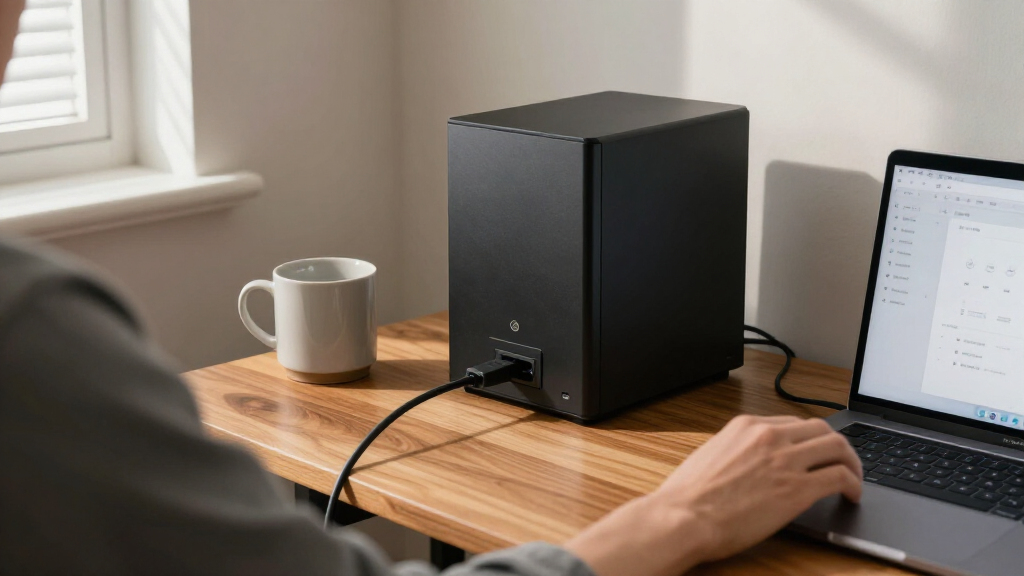
The server is a Beelink S12 Pro with an Intel N100 processor, 16 GB of RAM and a 512 GB internal SSD, paired with a 6 TB media drive. The author reports paying €180 before a surge in memory prices; the same Amazon listing was €359 at the time of writing. Services run natively where practical, while more complex applications use Podman. The author says they prefer Podman’s integration with systemd and no longer use Docker.
A Home Server With Practical Limits
The report shows how a household’s priorities can shape a self-hosting setup: control over media choices, reduced reliance on subscription services, and the ability to choose when software is updated. The author describes reading release notes and deciding whether and when to upgrade, instead of receiving changes through hosted services. That arrangement gives the operator more control, while also making maintenance and service availability their responsibility.
The account also shows that the stated hardware is modest for the listed non-AI services. The author says those services have worked on the 16 GB system, sometimes with simple configuration changes, while making clear that it is not used for local AI inference. This is a report from one household, rather than a performance test or a claim that the same configuration will suit every workload.
Access away from home is a trade-off. The author keeps services off the public internet, apart from VPN servers on the router, and says the ISP’s carrier-grade NAT makes the home network unreachable over IPv4. The VPN is publicly reachable only over IPv6. According to the author, that is workable for their needs but can fail on public Wi-Fi networks that do not offer IPv6; mobile data is a fallback when available.
As an affiliate, we earn on qualifying purchases.
From Jellyfin to Household Services
The author places the current setup in a longer history of running personal technology. In university, they hosted a website from a Linux computer under a bed; the account recalls downtime when a roommate switched it off because of the fan noise. Later, the author ran MythTV and then XBMC, which was renamed Kodi. The recent move to Jellyfin follows that earlier interest in operating media software at home.
The report presents the setup as a response to specific preferences rather than a universal guide. The author wants fewer subscription costs and less exposure to redesigns, feature changes and service notices. Their operating rules include avoiding direct public access to services, preferring native installations when possible, and using containers when complexity or dependencies justify them. The service list is explicitly personal: it includes a cloud-based exception for investments and manual steps for bank transactions.
“I don’t expose any services directly to the public internet.”
— The report’s author
As an affiliate, we earn on qualifying purchases.
Costs and Connectivity Trade-Offs
The report does not provide a full cost comparison between the server and the streaming subscriptions it replaced. It also does not detail electricity use, maintenance time, uptime, or the cost of the storage and other equipment, so the account cannot establish whether the setup saves money overall. The Amazon price cited for the mini PC is a listing price at the time of writing, not a measure of its longer-term cost.
The author describes IPv6-only VPN access as a workable constraint for their household, but does not quantify how often public Wi-Fi prevents a connection. The article also gives no independent security assessment of the setup or measured performance results. Its observations concern the author’s own services, network and use patterns.
As an affiliate, we earn on qualifying purchases.
Further Moves Away From Cloud
The author says they may eventually try to move investment tracking away from a cloud service, but gives no timetable or named replacement. For now, that service remains an exception to the household’s self-hosted setup.
The report describes ongoing choices rather than a fixed endpoint: the author reviews software release notes and decides when to upgrade, while continuing to use manual transaction imports and IPv6 VPN access. It does not announce a new product, service launch or planned hardware change.
As an affiliate, we earn on qualifying purchases.
Key Questions
What prompted the move to self-hosted media?
The author says higher streaming prices after leaving India and frustration with recommendations and autoplay helped prompt the switch to Jellyfin. They also wanted more control over the programming available to their son.
What hardware does the server use?
The reported system is a Beelink S12 Pro with an Intel N100 processor, 16 GB of RAM and a 512 GB SSD. A separate 6 TB hard drive stores media.
How does the author access services away from home?
The author uses VPN servers on the router and says they are publicly reachable over IPv6 only. Public Wi-Fi without IPv6 can prevent a connection; mobile data is one possible fallback.
Does the author run every service locally?
No. The author says investment accounts remain on a cloud service. Actual Budget is used for expense tracking, with transactions imported manually rather than fetched automatically from banks.
Source: hn
Halloween Picks
halloween
As an affiliate, we earn on qualifying purchases.