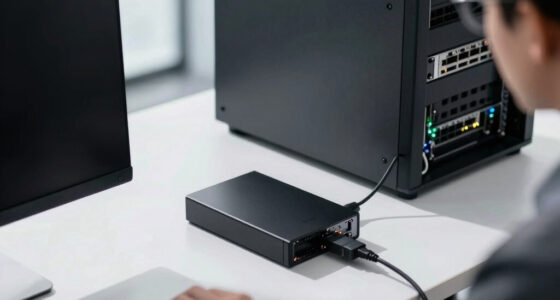

Combining server room access control with environmental monitoring helps you secure your data and hardware more effectively. Access systems restrict entry to authorized personnel, while environmental sensors track temperature, humidity, and airflow to prevent damage. When integrated, these systems share real-time data, allowing you to respond quickly to security breaches or environmental issues. This seamless connection boosts operational efficiency and safety. To discover how this integration can benefit your setup even further, keep exploring the possibilities.

Get business pricing on networking and server gear
- Business-only prices and quantity discounts
- Tax-exempt purchasing
- Multiple users, one account, clear invoices
Key Takeaways
- Integration enables real-time alerts for both security breaches and environmental anomalies, allowing swift responses.
- Access logs are combined with environmental data for comprehensive security audits and incident analysis.
- Automated systems can restrict access or activate cooling based on combined security and environmental conditions.
- Centralized management systems synchronize access control and environmental monitoring for efficient oversight.
- Enhanced security protocols protect critical infrastructure by preventing unauthorized access during environmental hazards.
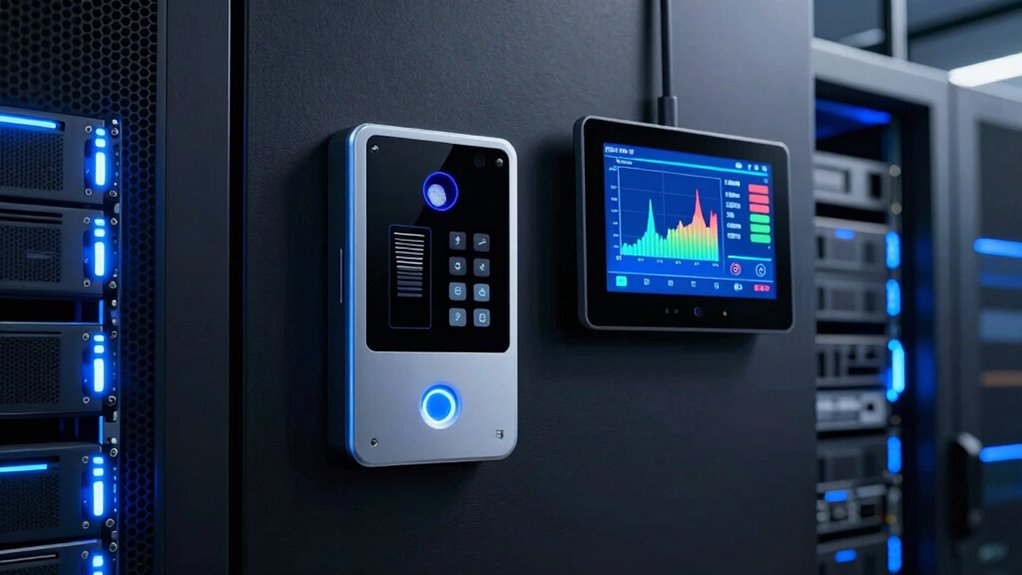
Maintaining the security and ideal conditions of your server room is essential for protecting critical data and ensuring continuous operations. When you implement effective access control, you establish a foundation that limits entry to authorized personnel, reducing the risk of physical breaches. But access control alone isn’t enough; you need environmental monitoring to keep conditions perfect. Together, these systems form a thorough approach that safeguards both your hardware and data.
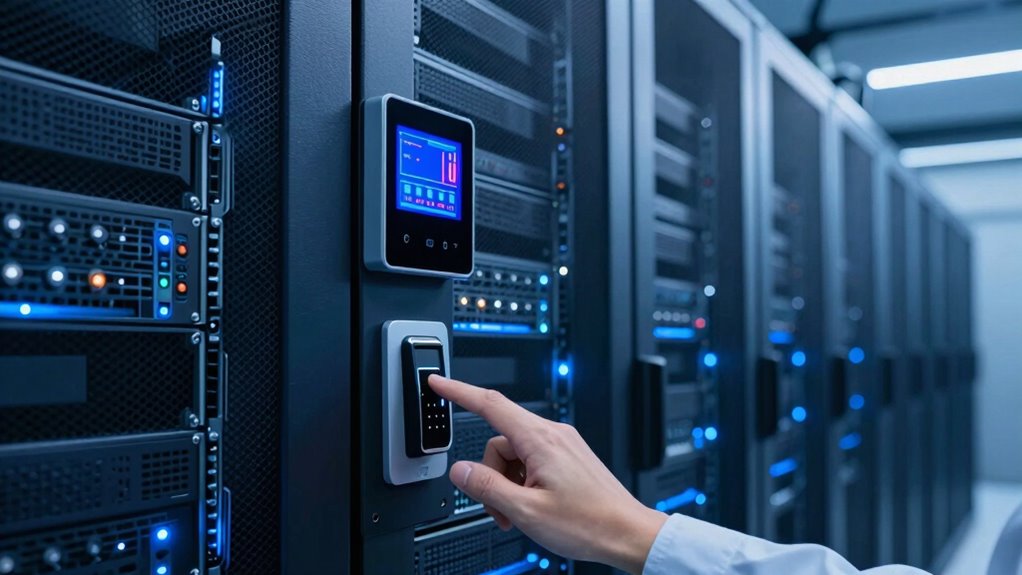
Security protocols are key for controlling who enters your server room. Using methods like biometric scans, key cards, or PIN entries, you can verify identities and log every access attempt. When these security protocols are integrated into a broader system, they not only restrict unauthorized entry but also enable real-time monitoring and quick response if something unusual occurs. System integration plays a central role here, connecting access control with other security layers such as surveillance cameras and alarm systems. This interconnected setup ensures that if someone attempts to breach security, alerts are triggered immediately, and security teams can respond swiftly.
Integrating access control with surveillance and alarms enables real-time monitoring and swift security responses.
Environmental monitoring complements access control by maintaining ideal temperature, humidity, and airflow levels. Proper environmental conditions are essential to prevent equipment overheating, condensation, or static buildup, which can lead to hardware failures or data loss. Sensors placed throughout the server room constantly track these parameters and relay data to centralized management systems. When integrated with access control, environmental monitoring creates a unified security ecosystem. For example, if access is granted to a technician, the system can automatically verify that environmental conditions are within safe limits before allowing maintenance activities. Conversely, if temperature sensors detect abnormal heat, the system can trigger alerts or even lock down the room if an unauthorized entry is detected. Additionally, system integration enhances overall operational efficiency by enabling automated responses to environmental or security anomalies. Incorporating real-time data analysis further improves responsiveness and decision-making in critical situations. Moreover, understanding the importance of system interoperability can significantly improve the effectiveness of these combined security measures. Implementing these interconnected systems can also help in preventing hardware damage, which is vital for maintaining continuous operations and avoiding costly downtime.
The true strength lies in how these systems work together seamlessly. When you synchronize access control with environmental monitoring through system integration, you gain real-time visibility and control. This setup allows you to automate responses—such as activating cooling systems if temperatures rise or locking down the room if an unauthorized entry is detected. It also streamlines management, reducing manual oversight and minimizing human error. Additionally, leveraging advanced security protocols further fortifies your infrastructure against potential threats. Ultimately, integrating these systems enhances your server room’s security and reliability, ensuring that your critical infrastructure operates smoothly and safely. By leveraging advanced security protocols and system integration, you create a resilient environment that protects your data assets and supports your operational continuity.
server room access control system
As an affiliate, we earn on qualifying purchases.
As an affiliate, we earn on qualifying purchases.
Frequently Asked Questions
How Do Access Control Systems Handle Emergency Situations?
During emergencies, access control systems prioritize safety by automatically releasing doors to allow quick evacuation, following predefined emergency protocols. You should guarantee staff training includes clear procedures for such situations, so everyone knows how to respond swiftly. These systems can also be integrated with environmental monitoring to detect hazards like fires or floods, enabling immediate alerts and safe access for emergency responders, ultimately protecting both personnel and sensitive equipment.
Can Environmental Monitoring Trigger Automatic Access Restrictions?
Yes, environmental triggers can automatically activate access restrictions. When sensors detect issues like excessive temperature, humidity, or smoke, the system can restrict access to prevent further damage or risk. You’ll find that this integration enhances security and safety, as it guarantees access is limited during environmental emergencies. This proactive approach helps protect your server room by automatically responding to environmental threats without delays.
What Are the Cybersecurity Risks of Integrated Systems?
Integrated systems can pose cybersecurity risks if not properly secured. Hackers might exploit vulnerabilities through weak data encryption or compromised user authentication, gaining access to sensitive areas or environmental controls. You need to guarantee strong encryption protocols and multi-factor authentication to protect against unauthorized access. Regular updates and monitoring help detect threats early, keeping your server room’s access control and environmental systems safe from cyberattacks.
How Often Should Environmental Sensors Be Calibrated?
You should calibrate environmental sensors at least once a year to guarantee sensor calibration and maintain environmental accuracy. Regular calibration helps identify any drift or inaccuracies that could compromise your data. In some cases, more frequent calibration—every six months—may be necessary, especially in environments with fluctuating conditions. Consistent calibration ensures your monitoring system remains reliable, protecting your server room from environmental risks and supporting ideal operation.
Are There Industry Standards for Combined Access and Environmental Systems?
Think of your server room like a fortress, where access integration and environmental monitoring are the guards. Industry standards, like ISO/IEC 27001 and specific security protocols, guide how these systems work together. They guarantee standard compliance, making your security more reliable and cohesive. While specific combined standards are evolving, aligning with established cybersecurity and environmental norms helps you strengthen your defenses and maintain a secure, well-monitored environment.
environmental monitoring sensors for server room
As an affiliate, we earn on qualifying purchases.
As an affiliate, we earn on qualifying purchases.
Conclusion
By integrating server room access control with environmental monitoring, you create a fortress that’s smarter and more responsive. Think of it as having a modern-day knight with a digital shield and a crystal ball—protecting your data from both intruders and environmental threats. When they work in harmony, you’re not just reacting to issues; you’re preventing them entirely. It’s like having a trusty robot sidekick—always vigilant, always ready—making your server room a true bastion of security.
biometric access control for data center
As an affiliate, we earn on qualifying purchases.
As an affiliate, we earn on qualifying purchases.
server room temperature humidity monitor
As an affiliate, we earn on qualifying purchases.
As an affiliate, we earn on qualifying purchases.
Fall Picks
fall essentials
As an affiliate, we earn on qualifying purchases.