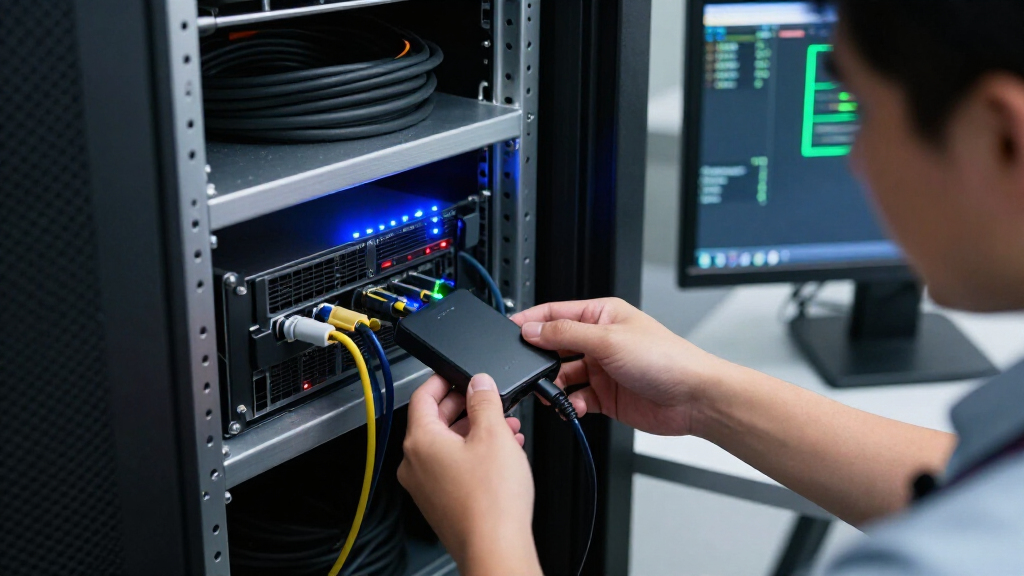
For most server backup workflows, I’d start with the Samsung T9 Portable SSD 4TB: its large capacity and up-to-2,000MB/s transfer speed make it a strong fit for frequent, sizable backup jobs. The Samsung T7 2TB is a more straightforward pick for routine backups, while the Crucial X10 Pro 1TB suits buyers prioritizing fast transfers in a smaller drive. The key tradeoffs are capacity versus transfer speed, ruggedness versus size, and whether your server’s USB port can use a drive’s fastest mode. A fast SSD cannot replace a second backup copy or a tested restore plan. Read on for how the 11 options compare and which one fits your setup.

Get business pricing on networking and server gear
- Business-only prices and quantity discounts
- Tax-exempt purchasing
- Multiple users, one account, clear invoices
Key Takeaways
- The Samsung T9 4TB leads for large backup sets: its capacity and 2,000MB/s rated speed make it more suited to repeated, sizable transfers than the 1TB models.
- The Samsung T7 2TB is the balanced everyday choice: it offers a familiar USB 3.2 Gen 2 connection and up to 1,050MB/s speeds without requiring a higher-bandwidth setup.
- High speed depends on the host, not just the drive: the Samsung P7’s 4,000MB/s rating and the faster SanDisk model’s 2,000MB/s rating matter only when the server port and cable support the relevant performance.
- SanDisk’s Extreme options prioritize ruggedness: they offer a different fit from the simpler SanDisk Portable Drive, whose stated 600MB/s read speed favors basic transfers over speed-focused jobs.
- Capacity and backup design matter as much as headline speed: a 1TB drive can be a poor fit for a server with large incremental history, and one portable SSD alone is not a complete backup strategy.
| SanDisk Extreme Portable SSD, 2TB |  | Best Overall for Rugged, Encrypted Backups | Storage capacity: 2 TB | Interface: USB-C | Read speed: Up to 1050 MB/s | VIEW LATEST PRICE | See Our Full Breakdown |
| Samsung T7 Portable SSD 2TB Titan Gray, USB 3.2 Gen 2 | 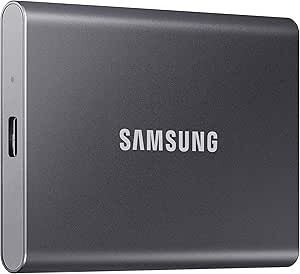 | Best for Straightforward Cross-Platform Backups | Storage capacity: 2 TB | Interface: USB 3.2 Gen 2 | Read speed: Up to 1050 MB/s | VIEW LATEST PRICE | See Our Full Breakdown |
| SanDisk Extreme PRO 2TB Portable SSD |  | Best for High-Throughput Backup Workflows | Storage capacity: 2 TB | Connector: USB Type-C | Maximum read speed: Up to 4,000 MB/s | VIEW LATEST PRICE | See Our Full Breakdown |
| SanDisk 1TB Portable Drive, Up to 600MB/s Read Speeds – Black |  | Best Compact Option for Small Backup Sets | Storage capacity: 1 TB | Interface: USB Type-C | Read speed: Up to 600 MB/s | VIEW LATEST PRICE | See Our Full Breakdown |
| SanDisk 2TB Extreme Portable SSD – Up to 1050 MB/s Read Speed |  | Best for Secure Off-Site Rotation | Capacity: 2 TB | Interface: USB 3.2 Gen 2 | Read speed: Up to 1050 MB/s | VIEW LATEST PRICE | See Our Full Breakdown |
| Crucial X10 Pro 1TB Portable SSD, USB-C, Black |  | Best for Fast, Rugged 1TB Backups | Storage capacity: 1 TB | Maximum read speed: Up to 2,100 MB/s | Maximum write speed: Up to 2,000 MB/s | VIEW LATEST PRICE | See Our Full Breakdown |
| SanDisk 1TB Portable SSD – Up to 1000 MB/s Read Speed, Black |  | Best for Simple, Pocketable Backups | Storage capacity: 1 TB | Maximum read speed: Up to 1,000 MB/s | Interface: USB-C; USB 3.0 listed | VIEW LATEST PRICE | See Our Full Breakdown |
| Samsung Portable SSD P7 1TB, Read/Write Speeds up to 4,000/3,700 MB/s |  | Best for USB4 Backup Workstations | Storage capacity: 1 TB | Maximum read speed: Up to 4,000 MB/s | Maximum write speed: Up to 3,700 MB/s listed; up to 3,800 MB/s in the product description under specified conditions | VIEW LATEST PRICE | See Our Full Breakdown |
| Samsung T9 Portable SSD 4TB, USB 3.2 Gen 2×2, Up to 2,000 MB/s | 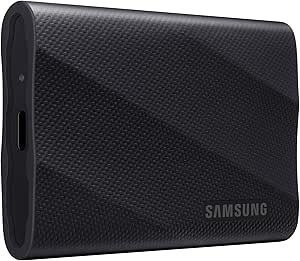 | Best for High-Capacity Backup Rotation | Storage capacity: 4 TB | Interface: USB 3.2 Gen 2×2 | Maximum read/write speed: Up to 2,000 MB/s | VIEW LATEST PRICE | See Our Full Breakdown |
| SanDisk 1TB Extreme Portable SSD – Up to 2000 MB/s Transfer Speeds (New Model) |  | Best for Encrypted Backup Copies on the Move | Storage capacity: 1 TB | Maximum read speed: Up to 2,000 MB/s | Write speed: Lower than read speed; varies by host | VIEW LATEST PRICE | See Our Full Breakdown |
| Samsung T5 Portable SSD 2TB, USB 3.1, Black (MU-PA2T0B/AM) | 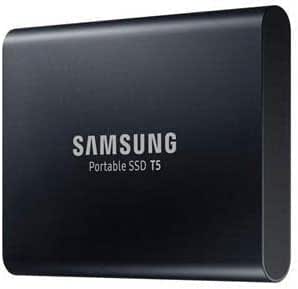 | Best for Straightforward, Encrypted Backups | Capacity: 2 TB | Interface: USB 3.1 | Transfer speed: Up to 540 MB/s | VIEW LATEST PRICE | See Our Full Breakdown |
| portable SSDs for server backup | Interface | Drop protection | Storage capacity | Encryption |
|---|---|---|---|---|
| SanDisk Extreme Portable SSD | USB-C | Up to 3 meters | 2 TB | 256-bit AES hardware encryption |
| Samsung T7 Portable SSD 2TB Ti | USB 3.2 Gen 2 | Up to 6 feet | 2 TB | 256-bit AES hardware encryption |
| SanDisk Extreme PRO 2TB Portab | — | Up to 3 meters | 2 TB | 256-bit AES password protection |
| SanDisk 1TB Portable Drive | USB Type-C | Up to 2 meters | 1 TB | — |
| SanDisk 2TB Extreme Portable S | USB 3.2 Gen 2 | Up to 3 meters | — | 256-bit AES hardware encryption |
| Crucial X10 Pro 1TB Portable S | USB-C, 20 Gbps data transfer rate | Up to 7.5 ft (2 m) | 1 TB | — |
| SanDisk 1TB Portable SSD | USB-C; USB 3.0 listed | Up to 2 meters | 1 TB | — |
| Samsung Portable SSD P7 1TB | USB4 performance; USB Type-C | Up to 6.5 ft | 1 TB | — |
| Samsung T9 Portable SSD 4TB | USB 3.2 Gen 2×2 | Up to 9.8 ft | 4 TB | AES 256-bit hardware encryption |
| SanDisk 1TB Extreme Portable S | USB 3.0; USB Type-C connectivity | Up to 3 meters | 1 TB | 256-bit AES password protection |
| Samsung T5 Portable SSD 2TB | USB 3.1 | — | — | AES 256-bit hardware encryption; optional password protection |
More Details on Our Top Picks
SanDisk Extreme Portable SSD, 2TB
For a server administrator who carries backup copies between locations, this 2TB SanDisk Extreme balances useful capacity, strong transfer speeds, and physical protection. Its IP65 rating and three-meter drop protection offer more reassurance on the move than the Samsung T7, whose listed protection is limited to shock resistance and drops up to six feet. Hardware encryption adds a privacy layer if the drive is lost, while Time Machine support also suits Mac-based backup routines. The tradeoff is that its maximum speeds require a compatible USB-C host, and 2TB may fill quickly when keeping several generations of server images. Compared with the much faster SanDisk Extreme PRO, this is the more practical pick for routine backup transfers rather than demanding, sustained workstation workloads.
Pros:- IP65 water and dust resistance plus drop protection up to three meters
- 256-bit AES hardware encryption for portable backup copies
- Up to 1050 MB/s read and 1000 MB/s write speeds
- Time Machine support and a carabiner loop for portable use
Cons:- Reaching maximum speeds depends on a compatible host and connection
- 2TB can be restrictive for multiple long-term backup generations
- USB-C may require an adapter with older server or workstation ports
Best for: Small-business administrators and Mac users who need a rugged, encrypted 2TB drive for rotating off-site server backups
Not ideal for: Teams retaining many full server images or moving very large datasets daily; its 2TB capacity and standard Extreme-series speeds may be limiting
- Storage capacity:2 TB
- Interface:USB-C
- Read speed:Up to 1050 MB/s
- Write speed:Up to 1000 MB/s
- Water and dust resistance:IP65
- Drop protection:Up to 3 meters
- Encryption:256-bit AES hardware encryption
- Warranty:5-year limited warranty
Our verdict“Choose this SanDisk for portable, encrypted backup copies that need better environmental protection than the Samsung T7 offers.”
Samsung T7 Portable SSD 2TB Titan Gray, USB 3.2 Gen 2
The Samsung T7 is a sensible choice when a backup drive needs to move between a server, a PC, and other devices without demanding a ruggedized build. Its USB 3.2 Gen 2 connection supports up to 1050 MB/s reads and 1000 MB/s writes, putting it in the same speed class as the SanDisk Extreme, while the included USB-C-to-C and USB-C-to-A cables make more host connections convenient. Its aluminum body and six-foot drop protection help with everyday transport, but it lacks the SanDisk Extreme’s stated IP65 resistance and three-meter drop protection. The T7 also lists 256-bit AES hardware encryption, though the supplied details do not specify a rugged weather rating. I would favor it for organized, indoor backup rotation—not for frequent field transport or wet, dusty environments.
Pros:- Up to 1050 MB/s read and 1000 MB/s write speeds
- USB-C-to-C and USB-C-to-A cables included
- Aluminum unibody with shock resistance and protection from drops up to six feet
- 256-bit AES hardware encryption and compatibility across PC, Mac, Android, and consoles
Cons:- No IP water or dust-resistance rating is listed
- Drop protection is less than the three-meter rating of the SanDisk Extreme models
- Maximum throughput requires a compatible USB 3.2 Gen 2 host and cable
Best for: IT staff who rotate backups among USB-C and USB-A computers and value included cable options and broad device compatibility
Not ideal for: Administrators who transport drives through rough or exposed environments and need an explicit water- and dust-resistance rating
- Storage capacity:2 TB
- Interface:USB 3.2 Gen 2
- Read speed:Up to 1050 MB/s
- Write speed:Up to 1000 MB/s
- Drop protection:Up to 6 feet
- Encryption:256-bit AES hardware encryption
- Dimensions:3.3 × 2.2 × 0.3 inches
- Weight:2.08 ounces
Our verdict“Pick the T7 for fast, cross-platform backup rotation in controlled settings, but choose the SanDisk Extreme for tougher conditions.”
SanDisk Extreme PRO 2TB Portable SSD
When backup jobs involve repeated transfers of large image files or media-heavy server data, the Extreme PRO offers the highest stated throughput in this group: up to 4,000 MB/s reads and 3,100 MB/s average sustained writes. That sustained-write figure is more relevant to long transfers than a brief peak alone. Against the standard SanDisk Extreme and Samsung T7, it can shorten compatible-host transfer windows substantially, though only a fast enough interface lets the drive approach its advertised ceiling. Its IP65 protection, three-meter drop rating, and 256-bit AES password protection also suit transport between sites. Those advantages come with setup and compatibility caveats: password protection requires software, and support is specified for Windows 10+ and macOS 13+. For ordinary nightly backups, the less costly-throughput class of the T7 may be plenty.
Pros:- Up to 4,000 MB/s reads and 3,100 MB/s average sustained writes
- IP65 dust and water resistance with up to three-meter drop protection
- 256-bit AES password protection
- Pocket-sized 2TB capacity for moving substantial backup sets
Cons:- Maximum performance depends on a compatible host and interface
- Password protection requires a software download and supports specified newer operating systems
- Its high throughput may provide little benefit for routine backups on slower server ports
Best for: Administrators and creative teams moving large backup sets regularly over high-speed USB-C systems and needing encrypted portable storage
Not ideal for: Users with older hosts or modest backup volumes who cannot use the higher speeds or do not want to manage encryption software compatibility
- Storage capacity:2 TB
- Connector:USB Type-C
- Maximum read speed:Up to 4,000 MB/s
- Maximum write speed:Up to 3,800 MB/s
- Average sustained write speed:3,100 MB/s
- Water and dust resistance:IP65
- Drop protection:Up to 3 meters
- Encryption:256-bit AES password protection
- Weight:2.24 ounces
Our verdict“Choose the Extreme PRO when compatible hardware and frequent large transfers make its sustained speed more useful than the T7’s simpler setup.”
SanDisk 1TB Portable Drive, Up to 600MB/s Read Speeds – Black
This pocket-sized SanDisk is the simplest fit here for a small, frequent backup copy rather than a full archive. Its 1TB capacity and up-to-600 MB/s read speed trail the 2TB SanDisk Extreme and Samsung T7, so it is better suited to selected configuration files, small databases, or a limited set of recent backups than large server images. The compact design and two-meter drop protection make it easy to carry between a worksite and a secure storage location, while USB-C support fits newer systems. Unlike the pricier-featured Extreme models, the supplied information does not list IP65 protection or encryption, and its write speed is not specified. I would choose this over a traditional portable hard drive for a lightweight secondary copy, but not as the only destination for growing backup needs.
Pros:- Pocket-sized design at 1.12 ounces
- Up to 600 MB/s read speed, faster than the product’s cited portable HDD comparison
- Drop protection up to two meters
- USB Type-C connectivity for compatible computers and mobile devices
Cons:- 1TB capacity is limited for full server backups and longer retention
- Write speed is not specified in the supplied product data
- No encryption or water- and dust-resistance rating is listed
Best for: Solo administrators or small teams carrying a compact, secondary copy of selected server files or recent backup snapshots
Not ideal for: IT teams storing full server images, multiple retention generations, or sensitive backups that require listed hardware encryption and IP-rated protection
- Storage capacity:1 TB
- Interface:USB Type-C
- Read speed:Up to 600 MB/s
- Drop protection:Up to 2 meters
- Weight:1.12 ounces
- Dimensions:2.95 × 1.77 × 0.39 inches
- Compatible platforms:Mac, PC
- Compatible devices:Desktop, laptop, smartphone, tablet
Our verdict“Use this SanDisk as a compact secondary backup drive for smaller data sets, not as a rugged, encrypted archive like the 2TB Extreme.”
SanDisk 2TB Extreme Portable SSD – Up to 1050 MB/s Read Speed
This 2TB Extreme makes a strong case for backup rotation when the drive will leave the server room: it combines 256-bit AES hardware encryption with IP65 water and dust resistance and three-meter drop protection. Its stated 1050 MB/s read and 1000 MB/s write speeds match the other standard-speed Extreme model, so the choice between these two is less about performance and more about the supplied details: this listing specifies USB 3.2 Gen 2 and an operating-temperature range, while the B0DXQJS2QB listing explicitly notes Time Machine support and a five-year limited warranty. Against the Samsung T7, this SanDisk is the more clearly protected option for travel, though the T7 includes both USB-C-to-C and USB-C-to-A cables. Maximum speeds still depend on a compatible host, and 2TB may not cover extensive multi-generation server retention.
Pros:- 256-bit AES hardware encryption for sensitive backup data
- IP65 water and dust resistance
- Drop protection up to three meters
- Up to 1050 MB/s read and 1000 MB/s write speeds
Cons:- Maximum speeds require a compatible USB 3.2 Gen 2 host
- 2TB can limit retention of multiple full server images
- Supplied product details do not specify included cables or Time Machine support
Best for: Administrators who rotate encrypted backup drives off-site and need stated water, dust, and drop protection
Not ideal for: Teams requiring more than 2TB per portable copy or users whose older systems lack USB 3.2 Gen 2 support
- Capacity:2 TB
- Interface:USB 3.2 Gen 2
- Read speed:Up to 1050 MB/s
- Write speed:Up to 1000 MB/s
- Water and dust resistance:IP65
- Drop protection:Up to 3 meters
- Encryption:256-bit AES hardware encryption
- Operating temperature:-20°C to 85°C
Our verdict“Choose this model for rugged, encrypted 2TB off-site rotations; choose the Samsung T7 if included cable flexibility matters more than IP-rated protection.”
Crucial X10 Pro 1TB Portable SSD, USB-C, Black
The Crucial X10 Pro pairs up to 2,100 MB/s read and 2,000 MB/s write speeds with IP55 water and dust resistance, making it a strong fit for moving a server backup between work areas or keeping a rotation drive on the go. Its write speed is a useful advantage over the SanDisk 1TB Portable SSD, which lists up to 1,000 MB/s read speed and no write-speed figure. The X10 Pro’s 7.5-foot drop protection adds reassurance for transport, though it does not replace a separate off-site copy. The main constraint is capacity: 1TB may be limiting for full images or multiple backup generations. Its top speeds also depend on a suitably capable USB connection, so older hosts may not reach them.
Pros:- Up to 2,000 MB/s write speed can shorten large backup transfers on compatible hardware.
- IP55 water and dust resistance suits portable backup rotations.
- Drop protection up to 7.5 feet helps guard against handling accidents.
- Works with Windows, Mac, Linux, tablets, phones, and listed gaming consoles.
Cons:- 1TB capacity can be restrictive for full server images or multiple retention points.
- Maximum transfer speeds require a compatible USB connection and host.
- Requires a USB connection, which may call for an adapter on older systems.
Best for: Administrators who need a fast, rugged 1TB drive for transferring backup sets between compatible computers and servers.
Not ideal for: Teams retaining several large server images on one drive; the 1TB capacity may fill quickly, and a higher-capacity option such as the Samsung T9 4TB is a better match.
- Storage capacity:1 TB
- Maximum read speed:Up to 2,100 MB/s
- Maximum write speed:Up to 2,000 MB/s
- Interface:USB-C, 20 Gbps data transfer rate
- Water and dust resistance:IP55
- Drop protection:Up to 7.5 ft (2 m)
- Enclosure material:Anodized aluminum
- Compatibility:Windows, Mac, iPad Pro, Chromebooks, Android, Linux, PS4, PS5, Xbox
Our verdict“Choose the X10 Pro for quick, durable 1TB backup transfers, but pick the Samsung T9 if capacity for multiple backup generations matters more.”
SanDisk 1TB Portable SSD – Up to 1000 MB/s Read Speed, Black
The SanDisk 1TB Portable SSD is the straightforward carry-along choice here: it weighs 1.12 ounces, fits in a pocket, and connects over USB-C for plug-and-play use with listed desktops, laptops, phones, and tablets. For server backups, that makes it suitable for carrying a prepared copy between a server room and another location, rather than accelerating a large ongoing backup workload. Its up to 1,000 MB/s read speed is lower than the Crucial X10 Pro’s, and the provided data does not specify a write speed, so I would not choose it when backup-window timing depends on fast sustained writes. It offers dust and water resistance and drop protection up to 2 meters, but the listing does not give an IP rating. The 1TB capacity also limits retention.
Pros:- Very light at 1.12 ounces and compact enough for pocket carry.
- USB-C plug-and-play connectivity supports listed computers and mobile devices.
- Up to 1,000 MB/s read speed is faster than a conventional portable hard drive.
- Listed dust and water resistance and drop protection up to 2 meters support travel.
Cons:- Write speed is not specified, making backup-transfer expectations less clear.
- 1TB capacity may not hold several full server backups or long retention histories.
- The listing gives no specific IP rating for its dust and water resistance.
Best for: Individuals or small-office administrators who want a light, easy-to-carry 1TB drive for occasional backup transfers and off-site handoffs.
Not ideal for: Administrators moving large server images on tight schedules or keeping multiple restore points; its listed read speed and unspecified write speed offer less performance certainty than the Crucial X10 Pro.
- Storage capacity:1 TB
- Maximum read speed:Up to 1,000 MB/s
- Interface:USB-C; USB 3.0 listed
- Weight:1.12 ounces
- Dimensions:1.77 × 3.35 × 0.39 inches
- Drop protection:Up to 2 meters
- Resistance:Dust- and water-resistant; no IP rating specified
- Compatible devices:Desktop, laptop, smartphone, tablet
Our verdict“Pick this SanDisk for a light, uncomplicated 1TB backup shuttle, not for high-volume or write-speed-sensitive server backup jobs.”
Samsung Portable SSD P7 1TB, Read/Write Speeds up to 4,000/3,700 MB/s
The Samsung Portable SSD P7 is the speed specialist in this group, listing up to 4,000 MB/s read and 3,700 MB/s write when the host, cable, USB4 connection, and UASP mode support those figures. That can make a difference when frequent large datasets or project files need to move quickly. For a typical server backup setup, though, those peak rates are useful only if the source system and connection can keep pace; the Samsung T9’s up-to-2,000 MB/s performance is a less demanding match for many workflows, while offering 4TB rather than 1TB. The P7 provides drop protection up to 6.5 feet and Samsung Magician health monitoring, but the supplied details do not list a water or dust rating. Its limited 1TB capacity makes it a fast transfer drive, not a roomy backup archive.
Pros:- Very high listed read and write speeds can reduce transfer time with a compatible USB4 host.
- Samsung Magician includes drive optimization tools and health monitoring.
- Drop protection up to 6.5 feet supports everyday portable handling.
- Broad listed compatibility includes computers, phones, tablets, cameras, TVs, and gaming consoles.
Cons:- Maximum speeds require USB4 Gen 3×2, a compatible cable, and UASP mode.
- The listed 1TB capacity is modest beside the Samsung T9 4TB for backup retention.
- No water or dust resistance rating is provided in the supplied product details.
Best for: IT teams with USB4-capable workstations that regularly transfer large datasets and want software health monitoring on a portable drive.
Not ideal for: Teams whose servers lack USB4 or whose main need is long-term retention of multiple backup generations; its peak speed depends on compatible hardware and its listed capacity is 1TB.
- Storage capacity:1 TB
- Maximum read speed:Up to 4,000 MB/s
- Maximum write speed:Up to 3,700 MB/s listed; up to 3,800 MB/s in the product description under specified conditions
- Interface:USB4 performance; USB Type-C
- Drop protection:Up to 6.5 ft
- Drive management:Samsung Magician software with optimization tools and health monitoring
- Weight:0.1 kg
- Compatibility:Windows, Mac, smartphones, tablets, cameras, TVs, gaming consoles
Our verdict“Choose the P7 when your backup workstation supports USB4 and transfer speed outranks capacity or environmental sealing.”
Samsung T9 Portable SSD 4TB, USB 3.2 Gen 2×2, Up to 2,000 MB/s
For server backups, the Samsung T9 4TB earns its place through capacity: it can hold more backup sets than the 1TB Crucial X10 Pro or Samsung P7, giving administrators room to retain multiple restore points on one portable drive. Its AES 256-bit hardware encryption is a useful extra when that drive travels outside the server room, while drop protection up to 9.8 feet and dynamic thermal management suit repeated handling and extended transfers. The tradeoff is host dependence. Reaching its up to 2,000 MB/s requires a USB 3.2 Gen 2×2 host, compatible cable, and UASP mode; a slower port can narrow its advantage. It is also less compelling if all you need is a small shuttle drive, where the pocket-sized SanDisk 1TB Portable SSD is easier to carry.
Pros:- 4TB capacity provides more room for full images and multiple backup generations than the 1TB options.
- AES 256-bit hardware encryption adds a security layer for portable backup copies.
- Up to 2,000 MB/s read and write speeds are available on compatible systems.
- Dynamic thermal management and drop protection up to 9.8 feet suit repeated transfer use.
Cons:- Maximum speed depends on a USB 3.2 Gen 2×2 host, compatible cable, and UASP mode.
- Compatibility and performance may vary across host devices.
- Higher capacity is unnecessary bulk for buyers who only need a small transfer shuttle.
Best for: Small-business and IT administrators who need several terabytes for rotating server backups, with hardware encryption for a drive that may leave the premises.
Not ideal for: Buyers needing a lightweight, low-capacity transfer drive or using hosts without USB 3.2 Gen 2×2; the drive’s peak speed requires compatible hardware.
- Storage capacity:4 TB
- Interface:USB 3.2 Gen 2×2
- Maximum read/write speed:Up to 2,000 MB/s
- Encryption:AES 256-bit hardware encryption
- Drop protection:Up to 9.8 ft
- Thermal management:Dynamic thermal management
- Form factor:Portable, 2.4 inches
- Compatible devices:Gaming consoles, Mac, PC, tablet, iPhone 15/16
Our verdict“Choose the T9 when backup capacity, encryption, and ruggedness matter more than matching the fastest USB4 transfer speeds.”
SanDisk 1TB Extreme Portable SSD – Up to 2000 MB/s Transfer Speeds (New Model)
The SanDisk Extreme Portable SSD combines 256-bit AES password protection with IP65 water and dust resistance and drop protection up to 3 meters, making it a strong choice for a backup copy that travels between locations. Its listed read speed of up to 2,000 MB/s is faster than the SanDisk 1TB Portable SSD’s 1,000 MB/s figure, and its security feature distinguishes it from the similarly quick Crucial X10 Pro, whose supplied specs do not list encryption. The tradeoff is that write speed is lower than read speed and varies by host, so read performance alone does not predict how quickly a large server backup will finish. At 1TB, it is also much less suited to keeping several generations than the Samsung T9 4TB. The listing specifies USB 3.0 and USB-C connectivity, so check the host and cable for your setup.
Pros:- 256-bit AES encryption with password protection helps protect a portable backup copy.
- IP65 rating covers dust and water resistance.
- Drop protection up to 3 meters suits frequent transport.
- Up to 2,000 MB/s read speed is higher than the standard SanDisk 1TB Portable SSD’s listed speed.
Cons:- Write speed is lower than the listed read speed and varies by host.
- 1TB capacity may not support multiple full backup generations.
- USB-C or an adapter is needed for hosts without a suitable port.
Best for: Administrators carrying a 1TB backup copy between sites who want password protection and clear dust, water, and drop-resistance ratings.
Not ideal for: Teams retaining multiple large server images or requiring predictable high write speeds; the Samsung T9 4TB offers more room, while this model’s write rate varies by host.
- Storage capacity:1 TB
- Maximum read speed:Up to 2,000 MB/s
- Write speed:Lower than read speed; varies by host
- Interface:USB 3.0; USB Type-C connectivity
- Encryption:256-bit AES password protection
- Water and dust resistance:IP65
- Drop protection:Up to 3 meters
- Weight:1.6 ounces
Our verdict“Pick this SanDisk for a portable, password-protected 1TB backup copy, but choose the Samsung T9 when capacity and sustained backup writes take priority.”
Samsung T5 Portable SSD 2TB, USB 3.1, Black (MU-PA2T0B/AM)
The Samsung T5 suits server administrators who want a compact off-site copy without needing the higher transfer rates of newer drives. Its 2TB capacity and speeds up to 540 MB/s make it a practical fit for scheduled backups and file transfers, though large initial imaging jobs will take longer than on the Samsung T7, rated for up to 1,050 MB/s. Hardware AES 256-bit encryption with optional password protection adds a useful layer for a drive that may leave the server room.
At just 1.6 ounces, its metal body is easy to store or carry, and shock resistance helps with everyday handling. The tradeoff is an older USB 3.1 interface and a speed ceiling below several alternatives in this roundup. Buyers should also confirm their host has a compatible USB connection; the included USB-C-to-USB-A cable gives more connection options, but cannot make an incompatible port work.
Pros:- 2TB capacity gives room for multiple backup sets or retained copies.
- AES 256-bit hardware encryption with optional password protection supports safer off-site storage.
- Compact, 1.6-ounce metal body is easy to carry and store.
- Includes USB-C-to-USB-C and USB-C-to-USB-A cables for different host ports.
Cons:- Up to 540 MB/s is slower than newer options such as the Samsung T7, extending large backup transfers.
- Actual performance depends on the connected USB port and host system.
- The included USB cables do not address compatibility with hosts lacking a suitable USB connection.
Best for: Small-office administrators who need a lightweight 2TB drive for encrypted, scheduled server backups and occasional off-site transport.
Not ideal for: Administrators who regularly copy very large server images under tight backup windows or need the higher transfer rates offered by the Samsung T7 or Samsung T9.
- Capacity:2 TB
- Interface:USB 3.1
- Transfer speed:Up to 540 MB/s
- Encryption:AES 256-bit hardware encryption; optional password protection
- Dimensions:3 x 2.3 x 0.4 inches
- Weight:1.6 ounces
- Included cables:USB-C to USB-C and USB-C to USB-A
- Compatibility:PC, Mac, Android, desktop, gaming console, laptop, smartphone
Our verdict“Choose the T5 for portable, encrypted 2TB backup copies when compact size matters more than the faster transfer rates of newer models.”
How We Picked
I ranked these drives for server backup usefulness, not for peak speed in isolation. I weighed stated transfer rates and capacities against the realities of backup jobs: sustained transfers, enough room for full and incremental copies, connection compatibility, portability, and the practical cost of managing multiple drives. Ruggedness and the simplicity of using the drive with a server also mattered, since a backup device may be unplugged, stored separately, and reconnected on a schedule.
The order favors options with a useful balance of capacity, speed, and ease of matching to common USB connections. Models with higher stated speeds rank well for capable hosts, but not automatically above more broadly compatible choices; a server with a slower port may not benefit from those ratings. Smaller-capacity drives and older or lower-speed options remain relevant for modest data sets or secondary copies, but rank lower for larger, frequent server backups. Product names and stated specifications guide this comparison; actual results vary with the host, workload, cable, file size, and backup software.
| portable SSDs for server backup | Drop protection |
|---|---|
| SanDisk Extreme Portable SSD | Up to 3 meters |
| Samsung T7 Portable SSD 2TB Ti | Up to 6 feet |
| SanDisk Extreme PRO 2TB Portab | Up to 3 meters |
| SanDisk 1TB Portable Drive | Up to 2 meters |
| SanDisk 2TB Extreme Portable S | Up to 3 meters |
| Crucial X10 Pro 1TB Portable S | Up to 7.5 ft (2 m) |
| SanDisk 1TB Portable SSD | Up to 2 meters |
| Samsung Portable SSD P7 1TB | Up to 6.5 ft |
| Samsung T9 Portable SSD 4TB | Up to 9.8 ft |
| SanDisk 1TB Extreme Portable S | Up to 3 meters |
| Samsung T5 Portable SSD 2TB | — |
Factors to Consider When Choosing Portable SSDs For Server Backups
Choosing a portable SSD for server backups starts with the backup job, not the fastest number on the box. I’d work out how much data must fit, how quickly a backup window needs to finish, and how the drive will connect to the server before choosing a model.
Match Capacity to Your Retention Plan
Estimate the space needed for a full backup, then account for incremental versions and filesystem overhead. A drive that barely holds one copy may force you to erase the previous backup before the next one completes, leaving no useful rollback point if a job fails. Keep free space available rather than planning to fill the drive to its limit. If the server’s data set grows quickly, a larger drive such as a 4TB model can reduce how often you rotate or replace storage. For smaller workloads, 1TB may be enough, but confirm the backup application’s temporary-space needs too.
Check the Server’s USB Connection Before Paying for Speed
SSD speed ratings describe what a drive may achieve under supported conditions, not what every server will deliver. Check the server’s USB generation, port type, operating system support, and cable before selecting a high-speed model. A drive rated for 2,000MB/s or more can run at a lower rate when connected to a slower port, so the premium may bring no benefit to that machine. Backup jobs made up of many small files can also perform differently from large sequential transfers. Prioritize a compatible, stable connection over the highest advertised number.
Think About Backup Windows and Sustained Workloads
For a large initial copy, faster transfers can shorten the time a drive is attached to the server. Yet real backup duration also depends on source-disk speed, encryption, compression, file count, and backup software. Repeated write-heavy jobs may behave differently from a short speed test, so leave room in the schedule instead of assuming the rated peak speed will persist throughout every run. If backups run overnight, capacity and reliable completion may matter more than shaving a few minutes off the transfer. If the server has a narrow maintenance window, verify performance with your actual workload before relying on a new setup.
Treat Portability and Physical Protection as Part of the Plan
A portable backup drive is useful when you can disconnect it and store it away from the server, reducing exposure to some hardware failures and attacks. Rugged construction can help with handling and transport, but it does not protect against deletion, malware, loss, or every form of physical damage. Keep the drive in a secure location and decide who can access it. If it will stay plugged in continuously, a portable form factor alone does not create an offline backup. Build a rotation routine that includes checking the drive and confirming that recent backup files are present.
Plan for Encryption, Restore Tests, and More Than One Copy
Before storing server data on a portable SSD, decide how the backup will be encrypted and where recovery keys will live. A password-protected drive is of little help if the key is stored only on the server that failed. Test restoring a sample file, then periodically test a larger recovery to catch software, permissions, or compatibility problems. Keep another copy on separate storage or at another location; a single drive can fail or be lost regardless of its speed. The backup process is only useful when you can recover the needed data within your recovery window.
Frequently Asked Questions
Is a 1TB portable SSD enough for a server backup?
It depends on the size of the data set and how many restore points you keep. A 1TB model may suit a small server or a secondary copy, but a full backup plus several incremental versions can exceed its usable space. Check the backup software’s retention settings and whether it stages temporary files on the destination. If the drive is close to full after one backup, choose more capacity rather than relying on frequent deletion. Keep a separate copy so a capacity limit does not force you to discard your only recent backup.
Will a 2,000MB/s or 4,000MB/s SSD make my server backups that fast?
No, the rated speed is not a guaranteed backup rate. The server’s USB port and cable must support the drive’s faster connection, and the source storage and backup software also affect performance. Many small files, compression, encryption, and other server activity can slow a job compared with a large sequential transfer. A faster drive can still help on a compatible system, especially for large copies, but it may offer little advantage on an older port. Check the server specifications before choosing a model mainly for peak speed.
Should I leave a portable SSD connected to the server all the time?
Leaving it connected can make scheduled backups simpler, but it also leaves the drive exposed to some of the same risks as the server, including accidental deletion and certain malware events. Disconnecting it after a backup and storing it separately provides a stronger physical separation. If frequent automatic backups require a connected drive, use additional backup copies and access controls rather than treating that drive as the only safeguard. Set a schedule that makes unplugging practical, and confirm that each job finished successfully. A tested restore matters more than a drive that is merely connected.
Is one portable SSD enough to protect server data?
Usually not if the data matters. A single drive can fail, be lost, or be damaged alongside the server, and an always-connected copy may share some of the server’s risks. Keep multiple copies on separate media or locations, with at least one copy disconnected or otherwise isolated when feasible. Choose retention periods that let you recover from an unnoticed problem rather than only the latest backup. Test restores from each backup path so you know which copy works when needed.
Should I choose a rugged drive or a faster drive for off-site rotation?
For a drive that will be carried between locations, handling and storage conditions may matter more than peak transfer speed. A rugged-style option can better suit frequent transport, while a higher-speed model is more useful when the server and cable can take advantage of its bandwidth and backup windows are tight. Neither trait replaces careful storage, encryption, and a second copy. Consider how often the drive moves, how large each backup is, and how quickly you need it restored. If transfers happen only occasionally, extra speed may be less useful than capacity and a dependable rotation routine.
Conclusion
For most buyers, I’d choose the Samsung T9 4TB as the best overall when the server supports its connection and the backup set is large. The Samsung T7 2TB is my best value-style fit for routine backups, balancing useful capacity with a more common speed tier, while the Samsung P7 is the premium speed pick for compatible hosts that can use its rated performance. For beginners, I’d start with the SanDisk 1TB Portable SSD rated up to 1,000MB/s if the data set is modest and straightforwardness matters more than capacity. For frequent off-site handling, compare the SanDisk Extreme models for their ruggedness-focused positioning; for a basic, lower-speed secondary copy, the SanDisk Portable Drive rated up to 600MB/s may be sufficient. Whichever model you select, match capacity to retention needs, verify server compatibility, and keep another tested backup copy.