Shopping for network attached storage drives means balancing three things: how much storage you need, whether you want drives included or diskless flexibility, and how much control you want over apps and settings. The UGREEN NAS DXP4800 Pro earns my best overall pick for its four-bay expandability, strong hardware, and room to grow into a serious home media and backup server. If you want something simpler, the Buffalo LinkStation 210 models come with drives pre-installed and work almost out of the box, while the UGREEN DH2300 is a compact, budget-friendly entry point for phone and laptop backups. The main tradeoff in this category is convenience versus capability — pre-populated Buffalo units skip the setup hassle but lock you into fixed capacities, while diskless UGREEN models cost more upfront yet let you choose your own drives and build in redundancy. Read on for the full breakdown of all 14 options.

Get business pricing on networking and server gear
- Business-only prices and quantity discounts
- Tax-exempt purchasing
- Multiple users, one account, clear invoices
Key Takeaways
- UGREEN‘s diskless models (DXP4800 Pro, DXP2800, DH4300 Plus) dominate the top of this comparison because they let you choose your own NAS-rated drives and configure RAID your way, while Buffalo‘s pre-populated units trade that flexibility for true plug-and-play simplicity.
- Single-bay Buffalo LinkStation units (210 and 710 series) have no redundancy — if the one included drive fails, your data is gone — which makes them backups rather than primary storage despite their attractive simplicity.
- The Seagate IronWolf Pro 12TB is the only bare drive in this lineup, and it only makes sense paired with a diskless NAS like the UGREEN models; buying it alongside a pre-populated Buffalo unit is wasted money.
- Across the board, drives-included Buffalo options win on day-one value and zero configuration, while diskless options win on long-term cost per terabyte and upgrade headroom.
- Phone backup is the killer feature pulling casual buyers into this category — the UGREEN DH2300 targets exactly that user, whereas the 8-bay-capable TeraStation and 4-bay UGREEN units target households and small offices with serious media libraries.
| Yxk Zero1 2-Bay Desktop NAS for Home and Personal Storage (Diskless) |  | Best for Tinkerers | Drive Bays: 2 (diskless; drives sold separately) | RAM: 4GB | Ethernet: 2.5GbE | VIEW LATEST PRICE | See Our Full Breakdown |
| UGREEN NAS DH4300 Plus 4-Bay NAS Storage |  | Best for Photo Libraries | Drive Bays: 4 (drives not included) | Max Capacity: 128TB (RAID 0) | RAM: 8GB LPDDR4X | VIEW LATEST PRICE | See Our Full Breakdown |
| Buffalo LinkStation 720 8TB 2-Bay NAS with Hard Drives Included |  | Best Plug-and-Play Capacity | Total Capacity: 8TB (2x4TB included) | Drive Bays: 2 | Usable Capacity: 4TB in RAID 1; 8TB in RAID 0 | VIEW LATEST PRICE | See Our Full Breakdown |
| BUFFALO LinkStation 720 4TB 2-Bay Private Cloud NAS with Hard Drives Included | | Best Budget Private Cloud | Total Capacity: 4TB | Drive Bays: 2 (hard drives included) | Usable Capacity: 2TB in RAID 1; 4TB in RAID 0 | VIEW LATEST PRICE | See Our Full Breakdown |
| UGREEN NAS DH2300 2-Bay Personal NAS for Phone Backup |  | Best for Freeing Up Phone Storage | Drive Bays: 2 (drives not included) | Max Capacity: 64TB | RAM: 4GB | VIEW LATEST PRICE | See Our Full Breakdown |
| BUFFALO LinkStation 210 4TB 1-Bay NAS with Hard Drive Included |  | Best Plug-and-Play NAS | Capacity: 4TB | Drive Bays: 1 | Hard Drive Included: Yes | VIEW LATEST PRICE | See Our Full Breakdown |
| UGREEN NAS DXP2800 2-Bay Network Attached Storage |  | Best Value for Tinkerers | Drive Bays: 2 HDD + 2 M.2 NVMe | Max Capacity: Up to 80TB | Processor: Intel N100 quad-core | VIEW LATEST PRICE | See Our Full Breakdown |
| BUFFALO LinkStation 220 4TB 2-Bay NAS with Hard Drives Included |  | Best Redundancy on a Budget | Capacity: 4TB total (2TB usable in RAID 1) | Drive Bays: 2 | RAID: RAID 1 default; configurable to RAID 0 | VIEW LATEST PRICE | See Our Full Breakdown |
| BUFFALO LinkStation 710 4TB 1-Bay Network Attached Storage with HDD Included |  | Best for Cloud Sync | Capacity: 4TB | Drive Bays: 1 | Hard Drive Included: Yes | VIEW LATEST PRICE | See Our Full Breakdown |
| UGREEN NAS DXP4800 Pro 4-Bay NAS |  | Best Premium Powerhouse | Bays: 4x HDD + 2x M.2 SSD | Processor: Intel Core i3-1315U (6 cores, 8 threads, up to 4.5GHz) | RAM: 8GB DDR5, expandable to 96GB | VIEW LATEST PRICE | See Our Full Breakdown |
| Seagate IronWolf Pro 12 TB Enterprise NAS Internal HDD (ST12000NT001) |  | Best NAS Hard Drive for Enthusiasts and Small Business | Capacity: 12 TB | Interface: SATA 6 Gb/s | Form Factor: 3.5 inches | VIEW LATEST PRICE | See Our Full Breakdown |
| Buffalo LinkStation 210 2TB 1-Bay NAS with Included Hard Drive |  | Best Budget Starter NAS | Capacity: 2TB | Drive Bays: 1 (drive included) | Compatibility: Windows, macOS 15 and earlier | VIEW LATEST PRICE | See Our Full Breakdown |
| BUFFALO TeraStation Essentials 2025 4-Bay Desktop NAS 16TB (4x4TB) with Hard Drives Included | 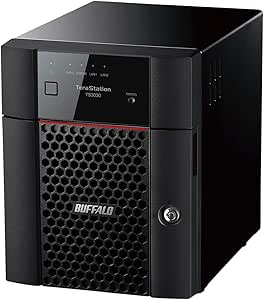 | Best Pre-Configured Value for Small Offices | Raw Capacity: 16 TB (4x4TB) | Usable Capacity (RAID 5): 12 TB | Drive Bays: 4 (drives included) | VIEW LATEST PRICE | See Our Full Breakdown |
| BUFFALO LinkStation 210 6TB 1-Bay NAS Network Attached Storage with Hard Drive Included | | Best Simple Home Media Hub | Capacity: 6TB | Drive Bays: 1 (HDD included) | Compatibility: Windows, macOS 15 and earlier | VIEW LATEST PRICE | See Our Full Breakdown |
| network attached storage drife | Drive Bays | Warranty | Compatibility |
|---|---|---|---|
| Yxk Zero1 2-Bay Desktop NAS fo | 2 (diskless; drives sold separately) | 2 years | — |
| UGREEN NAS DH4300 Plus 4-Bay N | 4 (drives not included) | — | Windows, macOS, Android, iOS, web browsers, smart TVs |
| Buffalo LinkStation 720 8TB 2- | 2 | 2-year limited warranty including drives | Windows and macOS 26 |
| BUFFALO LinkStation 720 4TB 2- | 2 (hard drives included) | 2 years including drives | Windows, macOS 26 |
| UGREEN NAS DH2300 2-Bay Person | 2 (drives not included) | — | — |
| BUFFALO LinkStation 210 4TB 1- | 1 | 2 years with 24/7 US-based support | Windows, macOS 15 (Sequoia) and earlier |
| UGREEN NAS DXP2800 2-Bay Netwo | 2 HDD + 2 M.2 NVMe | 2 years | — |
| BUFFALO LinkStation 220 4TB 2- | 2 | 2 years including hard drives | Windows, macOS 15 Sequoia or earlier |
| BUFFALO LinkStation 710 4TB 1- | 1 | 2-year limited, 24/7 US-based support | Windows, macOS 26 |
| UGREEN NAS DXP4800 Pro 4-Bay N | — | — | — |
| Seagate IronWolf Pro 12 TB Ent | — | 5-year limited | — |
| Buffalo LinkStation 210 2TB 1- | 1 (drive included) | 2 years including hard drive | Windows, macOS 15 and earlier |
| BUFFALO TeraStation Essentials | 4 (drives included) | 3 years including drives | — |
| BUFFALO LinkStation 210 6TB 1- | 1 (HDD included) | 2 years including drive | Windows, macOS 15 and earlier |
More Details on Our Top Picks
Yxk Zero1 2-Bay Desktop NAS for Home and Personal Storage (Diskless)
This option stands out for Docker support and snapshot recovery — features rarely packed into a compact 2-bay chassis at this tier. Compared with the UGREEN DH2300, which locks out containers entirely, the Zero1 appeals to anyone who wants to run self-hosted apps alongside basic file storage. The 2.5GbE port also puts it ahead of 1GbE models for wired transfer speed, provided the rest of the network can keep up. The tradeoff is real, though: drives are sold separately, so the true cost of ownership climbs once you add two disks, and setup demands more hands-on effort than a plug-and-play unit like the Buffalo LinkStation 720. Still, for a hobbyist who wants flexibility without a 4-bay footprint, this pick makes the most sense.
Pros:- 2.5GbE connectivity for noticeably faster transfers than standard 1GbE NAS units
- Docker support plus RAID modes, snapshot recovery, and encryption in one compact box
- 4K HDMI output for direct media playback without another streaming device
- Lightweight 2kg design fits easily on a desk or shelf
Cons:- Hard drives must be purchased separately, adding to total cost
- Requires network storage setup that may frustrate first-time NAS owners
Best for: Home users and hobbyists who want Docker apps, snapshots, and RAID flexibility in a small 2-bay enclosure
Not ideal for: Buyers who want storage ready out of the box — drives must be sourced and installed separately
- Drive Bays:2 (diskless; drives sold separately)
- RAM:4GB
- Ethernet:2.5GbE
- Video Output:4K HDMI
- Key Features:Docker support, RAID, automated backups, snapshot recovery, encryption, remote access
- Supported Platforms:Windows, macOS, iOS, Android, web browsers
- Weight:2kg
- Warranty:2 years
Our verdict“A flexible, feature-dense 2-bay NAS for tinkerers who value Docker and snapshots over turnkey simplicity.”
UGREEN NAS DH4300 Plus 4-Bay NAS Storage
Where the UGREEN DH4300 Plus earns its place is AI-powered photo management — semantic search and duplicate removal that turn a sprawling camera roll into something searchable. That focus on images sets it apart from the more general-purpose Yxk Zero1, and its four bays with up to 128TB capacity leave the 2-bay field behind for households with years of photos and video. With 8GB of RAM, it doubles the memory of most entry-level rivals, which shows in smoother app performance. The compromises are worth weighing: no Wi-Fi means it must live near your router, virtual machines are off the table (Docker only), and drives are extra. For photographers and families replacing cloud subscriptions, this model is better suited than anything disk-based in this lineup.
Pros:- AI photo backup with semantic search and duplicate cleanup
- Four bays supporting up to 128TB for long-term growth
- 8GB LPDDR4X RAM and 2.5GbE for quick transfers and responsive apps
- Beginner-friendly setup with NFC pairing and guided videos
Cons:- Drives sold separately, so upfront cost is higher than bundled alternatives
- Wired Ethernet only — no built-in Wi-Fi
- No virtual machine support despite Docker compatibility
Best for: Families and photo-heavy users who want AI-organized backups and room to grow across four bays
Not ideal for: Users who need virtualization or VM support — Docker is the ceiling here
- Drive Bays:4 (drives not included)
- Max Capacity:128TB (RAID 0)
- RAM:8GB LPDDR4X
- Network Port:2.5GbE Ethernet (wired only)
- Video Output:4K HDMI
- Virtualization:Docker supported; VMs not supported
- Certifications:TRUSTe certified, ETSI EN 303 645 (TÜV SÜD)
- Compatibility:Windows, macOS, Android, iOS, web browsers, smart TVs
Our verdict“The strongest pick here for anyone whose NAS exists primarily to safeguard and organize a lifetime of photos.”
Buffalo LinkStation 720 8TB 2-Bay NAS with Hard Drives Included
This model wins on out-of-the-box readiness: two drives ship pre-installed in RAID 1, so it works minutes after unboxing — a contrast to the diskless UGREEN DH4300 Plus and Yxk Zero1, both of which require a separate drive purchase and installation. The 4TB of usable mirrored capacity means one drive can fail without losing your files, and switching to RAID 0 doubles capacity if redundancy matters less. Syncing with Dropbox, Azure, and OneDrive plus folder-level access controls gives it genuine small-office credibility that simpler single-bay units like the LinkStation 210 can’t match. The honest tradeoff: you sacrifice half the raw capacity to mirroring, and there’s no Docker or app platform for expansion. For buyers who value simplicity over tinkering, that’s a fair exchange.
Pros:- Hard drives included and pre-configured in RAID 1 for immediate redundancy
- Automated backups and centralized storage for multiple computers
- Folder access controls and SSL-encrypted transfers
- 24/7 US-based support and cloud sync with Dropbox, Azure, and OneDrive
Cons:- RAID 1 leaves only 4TB usable from the 8TB total
- Closed platform with no container or third-party app support
Best for: Households and small offices that want mirrored, subscription-free storage working the day it arrives
Not ideal for: Users who want maximum capacity or app extensibility — RAID 1 halves usable space and there’s no Docker
- Total Capacity:8TB (2x4TB included)
- Drive Bays:2
- Usable Capacity:4TB in RAID 1; 8TB in RAID 0
- Compatibility:Windows and macOS 26
- Cloud Integration:Dropbox, Azure, OneDrive
- Security:SSL-encrypted transfers, folder access controls
- Support:24/7 US-based support
- Warranty:2-year limited warranty including drives
Our verdict“The easiest path to protected, ready-to-run network storage for buyers who never want to touch a screwdriver.”
BUFFALO LinkStation 720 4TB 2-Bay Private Cloud NAS with Hard Drives Included
Think of this as the entry ticket to subscription-free cloud storage: drives included, private remote access, and automated PC backups at a lower total capacity than its 8TB sibling. Compared with the Buffalo LinkStation 720 8TB, the value proposition is identical in function but sized for lighter needs — 2TB usable in RAID 1, or the full 4TB if you reconfigure to RAID 0 and accept the risk. Against diskless rivals like the UGREEN DH2300, its advantage is instant readiness; its weakness is the closed system, which limits third-party apps and rules out the Docker experimentation tinkerers enjoy elsewhere. For a first NAS that replaces a lingering cloud subscription without complexity, this pick makes the most sense — just be honest about whether 2TB of protected space is enough.
Pros:- Drives included, so no separate purchase or installation
- Subscription-free private cloud with remote file access
- Automated backups for multiple computers via included software
- SSL encryption, folder access restrictions, and cloud sync options
Cons:- RAID 1 cuts usable capacity to just 2TB
- Closed system limits third-party apps and customization
- Must be connected to a router for full functionality
Best for: First-time NAS buyers with modest storage needs who want drives included and simple private cloud access
Not ideal for: Users with large media collections — 2TB usable in RAID 1 fills up fast
- Total Capacity:4TB
- Drive Bays:2 (hard drives included)
- Usable Capacity:2TB in RAID 1; 4TB in RAID 0
- RAID Modes:RAID 0, RAID 1
- Compatibility:Windows, macOS 26
- Cloud Integration:Dropbox, Azure, OneDrive
- Security:SSL encryption, closed system, folder access restrictions
- Warranty:2 years including drives
Our verdict“A straightforward, low-commitment private cloud for households whose storage needs are modest and whose patience for setup is thinner.”
UGREEN NAS DH2300 2-Bay Personal NAS for Phone Backup
The DH2300 has one clear job — offloading photos and videos from phones, tablets, and laptops — and it does that job without asking much of the buyer. Its AI-assisted photo organization echoes the pricier UGREEN DH4300 Plus, but this 2-bay version trims cost and complexity for single-person use. What you give up versus both the DH4300 Plus and the Yxk Zero1 is substantial: 1GbE networking caps transfers around 125MB/s, Docker and virtual machines are unsupported, and there’s no built-in Wi-Fi. For a phone-backup station those limits barely matter; for anyone dreaming of a Plex server or home-lab experiments, they’re disqualifying. This model is better suited to the pragmatic user who wants storage off their devices and onto something they own, nothing more.
Pros:- Beginner-friendly setup focused on photo, video, and file backup
- Supports up to 64TB across two bays for long-term headroom
- Wired transfers up to 125MB/s with 4GB RAM
- AI photo organization with privacy-focused local storage
Cons:- Drives not included, adding to the real cost
- 1GbE port is slower than the 2.5GbE options in this lineup
- No Docker, virtual machines, or built-in Wi-Fi
Best for: Individuals whose phones and laptops are perpetually full and who want simple, local, automated backups
Not ideal for: Home-lab hobbyists — no Docker, no VMs, and no Plex-via-Docker support
- Drive Bays:2 (drives not included)
- Max Capacity:64TB
- RAM:4GB
- Network Port:1GbE Ethernet
- Max Transfer Speed:125 MB/s
- Drive Compatibility:3.5-inch SATA
- Connectivity:Ethernet, HDMI, SATA, USB
- Unsupported:Docker, virtual machines, SAN Manager
Our verdict“A focused, no-frills backup box for people drowning in phone photos who have no interest in running apps.”
BUFFALO LinkStation 210 4TB 1-Bay NAS with Hard Drive Included
Of all the options in this roundup, the LinkStation 210 demands the least from its buyer: plug it in, run the setup utility, and 4TB of network storage exists on your network within minutes. Unlike the diskless UGREEN DXP2800, there’s no drive shopping, no compatibility research, and no assembly — the drive is already inside. That simplicity is exactly why it earns a spot as the entry point of this lineup.
The tradeoff is structural. With a single drive bay, a failed hard drive means failed data, something the LinkStation 220 addresses with RAID 1 mirroring. Anyone storing irreplaceable family photos here needs a separate backup plan. The closed system also means no Docker, no Plex server, and no third-party apps — it’s storage and backup, full stop.
Pros:- 4TB hard drive included, so it works out of the box with no drive shopping
- Subscription-free personal cloud access with no monthly fees
- Automated backups and folder-level access controls
- 24/7 US-based support and a 2-year warranty
Cons:- Single drive bay means no RAID redundancy — one drive failure loses everything
- Closed system limits third-party apps and self-hosted services
- macOS compatibility stops at macOS 15 and earlier
Best for: Non-technical users or small households who want shared network storage and PC backups working the same day they open the box
Not ideal for: Anyone storing irreplaceable files without a second backup — the single bay offers no redundancy if the drive fails
- Capacity:4TB
- Drive Bays:1
- Hard Drive Included:Yes
- Compatibility:Windows, macOS 15 (Sequoia) and earlier
- Security:SSL encryption
- Software:NAS Navigator 2, PC backup software
- Warranty:2 years with 24/7 US-based support
Our verdict“Buy this if you value zero-setup simplicity over expandability; skip it if your files can’t be replaced.”
UGREEN NAS DXP2800 2-Bay Network Attached Storage
The UGREEN DXP2800 sits in a different category from the BUFFALO units in this guide: it’s a real computer, not an appliance. The Intel N100 quad-core and 8GB of DDR5 RAM mean it runs Docker containers, virtual machines, and compatible Plex servers — none of which the closed LinkStation 220 can touch. 2.5GbE networking also moves files more than twice as fast as the gigabit ports on most entry NAS drives here.
The catch is upfront effort and cost. Drives are sold separately, so the true budget includes two hard drives before anything is stored. Compared with the DXP4800 Pro, it gives up the 10GbE port, the Core i3 processor, and half the bays — but it also doesn’t pretend to be a lab server. For a home tinkerer who wants apps and speed without enterprise pricing, this pick makes the most sense.
Pros:- Intel N100 quad-core with 8GB DDR5 runs Docker, VMs, and compatible Plex media servers
- 2.5GbE networking for noticeably faster transfers than gigabit rivals
- Up to 80TB total capacity across two HDD bays and two M.2 NVMe slots
- AI photo organization and surveillance features included
Cons:- Diskless — HDDs and SSDs are an extra purchase before first use
- Advanced features require setup time and compatible apps or devices
Best for: Hobbyists and home-lab beginners who want Docker, Plex, and fast 2.5GbE transfers from a compact 2-bay chassis
Not ideal for: Buyers who want storage working immediately — drives are sold separately, and setup takes real effort compared to pre-built BUFFALO units
- Drive Bays:2 HDD + 2 M.2 NVMe
- Max Capacity:Up to 80TB
- Processor:Intel N100 quad-core
- Memory:8GB DDR5
- Networking:2.5GbE
- Drive Inclusion:Diskless; drives sold separately
- Warranty:2 years
Our verdict“The smart middle ground for tinkerers who want app flexibility and fast networking at a 2-bay price.”
BUFFALO LinkStation 220 4TB 2-Bay NAS with Hard Drives Included
This is the answer to the biggest weakness of the LinkStation 210 and LinkStation 710: mirrored storage. The LinkStation 220 ships in RAID 1, meaning your files live on two drives at once — if one dies, your data survives. For families keeping years of photos on a NAS, that single difference justifies choosing this over the cheaper 1-bay models, and it arrives pre-installed, so there’s still no drive shopping like with the UGREEN options.
The honest tradeoff is capacity: RAID 1 leaves 2TB usable from the 4TB total, and switching to RAID 0 for full capacity sacrifices the very redundancy that makes this model worth buying. It also lacks the cloud-service integration of the newer LinkStation 710 and the advanced features of the LS 700 series. What remains is a straightforward, protected vault — nothing more, and for many buyers, nothing less.
Pros:- Ships in RAID 1, so data survives a single drive failure
- Hard drives pre-installed with 4TB total capacity
- Subscription-free personal cloud with folder-level access controls
- 2-year warranty covering the drives, plus 24/7 US-based support
Cons:- RAID 1 default leaves only 2TB of usable capacity
- Fewer cloud and app features than the newer LinkStation 700-series models
- macOS support limited to macOS 15 Sequoia and earlier
Best for: Families and small offices who want out-of-the-box mirrored backup without buying drives separately or learning NAS software
Not ideal for: Users who need more than 2TB of usable protected storage, or anyone wanting cloud syncing and third-party apps
- Capacity:4TB total (2TB usable in RAID 1)
- Drive Bays:2
- RAID:RAID 1 default; configurable to RAID 0
- Drives Included:Yes
- Compatibility:Windows, macOS 15 Sequoia or earlier
- Security:SSL encryption, folder access restrictions
- Warranty:2 years including hard drives
Our verdict“The most affordable path in this lineup to genuine drive-failure protection with everything in the box.”
BUFFALO LinkStation 710 4TB 1-Bay Network Attached Storage with HDD Included
Where the LinkStation 210 is a standalone vault, the LinkStation 710 acts as a bridge between local storage and the cloud services many households already use. Native integration with Dropbox, OneDrive, and Azure lets files flow between the NAS and existing cloud accounts, which the 210 and 220 simply don’t offer. It also carries a more current compatibility window, listing macOS 26 support — a real consideration for anyone on a newer Mac who’d be shut out of the older BUFFALO models here.
It shares the same fundamental limitation as the 210, though: one drive bay means no mirroring, so this is convenience-focused storage rather than protected storage. Buyers prioritizing safety over cloud features should step up to the LinkStation 220 instead. Think of this as the pick for people whose files already live partly in the cloud and want a local anchor for them.
Pros:- Native Dropbox, OneDrive, and Azure integration for hybrid cloud workflows
- Subscription-free personal cloud access with SSL encryption
- 4TB drive included with automated computer backups
- Supports macOS 26, newer than the LinkStation 210 and 220
Cons:- Single drive bay means no RAID redundancy or expansion
- Closed system restricts third-party apps compared to UGREEN models
Best for: Households already using Dropbox or OneDrive who want a local NAS that syncs with their existing cloud accounts
Not ideal for: Buyers whose priority is data safety — the single bay offers no redundancy against drive failure
- Capacity:4TB
- Drive Bays:1
- Hard Drive Included:Yes
- Cloud Integration:Dropbox, Azure, OneDrive
- Compatibility:Windows, macOS 26
- Connectivity:Ethernet (Cat 6A cable included)
- Warranty:2-year limited, 24/7 US-based support
Our verdict“The right BUFFALO pick if cloud-service syncing matters more to you than mirrored redundancy.”
UGREEN NAS DXP4800 Pro 4-Bay NAS
At the top of this lineup sits the UGREEN DXP4800 Pro, and the gap between it and everything else here is one of ambition rather than nuance. A 13th-gen Intel Core i3 with six cores and 4.5GHz turbo puts it in a different performance class than the N100 in the DXP2800, handling multiple Docker containers and light virtual machines without breaking stride. The 10GbE + 2.5GbE dual ports push transfers up to 1.25GB/s — roughly ten times the practical throughput of the gigabit BUFFALO units — which matters enormously for video editors working with large files across a network.
Four HDD bays plus two PCIe 4.0 M.2 slots allow RAID 5 across up to 144TB, giving real protection at scale that no 2-bay model here can match. But none of it comes cheap or ready: drives are excluded, and the 8GB of shipping RAM is thin for serious virtualization even though it expands to 96GB. This model rewards buyers who plan to spend more after purchase.
Pros:- Intel Core i3-1315U with 6 cores handles VMs and Docker containers smoothly
- Dual 10GbE + 2.5GbE ports deliver transfers up to 1.25GB/s
- Up to 144TB capacity with RAID 0/1/5/10 and M.2 PCIe 4.0 cache
- Enterprise-grade security supporting up to 2048 user accounts
Cons:- Ships with only 8GB RAM — serious workloads need the expansion to 96GB, at extra cost
- 8 threads can bottleneck heavy multi-VM setups compared to higher-tier CPUs
- Drives and SSDs are not included, adding substantial cost before first use
Best for: IT professionals, developers, and media creators who need VM hosting, 10GbE-speed transfers, and RAID 5 protection at scale
Not ideal for: Casual home users — the hardware power is wasted on simple file backups, and drives plus RAM upgrades inflate the real cost
- Bays:4x HDD + 2x M.2 SSD
- Processor:Intel Core i3-1315U (6 cores, 8 threads, up to 4.5GHz)
- RAM:8GB DDR5, expandable to 96GB
- Network:10GbE + 2.5GbE dual ports (up to 1.25GB/s)
- Max Capacity:144TB
- RAID:RAID 0, 1, 5, 10
- Operating System:UGOS Pro
- Drive Inclusion:Diskless; drives sold separately
Our verdict“The pick for power users who intend to actually use the horsepower — overkill for anyone who just wants a family backup drive.”
Seagate IronWolf Pro 12 TB Enterprise NAS Internal HDD (ST12000NT001)
One clarification before anything else: this is a bare internal drive, not a complete NAS, so it belongs on this list for readers building or expanding their own enclosure. Compared with buying a pre-populated unit like the TeraStation Essentials 16TB, the IronWolf Pro 12 TB trades plug-and-play convenience for far better engineering per drive. Its CMR recording and 550 TB/year workload rating mean it sustains heavy multi-user RAID duty where the TeraStation’s 5400 rpm drives would throttle, and the rotational vibration sensors matter in 4-bay-plus enclosures where drive wobble causes errors over time. The standout perk is 3 years of Rescue Data Recovery Services, which can cost thousands out of pocket elsewhere. The tradeoff is obvious: you need a compatible enclosure, and you should verify the drive behaves in your RAID environment before loading it with data.
Pros:- 550 TB/year workload rating handles demanding multi-user RAID environments
- CMR technology delivers consistent performance without SMR slowdowns
- Complimentary 3-year Rescue Data Recovery Services included
- Rotational vibration sensors improve reliability in multi-bay setups
Cons:- Not a standalone NAS — requires a compatible enclosure and setup
- Should be tested in your RAID environment before full deployment
- 7200 RPM operation generates more heat and noise than 5400 RPM alternatives
Best for: DIY builders and small-office users populating a multi-bay Synology, QNAP, or UGREEN DXP4800 Pro enclosure who want enterprise-grade reliability
Not ideal for: Anyone wanting turnkey network storage — this is a component, not a device, and requires a NAS enclosure to function
- Capacity:12 TB
- Interface:SATA 6 Gb/s
- Form Factor:3.5 inches
- Rotational Speed:7200 RPM
- Cache:256 MB
- Recording Technology:CMR
- Warranty:5-year limited
Our verdict“If you’re building your own multi-bay NAS and want drives that won’t flinch under 24×7 load, this is the component pick; skip it if you want a working box out of the carton.”
Buffalo LinkStation 210 2TB 1-Bay NAS with Included Hard Drive
For first-time buyers who just want files off their laptops and onto the network, this is the cheapest credible entry point in the lineup. Unlike the diskless UGREEN DH2300, the LinkStation 210 ships with its 2TB drive installed, so there’s no second purchase or drive-formatting step before it works. Buffalo also leans on security basics rare at this price: SSL-encrypted transfers, folder-level access controls, and a closed system that resists the casual exploits that plague cheap NAS firmware. The automated backup software handles the job most buyers actually buy this for. What you give up is everything else — the single bay means zero redundancy, and unlike the LinkStation 220 4TB 2-Bay, a drive failure means data loss unless you’ve backed up elsewhere. The dated macOS support (15 and earlier) is another limitation worth weighing.
Pros:- Hard drive included and pre-installed for true out-of-the-box use
- Automated backup software for Windows PCs
- SSL encryption and folder access controls at a budget price
- 2-year warranty covering the drive plus 24/7 US-based support
Cons:- Only supports macOS 15 and earlier
- Single drive bay provides no RAID protection
- 2TB capacity fills quickly with photos and video
Best for: Budget-conscious households and students who want simple centralized backup and subscription-free cloud access without buying drives separately
Not ideal for: Mac users on newer versions than macOS 15, and anyone storing irreplaceable files without a second backup — one bay means no redundancy
- Capacity:2TB
- Drive Bays:1 (drive included)
- Compatibility:Windows, macOS 15 and earlier
- Network:Ethernet router connection
- Security:SSL encryption, folder access controls
- Warranty:2 years including hard drive
- Support:24/7 US-based
Our verdict“This is the low-commitment way to try network storage; just treat it as a backup hub, not a safe primary home for irreplaceable files.”
BUFFALO TeraStation Essentials 2025 4-Bay Desktop NAS 16TB (4x4TB) with Hard Drives Included
This model earns its spot by removing every setup barrier that trips up first-time NAS buyers. It arrives with four factory-tested drives pre-configured in RAID 5, so you get 12TB of protected storage the moment it’s plugged in — no drive shopping, no RAID initialization that takes hours. Compared with the UGREEN DXP4800 Pro, it gives up app ecosystems and expandability but counters with a native 2.5GbE port that doubles typical gigabit transfer speeds without buying new network gear beyond a matching switch. The 256-bit encryption and cloud integration with S3, Dropbox, Azure, and OneDrive make it a legitimate small-office workhorse rather than a toy. The honest tradeoffs: RAID 5 sacrifices 4TB of raw capacity, the 5400 rpm drives lag noticeably on heavy multi-user workloads versus something like the IronWolf Pro, and RAID 6 shrinks usable space further.
Pros:- Ships with four tested drives in RAID 5 — protected storage out of the box
- Native 2.5GbE port enables fast transfers on existing Cat5e cabling
- 256-bit encryption plus flexible RAID 0/5/6 and backup replication options
- 3-year warranty including drives, 24/7 US support, and data recovery service
Cons:- Only 12TB usable in default RAID 5, and just 8TB if you choose RAID 6
- 5400 rpm drives bottleneck demanding simultaneous access
- Limited app ecosystem compared with UGREEN or Synology-class hardware
Best for: Small offices and work-from-home professionals who want redundant, encrypted, fast-enough shared storage working within ten minutes of unboxing
Not ideal for: Power users wanting Docker containers, VMs, or drive swaps — the closed hardware and modest CPU make it a file server, not a home lab
- Raw Capacity:16 TB (4x4TB)
- Usable Capacity (RAID 5):12 TB
- Drive Bays:4 (drives included)
- Connectivity:2.5GbE Ethernet
- RAID Modes:RAID 0, 5 (default), 6
- Encryption:256-bit drive encryption
- Cloud Integration:Amazon S3, Dropbox, Azure, OneDrive
- Warranty:3 years including drives
Our verdict“The best zero-friction path to redundant multi-bay storage, provided your needs stop at file sharing and backup rather than apps and expansion.”
BUFFALO LinkStation 210 6TB 1-Bay NAS Network Attached Storage with Hard Drive Included
Think of this as the capacity-focused sibling of the 2TB LinkStation 210: same plug-into-your-router simplicity, same security posture, but three times the room for photo libraries, video archives, and music collections. That 6TB of included storage is what makes it a media hub rather than a bare-bones backup box, and the subscription-free personal cloud means accessing those files from anywhere doesn’t add a monthly bill. Compared with the LinkStation 710 4TB, you trade newer-generation performance — Buffalo’s LS 700 series is up to 7x faster — for more raw capacity at a lower tier. The core weakness is structural: one bay means one copy. A drive failure takes everything with it, so this pairs best with an external backup routine. Newer Mac users should also note the macOS 15 compatibility ceiling.
Pros:- 6TB included capacity fits large photo and video libraries
- Subscription-free personal cloud access from phones and tablets
- Simple router-based setup with automated PC backups
- SSL encryption and folder-level access restrictions
Cons:- Single bay offers no RAID redundancy
- Limited to macOS 15 and earlier; newer macOS needs the LS 700 series
- Older hardware platform — the LS 700 series is up to 7x faster
Best for: Families building a central media library who want large included capacity and free remote access without managing a multi-bay system
Not ideal for: Anyone with irreplaceable data and no secondary backup — no redundancy — plus Mac users past macOS 15
- Capacity:6TB
- Drive Bays:1 (HDD included)
- Compatibility:Windows, macOS 15 and earlier
- Connectivity:Ethernet
- Security:SSL encryption, folder-level restrictions
- Warranty:2 years including drive
- Support:24/7 US-based
Our verdict“A straightforward pick when capacity and simplicity matter more than speed or redundancy — just keep a second copy of anything precious.”

How We Picked
I ranked these network attached storage drives on four factors that actually matter at purchase time: capacity and expandability, ease of setup, redundancy options, and value over the ownership period. Diskless multi-bay models scored well on expandability and RAID flexibility because they let you install NAS-rated drives, add bays over time, and replace failed drives without replacing the whole unit. Pre-populated Buffalo units scored well on setup and day-one value, since the drives are installed and formatted before the box even arrives.
The ranking order also reflects who each product serves. Power users and growing households get the strongest hardware first; buyers who just want a private cloud for photos and documents get simple, drive-included options next; and single-bay units sit lower because they lack any data protection. The Seagate IronWolf Pro appears late in the lineup because it is a component, not a complete NAS — it earns its place only as the companion drive for the diskless picks above it.
| network attached storage drife | Compatibility |
|---|---|
| Yxk Zero1 2-Bay Desktop NAS fo | — |
| UGREEN NAS DH4300 Plus 4-Bay N | Windows, macOS, Android, iOS, web browsers, smart TVs |
| Buffalo LinkStation 720 8TB 2- | Windows and macOS 26 |
| BUFFALO LinkStation 720 4TB 2- | Windows, macOS 26 |
| UGREEN NAS DH2300 2-Bay Person | — |
| BUFFALO LinkStation 210 4TB 1- | Windows, macOS 15 (Sequoia) and earlier |
| UGREEN NAS DXP2800 2-Bay Netwo | — |
| BUFFALO LinkStation 220 4TB 2- | Windows, macOS 15 Sequoia or earlier |
| BUFFALO LinkStation 710 4TB 1- | Windows, macOS 26 |
| UGREEN NAS DXP4800 Pro 4-Bay N | — |
| Seagate IronWolf Pro 12 TB Ent | — |
| Buffalo LinkStation 210 2TB 1- | Windows, macOS 15 and earlier |
| BUFFALO TeraStation Essentials | — |
| BUFFALO LinkStation 210 6TB 1- | Windows, macOS 15 and earlier |
Factors to Consider When Choosing Network Attached Storage Drives
Before settling on one of the 14 picks above, step back and think about what you are actually protecting and how you want to grow into the device. These are the factors that most often make or break a NAS purchase.Drives Included vs. Diskless
The single biggest fork in this category is whether the drives ship inside the enclosure. Drives-included units like the Buffalo LinkStation and TeraStation models work within minutes of unboxing, and the total cost is transparent — but you are locked into the pre-installed capacity and often the pre-configured drive type. Diskless enclosures like the UGREEN models cost more than they appear, because you still need to buy NAS-rated drives separately, and first-time buyers frequently underestimate that. A common mistake is buying desktop-grade or recycled PC drives for a NAS; they lack vibration tolerance and firmware tuned for always-on operation, and they fail faster in multi-bay enclosures. My rule of thumb: choose drives-included if you value simplicity and a known budget, and diskless if you expect to expand or want to pick drives with specific capacities and endurance ratings.
Bay Count and Redundancy
Bay count determines your ceiling, not just your current capacity. A one-bay unit stores your files but cannot mirror them, so a single drive failure means total data loss — fine for convenience copies, dangerous for anything you cannot afford to lose. Two-bay units open the door to RAID 1 mirroring, where a second drive holds an exact copy, at the cost of halving your usable space. Four-bay models let you mix capacities, rebuild arrays after a single drive failure, and grow storage in stages. If you are torn between sizes, remember that a NAS is usually a five-to-seven-year purchase; the media library that fits comfortably today rarely fits in year three.
Software Ecosystem and Apps
Hardware is only half the product — the operating system determines what your NAS can actually do. UGREEN’s platform supports Docker containers, mobile backup apps, media servers, and multi-user permissions, which matters if you want the box to grow beyond simple file sharing. Buffalo’s software is deliberately leaner: dependable for backups, remote access, and shared folders, but far less extensible. The mistake I see most often is buyers paying for a powerful enclosure they never configure, or conversely, buying a locked-down unit and then discovering they want Plex or photo deduplication a year later. Match the software ambition to your realistic willingness to tinker.
Performance Class and Connection Speed
Casual buyers often overpay for throughput they cannot use. If your NAS exists for document backups and photo storage over gigabit Ethernet, nearly every unit here will saturate your network and feel identical in daily use. Where stronger CPUs and 2.5GbE or 10GbE connections earn their price is with multi-user access, 4K video streaming to several devices at once, or heavy photo-library indexing. The UGREEN Pro and Plus models carry that headroom; the entry LinkStations do not, and do not need to. Decide whether your NAS is a backup target or a media server before you spend on speed.
Total Cost of Ownership
Compare the cost of the complete system, not the sticker on the enclosure. A diskless four-bay NAS plus four NAS-rated drives frequently costs more than double the empty enclosure price, while a drives-included unit shows its full cost upfront. Offset that against longevity: diskless systems let you replace a single failed drive instead of the whole unit, and drive prices fall over time, so expanding later is usually cheaper than buying maximum capacity now. Also factor in power draw, since a NAS runs 24/7 — efficient models with drive spin-down can quietly save real money over the ownership period.
Who Is Actually Using It
The best spec sheet means nothing if the household cannot use the device. If a less technical partner or parent will rely on this NAS, the Buffalo plug-and-play experience with pre-installed drives and simple mobile apps will get used; a Docker-capable system that only one person can administer becomes a single point of failure in both senses. Small offices should prioritize multi-user accounts, permissions, and four-bay or larger arrays like the TeraStation. Solo tech enthusiasts get the most from the UGREEN lineup. Buy for the least technical person who depends on the box, not the most technical person who sets it up.
Frequently Asked Questions
Should I buy a NAS with drives included or a diskless enclosure?
If you want the fastest path from box to backup, drives-included units like the Buffalo LinkStation models are ready within minutes and their total cost is fully visible upfront. Diskless enclosures like the UGREEN models require you to buy and install NAS-rated drives, which adds cost and a setup step, but in exchange you choose your own capacity, configure RAID yourself, and can upgrade or replace individual drives later without touching the enclosure. Buyers who expect their storage needs to grow should lean diskless; buyers who want a set-and-forget private cloud get better value from pre-populated units. Whichever route you take, avoid installing cheap desktop drives in a multi-bay NAS — they are not built for continuous operation alongside other vibrating drives.
Is a one-bay NAS safe for storing my files?
A one-bay NAS like the LinkStation 210 or 710 stores your files but cannot protect them from drive failure, because there is no second drive holding a copy. That makes these units best treated as a convenience copy or overflow drive, not your only backup. If the files matter — family photos, tax records, work documents — you want at least a two-bay unit running RAID 1 mirroring, so one failed drive does not take everything with it. A practical middle path is using a one-bay NAS as a third copy in a 3-2-1 backup strategy, where your originals and a second copy live elsewhere. The money saved on a single-bay unit is small comfort when the drive dies.
Why is the Seagate IronWolf Pro in a NAS roundup when it is just a hard drive?
Because every diskless NAS in this comparison needs drives like it to function. The IronWolf Pro is built specifically for multi-bay enclosures, with vibration sensors, firmware tuned for always-on operation, and the endurance ratings that random desktop drives lack. It makes sense as the companion purchase for the UGREEN DXP4800 Pro, DXP2800, or DH4300 Plus, where you are choosing your own capacity and RAID configuration. It does not belong in your cart if you are buying a pre-populated Buffalo unit, since those already include drives. Think of it as the engine to the empty chassis — useful only in combination.
How many bays do I actually need?
One bay suits overflow storage and convenience copies. Two bays is the sweet spot for most households, giving you RAID 1 mirroring so a drive failure is an inconvenience rather than a catastrophe. Four bays suits media collectors, growing families, and small offices, because you can mix drive sizes, rebuild arrays after a failure, and expand in stages instead of starting over. The trap is buying for today’s library rather than the one you will have in three years — a NAS is a long-lived purchase, and spare bays are the cheapest future-proofing available. If budget forces a choice, prioritize two bays with mirroring over four bays without it.
Can I use a NAS just to back up my phone photos?
Yes, and it is one of the most common reasons people buy their first NAS. Compact two-bay units like the UGREEN DH2300 are built around exactly this job, with mobile apps that auto-upload your camera roll over your home network instead of paying monthly cloud subscription fees. Even the simplest LinkStation models handle photo backup well through Buffalo’s mobile app. The main decision is redundancy: if these are the only copies of your family photos, spend the extra on a two-bay mirrored setup rather than a single-bay unit. Over a few years, a NAS typically costs less than recurring cloud storage fees, and your photos stay on hardware you control.
Conclusion
For the best overall pick, the UGREEN NAS DXP4800 Pro combines four-bay expandability, strong performance headroom, and the software flexibility to grow from a backup box into a full home server. The UGREEN DH4300 Plus is my best premium choice for users who want maximum storage muscle without stepping up to enterprise gear. On the value side, the Buffalo LinkStation 220 and 210 drives-included models deliver dependable, pre-configured storage at the lowest total cost in the lineup. Beginners should start with a LinkStation 210 or 720 — drives arrive installed, setup takes minutes, and there is no RAID configuration to learn. For phone and laptop backups specifically, the compact UGREEN DH2300 hits the sweet spot of size, price, and simplicity. And if you go diskless, pair whichever UGREEN enclosure you choose with the Seagate IronWolf Pro so the drives match the enclosure’s ambitions. Match the pick to your least-technical daily user and your five-year storage plan, and you will not outgrow the purchase.
Fall Picks
fall essentials
As an affiliate, we earn on qualifying purchases.