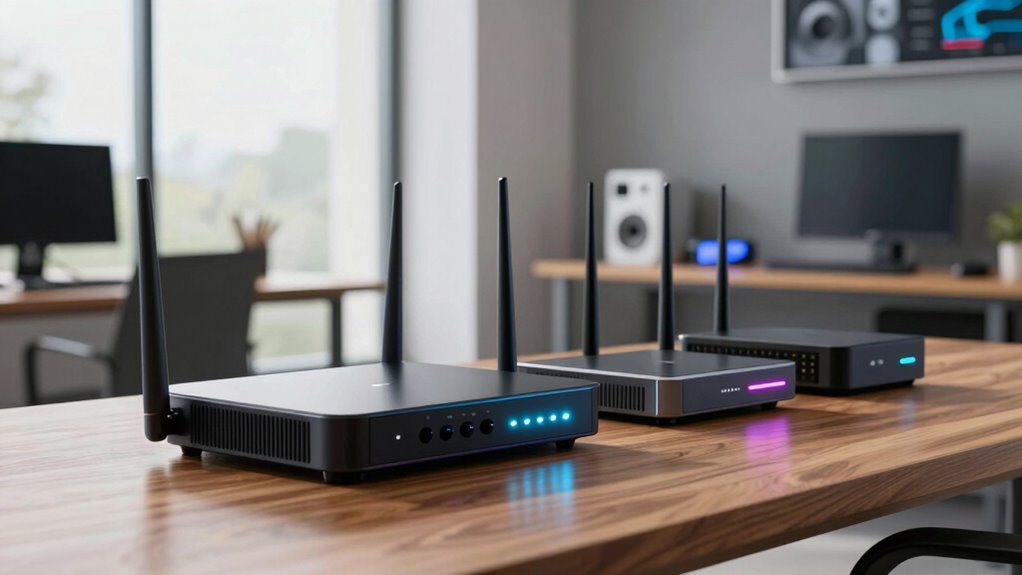

Choosing the right router for gigabit internet can be challenging due to the variety of options and features available. The TP-Link Archer BE3600 stands out as the best overall pick, thanks to its high-speed Wi-Fi 7 support and versatile ports. For those prioritizing raw speed, the NETGEAR Nighthawk WiFi 7 Router (RS140) offers cutting-edge performance, while the TP-Link AX5400 (Archer AX73) delivers excellent value with robust Wi-Fi 6 capabilities. The main tradeoffs revolve around balancing speed, coverage, ease of use, and cost. Continue reading to see how these routers compare and which one fits your internet needs perfectly.

Get business pricing on networking and server gear
- Business-only prices and quantity discounts
- Tax-exempt purchasing
- Multiple users, one account, clear invoices
Key Takeaways
- Wi-Fi 7 routers like the TP-Link Archer BE3600 and NETGEAR RS140 offer the highest speeds but come at a premium price.
- Wi-Fi 6 models such as the TP-Link AX5400 provide great performance and future-proofing at a more accessible cost.
- Coverage and device support vary significantly; larger households benefit from multi-band or mesh options like eero 6+.
- Port options, especially multi-gig ports, are key for wired connections and network expansion.
- User-friendly setups and security features differ; higher-end models often include advanced security and easy management tools.
| TP-Link Dual-Band Wi-Fi 7 Router, Archer BE3600, 4-Stream, 2.5G Ports, USB 3.0, Quad Core, 4 Antennas |  | Best Overall for Future-Proof Home Networks | Wi-Fi Technology: Wi-Fi 7 | Speed (5 GHz): 2882 Mbps | Speed (2.4 GHz): 688 Mbps | VIEW ON AMAZON | See Our Full Breakdown |
| NETGEAR Nighthawk WiFi 7 Dual-Band Router (RS140) |  | Best for Large, Device-Dense Homes | WiFi Standard: WiFi 7 | Max Speed: Up to 5.0 Gbps | Coverage: Up to 2,250 sq. ft. | VIEW ON AMAZON | See Our Full Breakdown |
| TP-Link AX5400 WiFi 6 Router (Archer AX73) Dual Band Gigabit Wireless Internet Router |  | Best for High-Speed Wi-Fi 6 Performance | Max WiFi Speed: 5400 Mbps | Bands: Dual Band | Antennas: 6× Antennas | VIEW ON AMAZON | See Our Full Breakdown |
| TP-Link AC1900 Dual Band WiFi Router (Archer A8) |  | Best Budget Dual-Band for Moderate Usage | Wireless Speed: 600 Mbps (2.4 GHz) + 1300 Mbps (5 GHz) | Bands: Dual Band | Coverage: Up to 1,200 sq. ft. | VIEW ON AMAZON | See Our Full Breakdown |
| TP-Link Smart WiFi 6 Dual Band Router with 4 Gigabit LAN Ports |  | Best for Wi-Fi 6 Compatibility and Device Efficiency | Wi-Fi Standard: 802.11ax (Wi-Fi 6) | Max Speed: 1201 Mbps | Bands: Dual Band | VIEW ON AMAZON | See Our Full Breakdown |
| NETGEAR Nighthawk Dual-Band WiFi 7 Router (RS90) |  | Best Overall for Advanced WiFi 7 Performance | WiFi Speed: up to 3.6 Gbps | Bands: Dual-Band 2.4 GHz + 5 GHz | Coverage: up to 2,000 sq. ft. | VIEW ON AMAZON | See Our Full Breakdown |
| NETGEAR Nighthawk WiFi 6 Router (RAX36) – AX3000, Dual-Band, 3Gbps Wireless Speed, Covers 2,000 sq. ft., Supports 25 Devices, Built-in VPN, USB 3.0, Gaming |  | Best Value for WiFi 6 with Strong Coverage | Coverage: 2,000 sq. ft. | Device Support: up to 25 devices | Wireless Speed: AX3000 3Gbps | VIEW ON AMAZON | See Our Full Breakdown |
| TP-Link Tri-Band WiFi 7 Router (Archer BE600) with 10G Port and HomeShield Security |  | Best for Large Homes and Extensive Coverage | WiFi Technology: WiFi 7 | Max Speed: 5,765 Mbps | Coverage: up to 2,600 sq. ft. | VIEW ON AMAZON | See Our Full Breakdown |
| TP-Link AX1800 WiFi 6 Router (Archer AX21 V5) |  | Best Budget-Friendly WiFi 6 for Moderate Use | Technology: WiFi 6 (802.11ax) | Bands: Dual Band | Total Bandwidth: 1.8 Gbps | VIEW ON AMAZON | See Our Full Breakdown |
| TP-Link Archer AX55 Dual-Band AX3000 Wi-Fi 6 Router |  | Best for Easy Setup and Smart Home Integration | Wi-Fi Speed: AX3000 2402 Mbps | Bands: Dual Band | Coverage: Varies with environment | VIEW ON AMAZON | See Our Full Breakdown |
| TP-Link AC1200 Gigabit Dual Band WiFi Router (Archer A6) |  | Best for Budget-Conscious High-Speed Streaming | Speed: 1200 Mbps (300 Mbps 2.4GHz + 900 Mbps 5GHz) | Ports: 4 Gigabit LAN ports | Antennas: 4 external antennas with Beamforming | VIEW ON AMAZON | See Our Full Breakdown |
| TP-Link BE6500 Dual-Band WiFi 7 Router (BE400) with 2.5Gbps Ports, USB 3.0, and HomeShield Security |  | Best for Future-Proof High-Speed Large Homes | WiFi Technology: WiFi 7 | Speed: up to 5764 Mbps (5GHz), 688 Mbps (2.4GHz) | Coverage: up to 2,400 sq. ft. | VIEW ON AMAZON | See Our Full Breakdown |
| eero 6+ Mesh WiFi Router – Supports Internet Plans up to 1 Gbps |  | Best for Simple Whole-Home Coverage with Smart Home Hub | Speed: Up to 1 Gbps | Coverage: 1500 sq. ft. | Device Capacity: 75+ devices | VIEW ON AMAZON | See Our Full Breakdown |
| router for gigabit internet | Coverage | Security | Ports |
|---|---|---|---|
| TP-Link Dual-Band Wi-Fi 7 Rout | Up to 2000 sq. ft. | — | 1×2.5G WAN/LAN, 1×2.5G LAN, 3×1G LAN |
| NETGEAR Nighthawk WiFi 7 Dual- | Up to 2,250 sq. ft. | — | — |
| TP-Link AX5400 WiFi 6 Router | Extensive with beamforming | WPA3 | 1× USB 3.0 |
| TP-Link AC1900 Dual Band WiFi | Up to 1,200 sq. ft. | — | 4× Gigabit LAN, 1× Gigabit WAN |
| TP-Link Smart WiFi 6 Dual Band | — | — | — |
| NETGEAR Nighthawk Dual-Band Wi | up to 2,000 sq. ft. | WPA3, NETGEAR Armor | — |
| NETGEAR Nighthawk WiFi 6 Route | 2,000 sq. ft. | WPA3 | 4 x 1G Ethernet |
| TP-Link Tri-Band WiFi 7 Router | up to 2,600 sq. ft. | HomeShield, VPN | 1x 10 Gbps WAN/LAN, 3x 2.5 Gbps LAN |
| TP-Link AX1800 WiFi 6 Router | — | Advanced security, VPN support | — |
| TP-Link Archer AX55 Dual-Band | Varies with environment | HomeShield | — |
| TP-Link AC1200 Gigabit Dual Ba | — | WPA3 | 4 Gigabit LAN ports |
| TP-Link BE6500 Dual-Band WiFi | up to 2,400 sq. ft. | HomeShield, VPN support | 1x 2.5 Gbps WAN/LAN, 1x 2.5 Gbps LAN, 3x 1 Gbps LAN |
| eero 6+ Mesh WiFi Router | 1500 sq. ft. | Basic included, subscription required for advanced features | — |
More Details on Our Top Picks
TP-Link Dual-Band Wi-Fi 7 Router, Archer BE3600, 4-Stream, 2.5G Ports, USB 3.0, Quad Core, 4 Antennas
The TP-Link Archer BE3600 stands out for incorporating Wi-Fi 7 technology, offering speeds up to 2882 Mbps on the 5 GHz band, making it ideal for streaming, gaming, and multiple device use. Compared to the NETGEAR Nighthawk RS140, it provides newer Wi-Fi standards and mesh support, but the lack of 6 GHz support might limit peak future speeds. Its multiple gigabit ports, including a 2.5G WAN/LAN, make wired connections fast and reliable. The quad-core processor ensures smooth operation even with high network loads, yet performance can vary based on environmental factors. Setup via the Tether app simplifies installation, and security features add peace of mind. However, it requires a separate modem, and the dual-band setup omits the 6 GHz band, which could become a bottleneck as Wi-Fi 7 devices evolve.
Pros:- Supports cutting-edge Wi-Fi 7 with high speeds and mesh capabilities
- Multiple gigabit ports, including 2.5G for fast wired connections
- Quad-core processor for reliable multitasking
- Easy setup and management via Tether app
Cons:- Performance may vary depending on environment and obstacles
- Limited to dual-band, no 6 GHz support yet
Best for: Homeowners seeking a future-ready router with the latest Wi-Fi technology and extensive wired options.
Not ideal for: Users with limited space who prefer a simple, budget-friendly Wi-Fi 6 router, as this model is more complex and costly.
- Wi-Fi Technology:Wi-Fi 7
- Speed (5 GHz):2882 Mbps
- Speed (2.4 GHz):688 Mbps
- Ports:1×2.5G WAN/LAN, 1×2.5G LAN, 3×1G LAN
- Processor:Quad-core 2.0 GHz
- Coverage:Up to 2000 sq. ft.
Our verdict“Ideal for tech-savvy users wanting a high-speed, future-proof router with mesh support.”
NETGEAR Nighthawk WiFi 7 Dual-Band Router (RS140)
The NETGEAR Nighthawk RS140 is designed to handle up to 80 devices with speeds up to 5.0 Gbps, making it a strong choice for big households with multiple smart devices and demanding streaming needs. While it doesn’t support Wi-Fi 7’s latest features like mesh or 6 GHz, its Wi-Fi 7 support ensures compatibility with emerging standards. Its coverage of up to 2,250 sq. ft. and multiple Ethernet ports make it suitable for busy homes requiring wired and wireless connectivity. Compared with the TP-Link BE3600, it offers broader device support but requires a separate modem and may need ISP configuration. Security features like WPA3 and NETGEAR Armor add protection, though they require subscriptions after trial periods. This router excels where high device density and speed are priorities but falls short on future-proofing Wi-Fi 7’s full potential.
Pros:- Supports up to 80 devices with fast Wi-Fi speeds
- Multiple wired Ethernet ports including 2.5G WAN
- WPA3 security and NETGEAR Armor protection
- Reliable coverage for large homes
Cons:- Requires a separate modem or ISP gateway
- Lacks support for Wi-Fi 6E or 6 GHz band
Best for: Large households or smart home enthusiasts who need extensive device support and high-speed wired connections.
Not ideal for: Users seeking the latest Wi-Fi 7 mesh features or integrated modem functions, as this router focuses more on device capacity and speed.
- WiFi Standard:WiFi 7
- Max Speed:Up to 5.0 Gbps
- Coverage:Up to 2,250 sq. ft.
- Device Capacity:Up to 80 devices
- Ethernet Ports:1×2.5G WAN, 3×1G LAN
- Dimensions:9.8 x 5.9 x 4 inches
Our verdict“Best for large households needing robust device support and fast wired/wireless speeds.”
TP-Link AX5400 WiFi 6 Router (Archer AX73) Dual Band Gigabit Wireless Internet Router
The TP-Link Archer AX73 offers speeds up to 5400 Mbps on dual bands, supporting multiple devices with MU-MIMO and OFDMA technology. It provides solid coverage with six antennas and beamforming, making it well suited for busy households or small offices. While it doesn’t support Wi-Fi 7 or the 6 GHz band, its Wi-Fi 6 capabilities still deliver fast, reliable connections—especially compared to older routers like the TP-Link Archer A8. Its USB port adds media sharing options, and security features are robust, but the lack of built-in modem functionality means it relies on an external modem. Advanced features may pose a learning curve for casual users, and it’s best suited for those who prioritize speed and device handling over the latest Wi-Fi standards.
Pros:- Very high Wi-Fi speeds up to 5400 Mbps
- Supports MU-MIMO and OFDMA for multiple devices
- Excellent coverage with six antennas and beamforming
- USB sharing for media and cloud storage
Cons:- Requires a separate modem for internet access
- No support for Wi-Fi 6E or 6 GHz band
Best for: Tech-savvy users wanting reliable Wi-Fi 6 speeds for streaming and gaming, with a focus on coverage and device load.
Not ideal for: Those seeking Wi-Fi 7 or integrated modem functionality, as this model is focused solely on Wi-Fi 6 performance.
- Max WiFi Speed:5400 Mbps
- Bands:Dual Band
- Antennas:6× Antennas
- Ports:1× USB 3.0
- Coverage:Extensive with beamforming
- Security:WPA3
Our verdict“Great for users needing fast Wi-Fi 6 speeds and extensive device management in a reliable setup.”
TP-Link AC1900 Dual Band WiFi Router (Archer A8)
The TP-Link Archer A8 delivers dual-band WiFi up to 1900 Mbps, making it suitable for average internet needs. It includes MU-MIMO technology and Gigabit ports, which provide reliable wired and wireless connections for typical home use. Compared to more advanced routers like the AX5400 AX73, it sacrifices speed and newer features for affordability, making it appealing to budget-conscious users. Its coverage of approximately 1,200 sq. ft. and parental controls are helpful for families, but it lacks a USB port and support for Wi-Fi 6 or 7, limiting future compatibility. It requires an external modem and is best suited for moderate internet plans rather than gigabit speeds, which might bottleneck high-bandwidth activities.
Pros:- Affordable dual-band WiFi with decent speeds
- Reliable Gigabit wired ports
- Easy setup with Tether app
- Parental controls for family management
Cons:- No USB port or advanced features
- Limited to older Wi-Fi standards, no Wi-Fi 6 or 7 support
Best for: Budget-conscious households with moderate internet needs and basic device support.
Not ideal for: Heavy streamers or gamers seeking high-speed, future-proof Wi-Fi 6 or 7 networks, as this router is more basic.
- Wireless Speed:600 Mbps (2.4 GHz) + 1300 Mbps (5 GHz)
- Bands:Dual Band
- Coverage:Up to 1,200 sq. ft.
- Ports:4× Gigabit LAN, 1× Gigabit WAN
- MU-MIMO:Yes
- Setup:Easy with Tether App
Our verdict“A solid choice for budget-minded users who need reliable Wi-Fi for everyday tasks but not demanding speeds.”
TP-Link Smart WiFi 6 Dual Band Router with 4 Gigabit LAN Ports
The TP-Link Archer AX10 offers Wi-Fi 6 support with speeds up to 1201 Mbps on the 5 GHz band and 300 Mbps on 2.4 GHz, making it suitable for busy households with multiple devices. Its OFDMA and MU-MIMO tech help handle simultaneous streams efficiently, much like the AX5400 AX73, but at a more affordable price point. While it doesn’t support Wi-Fi 7 or the 6 GHz band, its Beamforming enhances coverage, and its four gigabit LAN ports support wired devices. Unlike the higher-tier models, it lacks advanced security features and the ability to support gigabit internet plans fully, making it better suited for standard internet speeds. Its simplicity and compatibility make it a good choice for those upgrading from older Wi-Fi standards.
Pros:- Supports Wi-Fi 6 with improved efficiency
- Handles multiple devices with MU-MIMO and OFDMA
- Good coverage with Beamforming
- 4 Gigabit LAN ports for wired connections
Cons:- Limited to Wi-Fi 6, no Wi-Fi 6E or 7 support
- No built-in modem, relies on external provider
Best for: Families or small offices needing reliable Wi-Fi 6 coverage without complex settings or high-speed demands.
Not ideal for: Power users or those with gigabit internet plans aiming for the fastest speeds and latest Wi-Fi standards, as it’s limited to Wi-Fi 6 and lacks higher throughput.
- Wi-Fi Standard:802.11ax (Wi-Fi 6)
- Max Speed:1201 Mbps
- Bands:Dual Band
- LAN Ports:4 Gigabit
- Features:OFDMA, MU-MIMO, Beamforming
- Compatibility:All previous Wi-Fi standards
Our verdict“Ideal for users seeking reliable Wi-Fi 6 performance and device management at an affordable price.”
NETGEAR Nighthawk Dual-Band WiFi 7 Router (RS90)
The NETGEAR Nighthawk RS90 stands out for delivering the latest WiFi 7 speeds up to 3.6 Gbps, making it ideal for demanding gaming, streaming, and smart home setups. Unlike the TP-Link Archer BE600, which offers tri-band WiFi 7 with extensive coverage, the RS90 is slightly simpler to set up via app or web and offers strong security features like WPA3 and NETGEAR Armor. It requires a separate modem, meaning users with existing setups might need to upgrade their hardware, but this modularity ensures flexibility. While coverage is solid up to 2,000 sq. ft., it may vary based on home layout. This model is best suited for tech-savvy users who want cutting-edge WiFi and security, but those seeking a combined modem-router might prefer a different type.
Pros:- High-speed WiFi 7 performance for demanding tasks
- Easy setup via app or web browser
- Advanced security features including WPA3 and NETGEAR Armor
Cons:- Requires a separate modem, adding to total cost and setup complexity
- Coverage may vary depending on home layout and interference
Best for: Tech enthusiasts and gamers who want top-tier WiFi 7 speeds with premium security
Not ideal for: Casual users seeking an all-in-one modem-router solution or simple plug-and-play setup
- WiFi Speed:up to 3.6 Gbps
- Bands:Dual-Band 2.4 GHz + 5 GHz
- Coverage:up to 2,000 sq. ft.
- WAN Port:2.5 Gigabit
- LAN Ports:4 Gigabit Ethernet
- Security:WPA3, NETGEAR Armor
Our verdict“This router is best for users who prioritize the latest WiFi standards and security, and are comfortable with separate modem setup.”
NETGEAR Nighthawk WiFi 6 Router (RAX36) – AX3000, Dual-Band, 3Gbps Wireless Speed, Covers 2,000 sq. ft., Supports 25 Devices, Built-in VPN, USB 3.0, Gaming
The NETGEAR Nighthawk RAX36 offers reliable WiFi 6 performance with speeds up to 3 Gbps, making it a strong choice for households with multiple devices, similar to the TP-Link AX1800 AX21. While it doesn’t include a modem, it covers a generous 2,000 sq. ft. and supports up to 25 devices, ideal for busy families or small offices. Its built-in VPN and USB 3.0 ports add versatility, but it lacks WiFi 7’s speed and future-proofing. Compared to the TP-Link Archer AX55, it offers comparable coverage but with slightly lower max speeds, making it better suited for households prioritizing device support over cutting-edge WiFi tech. Its affordability and broad device support make it appealing, but users needing the latest WiFi standard might look elsewhere.
Pros:- Supports up to 25 devices simultaneously
- Fast WiFi 6 speeds up to 3 Gbps for smooth streaming and gaming
- Includes VPN support and USB 3.0 for versatile connectivity
Cons:- Requires a separate modem, adding complexity and cost
- Limited to WiFi 6, not future-proofed for WiFi 7
Best for: Families or small offices needing solid WiFi 6 performance with multiple device support
Not ideal for: Users seeking WiFi 7 speeds or integrated modem-router setups
- Coverage:2,000 sq. ft.
- Device Support:up to 25 devices
- Wireless Speed:AX3000 3Gbps
- Ports:4 x 1G Ethernet
- Built-in VPN:Yes
- Security:WPA3
Our verdict“This router offers excellent value for households needing robust WiFi 6 coverage without the latest WiFi 7 features.”
TP-Link Tri-Band WiFi 7 Router (Archer BE600) with 10G Port and HomeShield Security
The TP-Link Archer BE600 leverages WiFi 7’s tri-band technology to deliver speeds up to 5,765 Mbps, surpassing many competitors like the NETGEAR RS90 in raw throughput. Its 10G port and support for up to 120 devices make it tailored for large households and smart homes with extensive device counts. The setup can be more complex for non-technical users, and its premium features come at a higher price point, but the coverage of up to 2,600 sq. ft. and advanced security with HomeShield justify the investment. Compared with the NETGEAR RS90, which emphasizes speed and security, the BE600 emphasizes coverage and multi-device support, making it ideal for large, demanding environments.
Pros:- Supports WiFi 7 with speeds up to 5.76 Gbps
- Large coverage area up to 2,600 sq. ft.
- Multiple multi-gigabit ports for wired connections
Cons:- Setup complexity may challenge non-technical users
- Premium price reflects advanced features
Best for: Homeowners with large properties and many smart devices seeking high-speed WiFi 7
Not ideal for: Users seeking simple, straightforward setup or budget-conscious buyers
- WiFi Technology:WiFi 7
- Max Speed:5,765 Mbps
- Coverage:up to 2,600 sq. ft.
- Ports:1x 10 Gbps WAN/LAN, 3x 2.5 Gbps LAN
- Device Capacity:up to 120 devices
- Security:HomeShield, VPN
Our verdict“This router is best for large homes and tech-savvy users who want the latest WiFi 7 technology with extensive device support.”
TP-Link AX1800 WiFi 6 Router (Archer AX21 V5)
The TP-Link Archer AX21 V5 provides reliable dual-band WiFi 6 speeds up to 1.8 Gbps, making it a practical choice for users who need solid performance without breaking the bank. It supports multiple devices via OFDMA technology and offers good coverage with beamforming and high-gain antennas. Compared to the TP-Link AX55, which offers slightly higher speeds and more advanced features, the AX21 is more straightforward and budget-conscious. It lacks WiFi 7 capabilities and does not support the 6 GHz band, limiting its future-proofing potential. This model is suitable for typical households that want dependable gigabit-level speeds with minimal fuss, but advanced users may find it limiting.
Pros:- Affordable WiFi 6 speeds up to 1.8 Gbps
- Supports multiple devices with OFDMA and MU-MIMO
- Easy setup and broad compatibility with ISPs
Cons:- No WiFi 7 support or 6 GHz band
- Limited advanced features compared to higher-end models
Best for: Budget-conscious households seeking reliable WiFi 6 performance for everyday activities
Not ideal for: Heavy gamers or tech enthusiasts needing WiFi 7 or ultra-high speeds
- Technology:WiFi 6 (802.11ax)
- Bands:Dual Band
- Total Bandwidth:1.8 Gbps
- Max Speed (5 GHz):1200 Mbps
- Max Speed (2.4 GHz):574 Mbps
- Security:Advanced security, VPN support
Our verdict“This router delivers dependable gigabit WiFi 6 for users on a budget who want solid performance without the latest standards.”
TP-Link Archer AX55 Dual-Band AX3000 Wi-Fi 6 Router
The TP-Link Archer AX55 offers dual-band WiFi 6 with speeds up to 2,402 Mbps on 5 GHz, making it suitable for streaming, gaming, and smart home devices. Its high-gain antennas and Beamforming technology extend coverage effectively, comparable to the AX1800 but with slightly faster speeds. The router supports VPN, advanced security, and works seamlessly with voice assistants like Alexa. While it requires a separate modem, its user-friendly setup and smart home features make it a good choice for typical households. Compared to the NETGEAR RAX36, it might lack some enterprise features but provides a straightforward, reliable experience for home use.
Pros:- Fast WiFi 6 speeds up to 2.4 Gbps
- Supports multiple devices with MU-MIMO and Beamforming
- Voice control compatible with Alexa
Cons:- Requires a separate modem, not an all-in-one
- No WiFi 7 or 6 GHz support
Best for: Home users wanting easy setup, reliable WiFi 6, and smart home compatibility
Not ideal for: Power users requiring WiFi 7 or extensive network customization
- Wi-Fi Speed:AX3000 2402 Mbps
- Bands:Dual Band
- Coverage:Varies with environment
- Security:HomeShield
- Voice Control:Alexa compatible
- Support:2-year warranty
Our verdict“This router suits users seeking simple, fast WiFi 6 with voice control and broad device support for everyday use.”
TP-Link AC1200 Gigabit Dual Band WiFi Router (Archer A6)
The TP-Link Archer A6 offers a reliable dual-band connection with speeds up to 1200 Mbps, making it a strong choice for households that need solid performance without the premium price. Compared with the eero 6+ mesh router, it provides higher raw speed but lacks the seamless coverage expansion and smart home integration. Its four external antennas with Beamforming enhance coverage, and MU-MIMO technology supports multiple simultaneous streams, which benefits busy households. However, it requires a separate modem and lacks advanced features like network management tools, which might be a drawback for more tech-savvy users. This router is well-suited for users who want fast speeds for streaming and gaming on multiple devices but don’t need mesh coverage or built-in smart home support.
Pros:- Reliable dual-band speeds up to 1200 Mbps suitable for 4K streaming
- Extensive coverage with four external antennas and Beamforming
- Supports seamless whole-home WiFi via OneMesh
Cons:- Requires an external modem, increasing setup complexity
- Lacks advanced network management features for tech-savvy users
Best for: Budget-conscious households needing high-speed WiFi for streaming and gaming
Not ideal for: Large homes requiring seamless whole-home WiFi coverage or smart home integration
- Speed:1200 Mbps (300 Mbps 2.4GHz + 900 Mbps 5GHz)
- Ports:4 Gigabit LAN ports
- Antennas:4 external antennas with Beamforming
- Technology:MU-MIMO, OneMesh
- Security:WPA3
- Mode:Access Point Mode
Our verdict“This router makes the most sense for budget-minded users who prioritize speed over coverage expansion or smart features.”
TP-Link BE6500 Dual-Band WiFi 7 Router (BE400) with 2.5Gbps Ports, USB 3.0, and HomeShield Security
The TP-Link BE6500 harnesses WiFi 7 technology to deliver speeds up to 5764 Mbps on the 5GHz band, making it ideal for large households with many smart devices. Unlike the eero 6+ which focuses on simple setup and seamless mesh coverage, the BE6500 emphasizes raw throughput, multi-gig ports, and advanced security features, catering to users with demanding bandwidth needs. The six high-performance antennas and Multi-Link Operation (MLO) ensure robust coverage and stability even in expansive spaces. Its premium features, including VPN support and HomeShield security, come at a higher price point, which might be excessive for casual users. This model is best suited for tech enthusiasts and large families seeking a future-ready, high-speed network that can handle multiple 4K streams, gaming, and smart home devices simultaneously.
Pros:- Exceptional WiFi 7 speeds up to 5764 Mbps for demanding applications
- Supports up to 90 devices with wide coverage of 2,400 sq. ft.
- Includes multi-gig ports and advanced security features
Cons:- High price may deter budget-conscious buyers
- Complex features could overwhelm less experienced users
Best for: Large households or tech enthusiasts needing ultra-fast, reliable WiFi 7 coverage
Not ideal for: Casual users with basic internet needs or smaller apartments due to its premium cost
- WiFi Technology:WiFi 7
- Speed:up to 5764 Mbps (5GHz), 688 Mbps (2.4GHz)
- Coverage:up to 2,400 sq. ft.
- Device Support:up to 90 devices
- Ports:1x 2.5 Gbps WAN/LAN, 1x 2.5 Gbps LAN, 3x 1 Gbps LAN
- Security:HomeShield, VPN support
Our verdict“This router is perfect for large homes and early adopters who want cutting-edge performance and security, despite its higher cost.”
eero 6+ Mesh WiFi Router – Supports Internet Plans up to 1 Gbps
The eero 6+ offers gigabit speeds with Wi-Fi 6 technology and TrueMesh coverage, making it an excellent choice for users who prioritize easy setup and reliable whole-home WiFi. Compared with the TP-Link Archer A6, it excels in seamless coverage expansion using additional units, ideal for larger or multi-story homes. Its smart home hub integration with Zigbee and Thread simplifies connecting smart devices without extra hubs. However, its reliance on a subscription for advanced security features and the need for multiple units for larger spaces can add to the overall cost. For those who want straightforward management and smart home integration over raw speed, this model offers a compelling, user-friendly option.
Pros:- Supports gigabit speeds with Wi-Fi 6 for modern devices
- Seamless coverage expansion with additional eero units
- Built-in smart home hub for Zigbee and Thread devices
Cons:- Requires a subscription for advanced security and network features
- Limited coverage with a single unit, possibly needing multiple units for larger homes
Best for: Families seeking easy, reliable mesh WiFi with smart home features
Not ideal for: Power users requiring maximum throughput or advanced security without subscription fees
- Speed:Up to 1 Gbps
- Coverage:1500 sq. ft.
- Device Capacity:75+ devices
- Connectivity:Wi-Fi 6, Zigbee, Thread
- Number of Units:1-pack
- Security:Basic included, subscription required for advanced features
Our verdict“This mesh router suits families wanting simple, expandable WiFi coverage combined with smart home capabilities, despite needing extra units for larger spaces.”

How We Picked
These routers were evaluated based on performance, compatibility with gigabit internet plans, build quality, ease of setup, and feature set. Speed tests and device handling capacity were primary factors, ensuring each model could handle multiple high-bandwidth devices simultaneously. Cost was also considered to provide options across different budgets, while security features and future-proofing—like Wi-Fi 7 support—helped determine overall value. The ranking reflects a balance between raw performance, user experience, and long-term usability, highlighting which routers deliver the best experience for gigabit internet users.Factors to Consider When Choosing Router For Gigabit Internet
When selecting a router for gigabit internet, it’s important to consider several factors that influence performance, coverage, and usability. Understanding these can help you avoid common pitfalls and choose a device that meets your current needs without overpaying for features you’ll never use.Speed and Wi-Fi Standards
For gigabit internet, look for routers supporting Wi-Fi 6 or Wi-Fi 7, as these standards can handle multi-gigabit speeds. While Wi-Fi 6 offers excellent performance now, Wi-Fi 7 is designed to future-proof your setup with even faster speeds and lower latency. Beware of routers claiming gigabit speeds but only supporting older Wi-Fi standards, which can bottleneck your connection and hinder full gigabit utilization.
Coverage and Number of Devices
Assess your home’s size and device count. Larger homes might need mesh systems or routers with multiple bands and high-power antennas to ensure full coverage. For busy households with many devices, prioritize routers with higher device support and advanced MU-MIMO technology to prevent slowdowns and disconnections.
Wired Ports and Multi-Gig Support
Wired connections remain crucial for gaming, streaming, and smart home hubs. Look for routers with multi-gig Ethernet ports (2.5Gbps or higher) to maximize wired speeds. Skipping this can leave wired devices underutilized, especially when your internet plan supports multi-gig speeds, making wired connectivity just as important as wireless.
Security and Manageability
Security features like WPA3 encryption, automatic updates, and built-in firewalls protect your network. Also, easy-to-use management apps simplify setup and troubleshooting. Investing in a router with robust security is worthwhile, especially if you handle sensitive data or have smart devices connected throughout your home.
Price and Future-Proofing
Higher-priced models often include multi-gig ports, Wi-Fi 7 support, and advanced security, making them more future-proof. However, assess whether you need all these features now or if a Wi-Fi 6 router suffices. Overpaying for cutting-edge tech that you won’t utilize can be a mistake, but underinvesting risks obsolescence as internet demands grow.
Frequently Asked Questions
Will a Wi-Fi 6 router be enough for my gigabit internet plan?
Yes, a Wi-Fi 6 router can handle gigabit speeds effectively, especially if your devices support Wi-Fi 6. It offers a good balance of speed, coverage, and device support at a more affordable price than Wi-Fi 7 models. However, to fully utilize gigabit speeds, ensure your internet plan and wired connections also support multi-gig capabilities if needed.
Do I need a multi-gig port on my router for gigabit internet?
While a gigabit port is sufficient for most gigabit plans, having a 2.5Gbps or higher port provides extra headroom for future upgrades or multi-device wired connections. If your existing equipment supports multi-gig speeds, investing in a router with such ports makes sense. Otherwise, a standard gigabit port will generally handle your current plan without issues.
Is Wi-Fi 7 worth it for a gigabit internet setup now?
Wi-Fi 7 is designed to offer even faster speeds and lower latency, making it a promising future-proofing choice. However, most current gigabit internet plans and devices don’t fully leverage Wi-Fi 7’s capabilities yet. If you want the latest tech and plan to upgrade devices soon, it’s worth considering; otherwise, Wi-Fi 6 models remain excellent choices.
How important is mesh support for gigabit internet?
Mesh systems can significantly improve coverage in larger homes or spaces with many obstacles, ensuring consistent gigabit speeds across all areas. They’re especially useful if you have dead zones or multiple floors. For small apartments or homes with good existing coverage, a single high-performance router might suffice and save costs.
Should I prioritize security features over raw speed?
Security is vital, especially with the increasing number of connected devices. While high speed is important, features like WPA3 encryption, automatic updates, and integrated firewalls protect your network from threats. A balanced approach—selecting a router with both strong security and sufficient speed—delivers the best overall value and peace of mind.
Conclusion
For most users seeking a reliable, fast connection, the TP-Link Archer BE3600 offers a compelling mix of speed, features, and future-proofing as the best overall choice. Those on a tighter budget should consider the TP-Link AX5400, which provides excellent performance at a lower cost. If you want the latest technology and maximum speed, the NETGEAR Nighthawk WiFi 7 Router (RS140) stands out as the premium pick. Beginners or smaller households may find the eero 6+ easier to set up and manage, while larger homes with multiple devices will benefit from mesh options like the eero system. Choose based on your specific needs, budget, and long-term plans to maximize your gigabit internet experience.
As an affiliate, we earn on qualifying purchases.Fall Picks
fall essentials