

To effectively use multiple review sources without getting overwhelmed, focus on selecting reliable platforms known for transparency and verification. Cross-reference reviews from sites like Google, Yelp, and industry-specific platforms to identify consistent patterns. Pay attention to detailed, recurring feedback rather than isolated opinions. Visual tools or summaries can help you spot trends quickly. If you want to learn how to manage these sources efficiently and make informed decisions, continue exploring these strategies in more detail.

Get business pricing on networking and server gear
- Business-only prices and quantity discounts
- Tax-exempt purchasing
- Multiple users, one account, clear invoices
Key Takeaways
- Focus on trusted, verified platforms to ensure reliable reviews and reduce information overload.
- Use review aggregation tools to visualize patterns and identify consistent feedback across sources.
- Cross-reference reviews from multiple sites to get a comprehensive and balanced perspective.
- Prioritize detailed, specific reviews over overly positive or negative ones for credibility.
- Recognize and account for potential biases to maintain an objective understanding of reviews.
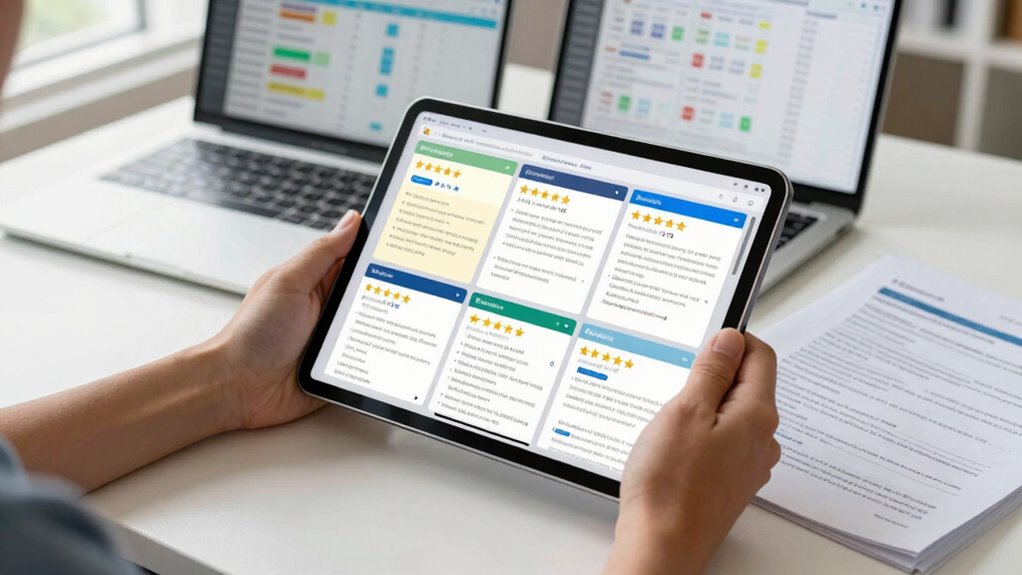
With so many review sources available today, it’s easy to feel overwhelmed when trying to gauge the quality of a product or service. The abundance of options can make it hard to determine which reviews are trustworthy, leading you to question the customer credibility behind each one. To navigate this vast landscape, you need a strategy that allows you to synthesize information efficiently. One effective approach is review aggregation, which compiles reviews from multiple sources into a single, all-encompassing overview. This method helps you see the bigger picture, filtering out the noise and highlighting consistent patterns that indicate genuine customer experiences.
When using review aggregation, focus on platforms that are known for their reliability and transparency. Look for sources that verify user identities or have moderation systems in place to weed out fake or biased reviews. These measures enhance customer credibility, giving you more confidence that the reviews reflect authentic experiences. Don’t rely solely on one review site; instead, cross-reference multiple platforms like Google Reviews, Yelp, and industry-specific sites. This diversity reduces the risk of skewed information caused by biased or manipulated reviews.
As you gather reviews, pay attention to recurring themes rather than isolated comments. If several reviews mention the same issue or praise the same feature, it’s likely a legitimate reflection of the product or service’s strengths or weaknesses. Be wary of reviews that are overly positive or negative without much detail—they can be fake or manipulated. Authentic reviews often include specific details about the user’s experience, which adds to their credibility. Use this detailed information to form a balanced opinion rather than jumping to conclusions based on a few reviews.
It’s also helpful to consider the overall star ratings in conjunction with the written reviews. A high rating with inconsistent or vague reviews might not be as trustworthy as a slightly lower rating with detailed, consistent feedback. Keep in mind that review aggregation tools can help you visualize these patterns quickly, saving you time and effort. They compile data into easy-to-understand summaries, making it simpler to make informed decisions without feeling lost in a sea of opinions. Additionally, understanding review credibility can help you distinguish between genuine feedback and potentially biased or manipulated content, leading to more accurate assessments. Recognizing the importance of consistent feedback allows you to prioritize reviews that reflect a pattern of experiences rather than isolated incidents. Moreover, being aware of cultural content in reviews can provide insights into the community and cultural perspectives that influence customer experiences.
Being mindful of review bias is crucial, as it can skew perceptions and lead to misjudgments, so always consider the context behind each review. By applying these principles, you can develop a more nuanced understanding of review reliability, which is essential for making well-informed choices. Ultimately, your goal is to sift through the noise and identify reliable, honest feedback. By focusing on customer credibility and leveraging review aggregation, you can confidently evaluate products or services without getting overwhelmed or misled. This organized approach ensures that you make smarter choices based on authentic, well-rounded insights.
review aggregation tools for products
As an affiliate, we earn on qualifying purchases.
As an affiliate, we earn on qualifying purchases.
Frequently Asked Questions
How Do I Verify the Credibility of Review Sources?
To verify the credibility of review sources, you should look for expert opinions and consumer insights that back up the reviews. Check if the source is transparent about its review process and whether the reviews are detailed and balanced. Be cautious of overly positive or negative reviews, and cross-reference multiple sources to see if they agree. This way, you guarantee you’re getting reliable, well-rounded information before making a decision.
What Tools Can Help Organize Reviews From Multiple Sources?
You can use review aggregation tools like ReviewTrackers or BirdEye to organize reviews from multiple sources efficiently. These tools compile reviews into one dashboard, making it easy to monitor and analyze feedback. Sentiment analysis features help you understand overall customer sentiment quickly. By integrating these tools, you stay organized, identify trends, and make informed decisions without getting overwhelmed by the volume of reviews across different platforms.
How to Identify Biased or Fake Reviews?
Spotting suspicious sources swiftly, you should scrutinize for signs of fake review detection. Look for overly positive language, repetitive phrases, or reviews posted in quick succession. Check review authenticity by verifying reviewer profiles for genuine activity and balanced feedback. Trust transparent, detailed reviews over vague, generic comments. Be cautious of extreme opinions and inconsistent tones. By staying alert and analyzing reviews critically, you can discern trustworthy insights from biased or fabricated feedback.
Should I Prioritize Recent Reviews Over Older Ones?
You should prioritize recent reviews over older ones, as they provide the current historical context of a product or service. Look for consistent review patterns over time, which indicate reliability. Recent reviews often reflect recent changes or improvements, helping you make informed decisions. By balancing the latest feedback with historical context, you get a clearer picture and avoid relying solely on outdated or potentially biased information.
How Often Should I Update My Review Sources?
Think of your review sources as a garden needing regular tending. You should update your sources at least monthly, ensuring fresh insights and relevant data. Regular review frequency keeps your garden vibrant and prevents overgrowth of outdated info. By consistently source updating, you stay ahead of trends and avoid confusion, just like a well-maintained garden stays healthy and beautiful. This habit makes your decision-making sharper and your insights more reliable.
As an affiliate, we earn on qualifying purchases.
Conclusion
By using multiple review sources wisely, you can make well-informed decisions without feeling overwhelmed. Remember, about 92% of consumers read online reviews before making a purchase, so leveraging various platforms gives you a more complete picture. Stay organized by noting key points from each source and cross-referencing them. This way, you avoid confusion and find the best options effortlessly. With a strategic approach, you’ll confidently navigate reviews and choose what’s truly right for you.
As an affiliate, we earn on qualifying purchases.
As an affiliate, we earn on qualifying purchases.
Halloween Picks
halloween
As an affiliate, we earn on qualifying purchases.