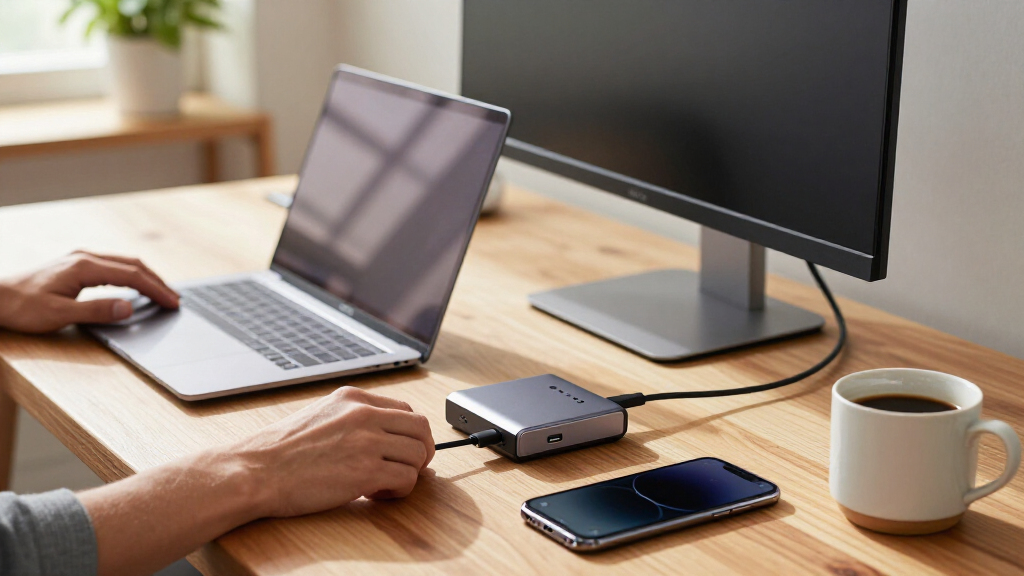

USB-C docking stations for laptops turn a single port into a full workstation — extra monitors, wired internet, USB accessories, and charging — but the right one depends heavily on your laptop and how many displays you run. My top pick overall is the Anker Prime 14-in-1 Laptop Docking Station, which balances dual-monitor support, generous power delivery, and a polished build better than anything else in this lineup. If budget leads your decision, the LIONWEI 13-in-1 delivers dual 4K HDMI and 100W passthrough charging at a friendlier price, while the Lenovo USB-C Dual Display Travel Dock is the standout for people who work from bags rather than desks. The main tradeoff you’ll face: full-featured 13- and 14-in-1 docks give you everything but demand desk space and a power brick, whereas slim hubs travel well but limit you to two displays and slower data speeds. Read on for the full breakdown of all 14 models.

Get business pricing on networking and server gear
- Business-only prices and quantity discounts
- Tax-exempt purchasing
- Multiple users, one account, clear invoices
Key Takeaways
- The Anker Prime 14-in-1 takes the top spot because it’s the only dock here that combines dual-monitor support, high-wattage passthrough charging, and a compact design without a major compromise in any one area.
- Port count proved to be a poor proxy for capability — several 13-in-1 and 14-in-1 docks share nearly identical specs, and what actually separated winners from losers was video output configuration, charging wattage, and thermal behavior under load.
- VGA ports (Selore, HoDo) are pure legacy ballast for most buyers in 2026 — they add bulk and cost for a connector almost no modern monitor needs, which dragged those docks down the rankings.
- The biggest practical divide in this roundup is desk dock versus travel dock: nothing in the 13/14-in-1 category is bag-friendly, and no slim hub matches a full dock for triple-display setups, so buyers should pick their camp first.
- DisplayLink-style triple-display claims (Anker 13-in-1, Acer 11-in-1) come with real tradeoffs — driver dependence, occasional macOS friction, and lighter host charging — that matter more than the headline monitor count suggests.
| Anker 13-in-1 USB-C Laptop Docking Station with Triple Display |  | Best Overall | Ports: 2× HDMI, DisplayPort, 3× USB-C, 3× USB-A, Gigabit Ethernet, SD, microSD, 3.5mm audio | Laptop charging: Up to 85W | Display support: Triple 1080p@60Hz; single display up to 4K@60Hz | VIEW LATEST PRICE | See Our Full Breakdown |
| LIONWEI 13-in-1 USB-C Docking Station with Dual 4K HDMI |  | Best Value | Ports: 13 total: 2 HDMI, 1 DisplayPort, 2 USB-C, 4 USB-A, Gigabit Ethernet, audio | Max display resolution: 4K at 60Hz | Power delivery: 100W input; 87W to laptop | VIEW LATEST PRICE | See Our Full Breakdown |
| Selore 14-in-1 USB-C Docking Station with Dual 4K HDMI and VGA |  | Best for Legacy Monitor Setups | Ports: 14-in-1: 2× HDMI 4K, 1× VGA, 7× USB, Ethernet, SD/microSD, audio | Video output: 2× HDMI (4K), 1× VGA | Data transfer: Up to 10Gbps | VIEW LATEST PRICE | See Our Full Breakdown |
| UGREEN USB C Docking Station Dual Monitor, 7-in-1 Aluminum Dock with 2xHDMI |  | Best Compact Pick | Ports: 2× HDMI, 2× USB-A, 2× USB-C, 1× USB-C PD | Video output: Dual 4K@60Hz | Data speed: 10Gbps (USB 3.2) | VIEW LATEST PRICE | See Our Full Breakdown |
| Acer 11-in-1 USB-C Laptop Docking Station with Triple Monitor Support |  | Best for High-Resolution Single Displays | Ports: 2× HDMI 4K@60Hz, 1× DP 8K@30Hz, 2× USB-C, 2× USB-A, Ethernet, SD/microSD | Max display output: 8K@30Hz (single), 4K@60Hz (dual) | Power delivery: 100W input / 85W output | VIEW LATEST PRICE | See Our Full Breakdown |
| Anker Nano 8-in-1 USB-C Hub with Dual 4K HDMI |  | Best Portable Dual-Monitor Hub | Ports: 8 | Video output: Dual HDMI, up to 4K@60Hz (DP 1.4, DSC 3:1) | USB data transfer: Up to 10 Gbps | VIEW LATEST PRICE | See Our Full Breakdown |
| Lenovo USB-C Dual Display Travel Dock |  | Best Travel Dock with Ethernet | Ports: 7 total | Video output: 1 x DisplayPort 1.4, 1 x HDMI 2.0, dual 4K | USB ports: 1 x USB-A 3.2 (10 Gbps), 2 x USB-C (10 Gbps, one Always-On) | VIEW LATEST PRICE | See Our Full Breakdown |
| Acer 9-in-1 USB-C Docking Station with Dual HDMI |  | Best Budget Desk Upgrade | Ports: 2 HDMI, 3 USB-A (5Gbps), 1 USB-C (5Gbps), SD, MicroSD | HDMI output: Dual monitors up to 4K@60Hz | Laptop charging: Up to 90W (100W input) | VIEW LATEST PRICE | See Our Full Breakdown |
| 14-in-1 USB-C Laptop Docking Station with Dual HDMI and DisplayPort |  | Most Ports for the Money | Ports: 14 | Video outputs: 2 HDMI, 1 DisplayPort | Single-display resolution: Up to 4K@60Hz (HDMI 1 or DP); HDMI 2 up to 4K@30Hz | VIEW LATEST PRICE | See Our Full Breakdown |
| Anker Nano 13-in-1 Laptop Docking Station with Detachable 6-in-1 USB-C Hub |  | Best Two-in-One Dock-and-Travel Kit | Ports: 13 on dock plus detachable 6-in-1 hub | Display support: 4K@60Hz single, 2K@60Hz dual, 1080p@60Hz triple | Video outputs: 2 HDMI, 1 DisplayPort | VIEW LATEST PRICE | See Our Full Breakdown |
| Dell Pro WD25 USB-C Docking Station, 100W |  | Best for Multi-Monitor Power Users | Model: WD25 | Connection: USB-C | Power Delivery: Up to 100W | VIEW LATEST PRICE | See Our Full Breakdown |
| Anker PowerExpand 8-in-1 USB-C Hub with Dual HDMI |  | Best Budget Dual-Display Hub | Ports: 2x HDMI, 2x USB-A, USB-C PD-IN, Ethernet, microSD/SD | Single Display: Up to 4K@60Hz | Dual Display: Up to 4K@30Hz | VIEW LATEST PRICE | See Our Full Breakdown |
| Anker Prime 14-in-1 Laptop Docking Station with Dual Monitor Support |  | Best Premium Charging Hub | Ports: 14-in-1 (3x USB-C, 1x USB-A, 2x HDMI, and more) | Total Power Output: 160W | USB-C PD: 100W max per port | VIEW LATEST PRICE | See Our Full Breakdown |
| HoDo 8-in-1 USB-C Docking Station with Dual 4K HDMI, DisplayPort, VGA, and 100W PD Charging |  | Best Budget Triple-Monitor Option | Ports: 2x HDMI (4K), 1x DisplayPort (4K), 1x VGA (1080P), 3x USB 2.0, 1x USB-C PD | Max Charging: 100W input / 87W output | Max Video Resolution: 4K@60Hz (HDMI 1 & DP), 4K@30Hz (HDMI 2) | VIEW LATEST PRICE | See Our Full Breakdown |
| USB-C docking stations for laptop | Ports | Compatibility | Power delivery |
|---|---|---|---|
| Anker 13-in-1 USB-C Laptop Doc | 2× HDMI, DisplayPort, 3× USB-C, 3× USB-A, Gigabit Ethernet, SD, microSD, 3.5mm audio | Windows 10/11, ChromeOS, USB-C, USB4, Thunderbolt 3/4/5 | — |
| LIONWEI 13-in-1 USB-C Docking | 13 total: 2 HDMI, 1 DisplayPort, 2 USB-C, 4 USB-A, Gigabit Ethernet, audio | — | 100W input; 87W to laptop |
| Selore 14-in-1 USB-C Docking S | 14-in-1: 2× HDMI 4K, 1× VGA, 7× USB, Ethernet, SD/microSD, audio | Windows 7/10, macOS via Thunderbolt 3 or USB-C DP Alt Mode | 100W input / 87W output |
| UGREEN USB C Docking Station D | 2× HDMI, 2× USB-A, 2× USB-C, 1× USB-C PD | Windows, macOS (mirror only), Chromebook, Surface | 100W |
| Acer 11-in-1 USB-C Laptop Dock | 2× HDMI 4K@60Hz, 1× DP 8K@30Hz, 2× USB-C, 2× USB-A, Ethernet, SD/microSD | Thunderbolt 3/4/5 or full-featured USB-C laptops | 100W input / 85W output |
| Anker Nano 8-in-1 USB-C Hub wi | 8 | Windows 10/11, ChromeOS, macOS; USB-C, USB4, Thunderbolt | — |
| Lenovo USB-C Dual Display Trav | 7 total | — | Up to 100W (requires 135W adapter) |
| Acer 9-in-1 USB-C Docking Stat | 2 HDMI, 3 USB-A (5Gbps), 1 USB-C (5Gbps), SD, MicroSD | Full-featured USB-C laptops supporting video, charging, and data | — |
| 14-in-1 USB-C Laptop Docking S | 14 | USB-C or Thunderbolt 3/4/5 with video output | Up to 100W input, 87W charging output |
| Anker Nano 13-in-1 Laptop Dock | 13 on dock plus detachable 6-in-1 hub | — | — |
| Dell Pro WD25 USB-C Docking St | 10 total, including 6 USB, HDMI, DisplayPort, Ethernet | — | Up to 100W |
| Anker PowerExpand 8-in-1 USB-C | 2x HDMI, 2x USB-A, USB-C PD-IN, Ethernet, microSD/SD | — | — |
| Anker Prime 14-in-1 Laptop Doc | 14-in-1 (3x USB-C, 1x USB-A, 2x HDMI, and more) | — | — |
| HoDo 8-in-1 USB-C Docking Stat | 2x HDMI (4K), 1x DisplayPort (4K), 1x VGA (1080P), 3x USB 2.0, 1x USB-C PD | — | — |
More Details on Our Top Picks
Anker 13-in-1 USB-C Laptop Docking Station with Triple Display
This Anker model earns the top spot because it solves the two problems that trip up most docks: incomplete power budgets and missing accessories. Unlike the UGREEN 7-in-1, which leaves you sourcing your own charger, this one ships with a 135W power adapter in the box, so the 85W laptop charging figure is actually achievable on day one. The port selection is genuinely broad — SD and microSD readers that the LIONWEI lacks, plus simultaneous 18W phone charging. The catch is display fidelity: triple-display output tops out at 1080p per screen, which is a real compromise compared with the dual 4K@60Hz setups the LIONWEI and UGREEN offer. If your priority is three screens for multitasking rather than two razor-sharp ones, this tradeoff works in your favor.
Pros:- 135W power adapter included, so full 85W charging works out of the box
- Rare triple-display support at 1080p@60Hz on Windows and ChromeOS
- SD and microSD card readers plus 10Gbps USB-C data cover nearly every peripheral
- Simultaneous 85W laptop and 18W phone charging
Cons:- Triple-display mode is capped at 1080p per screen
- macOS only mirrors external displays, no extended mode
Best for: Windows or ChromeOS users who want a true three-monitor workstation with an all-inclusive package
Not ideal for: macOS users wanting extended displays, and anyone prioritizing high-resolution dual 4K over screen count
- Ports:2× HDMI, DisplayPort, 3× USB-C, 3× USB-A, Gigabit Ethernet, SD, microSD, 3.5mm audio
- Laptop charging:Up to 85W
- Display support:Triple 1080p@60Hz; single display up to 4K@60Hz
- Power adapter:135W included
- Data transfer:Up to 10Gbps
- Compatibility:Windows 10/11, ChromeOS, USB-C, USB4, Thunderbolt 3/4/5
- Warranty:18 months
Our verdict“The safest all-around pick for multi-monitor Windows users who want everything included in one box.”
LIONWEI 13-in-1 USB-C Docking Station with Dual 4K HDMI
Where the Anker 13-in-1 spreads its video bandwidth across three 1080p screens, the LIONWEI concentrates it into dual 4K@60Hz outputs, which matters if you edit photos, read dense spreadsheets, or simply sit close to your monitors. The port spread is generous for the money: 13 connections including Gigabit Ethernet and a combined audio/mic jack, matching the Anker on breadth while beating it on resolution. It is also noticeably lighter at 140 g, making it more travel-friendly than the Anker’s 13-oz chassis. The compromises are familiar ones at this price: the dock itself consumes 13W of the 100W input, leaving 87W for the laptop — fine for most machines but tight for power-hungry workstations — and Mac extended mode is limited to a single external monitor.
Pros:- Dual 4K@60Hz HDMI plus DisplayPort for sharp multi-monitor setups
- 13 ports including Gigabit Ethernet and combo audio jack
- 10Gbps data transfer across fast USB ports
- Featherweight 140 g build travels well
Cons:- Dock reserves 13W, leaving only 87W for laptop charging
- Mac extended display mode supports just one external monitor
Best for: Budget-conscious Windows users who want dual 4K monitors and a full port spread without paying premium-brand prices
Not ideal for: MacBook owners needing multi-monitor extended desktops, or users of high-wattage gaming laptops needing maximum charge
- Ports:13 total: 2 HDMI, 1 DisplayPort, 2 USB-C, 4 USB-A, Gigabit Ethernet, audio
- Max display resolution:4K at 60Hz
- Power delivery:100W input; 87W to laptop
- Data transfer:Up to 10Gbps
- Ethernet:Gigabit
- Weight:140 g
- Warranty:18 months
Our verdict“The smart money pick for Windows users who value 4K clarity and port variety over brand polish.”
Selore 14-in-1 USB-C Docking Station with Dual 4K HDMI and VGA
The Selore’s defining feature is its VGA output — something no other dock in this lineup offers, including the similarly sized LIONWEI and Acer 11-in-1. That analog port makes it the go-to choice when your workplace still has an aging projector, conference-room screen, or older monitor hanging around. Around that, it delivers a competitive modern package: dual 4K HDMI, 10Gbps data on both USB-C and USB-A ports, and 87W passthrough charging. The plastic build feels a step below the aluminum UGREEN’s construction, and the same platform restrictions apply — Windows users get full triple-display extend modes while Mac users are stuck mirroring. It is also worth knowing the USB ports are data-only, with no video or charging passthrough on them.
Pros:- Rare VGA output for projectors and legacy monitors
- Triple-display support on Windows with mirror and extend modes
- 10Gbps transfer on both USB-C and USB-A ports
- 100W input with 87W laptop passthrough charging
Cons:- Mac users limited to mirror mode only
- USB ports do not support video or charging output
- Plastic construction feels less durable than aluminum rivals
Best for: Office workers or presenters who still connect to VGA projectors and legacy monitors alongside modern 4K displays
Not ideal for: macOS users wanting extended displays, or anyone wanting a premium metal build
- Ports:14-in-1: 2× HDMI 4K, 1× VGA, 7× USB, Ethernet, SD/microSD, audio
- Video output:2× HDMI (4K), 1× VGA
- Data transfer:Up to 10Gbps
- Power delivery:100W input / 87W output
- Network:1000Mbps Ethernet
- Compatibility:Windows 7/10, macOS via Thunderbolt 3 or USB-C DP Alt Mode
Our verdict“The pick when a VGA projector or old monitor is part of your daily mix and other docks simply cannot connect to it.”
UGREEN USB C Docking Station Dual Monitor, 7-in-1 Aluminum Dock with 2xHDMI
Not everyone needs thirteen ports, and the UGREEN makes a convincing case for restraint. Its aluminum chassis feels more premium and dissipates heat better than the plastic Selore, and the trimmed port count keeps it small enough for a laptop sleeve. Compared with the Acer 11-in-1, it focuses purely on the essentials — dual 4K@60Hz HDMI, four 10Gbps data ports, and 100W PD passthrough — executed cleanly rather than piled on. The tradeoffs are real, though: you will need to supply your own charging cable and power adapter, there is no Ethernet or card reader, and the USB ports are strictly for data, handling no charging, video, or audio. macOS users get mirror mode only, consistent with the rest of this category.
Pros:- Dual 4K@60Hz HDMI for high-resolution extended displays on Windows
- Four 10Gbps USB data ports in a compact footprint
- Aluminum build is sturdier and cooler-running than plastic rivals
- 100W Power Delivery passthrough for fast charging
Cons:- Power adapter and charging cable not included
- No Ethernet port or SD card reader
- USB ports support data only — no charging, video, or audio
Best for: Travelers and minimalists who want dual 4K monitors and fast data in a pocketable, sturdy dock
Not ideal for: Desk-only users needing Ethernet, card readers, or a complete out-of-the-box charging solution
- Ports:2× HDMI, 2× USB-A, 2× USB-C, 1× USB-C PD
- Video output:Dual 4K@60Hz
- Data speed:10Gbps (USB 3.2)
- Power delivery:100W
- Material:Aluminum
- Compatibility:Windows, macOS (mirror only), Chromebook, Surface
Our verdict“The best choice if you want a durable, travel-ready dual-monitor dock and already own a USB-C charger.”
Acer 11-in-1 USB-C Laptop Docking Station with Triple Monitor Support
The Acer 11-in-1 stands apart by pushing a single display to 8K at 30Hz through its DisplayPort output — a claim nothing else in this roundup makes, including the 4K-capped Anker 13-in-1 and LIONWEI. If you own an 8K monitor or a high-refresh 4K panel, that extra headroom is the reason to choose this one. Dual-monitor mode settles into 4K@60Hz, and the triple-monitor path is there for Windows users, again with macOS mirroring as the platform limitation. The significant cost of that display ambition is the empty accessory box: unlike the Anker, which includes a 135W brick, the Acer requires you to buy your own 100W adapter to unlock its 85W charging. USB-A ports also run at the older 5Gbps standard rather than the 10Gbps the UGREEN offers.
Pros:- 8K@30Hz single-display output via DisplayPort, unique in this lineup
- Triple-monitor support with 4K@60Hz dual mode
- 10Gbps USB-C data plus reliable 1Gbps Ethernet
- 85W laptop charging passthrough
Cons:- Power adapter and cable not included
- Mac users limited to mirroring across external monitors
- USB-A ports limited to 5Gbps
Best for: Enthusiasts and creators with 8K or high-spec displays who want maximum single-screen resolution
Not ideal for: Buyers wanting a plug-and-play kit — the missing power adapter means an extra purchase before charging works
- Ports:2× HDMI 4K@60Hz, 1× DP 8K@30Hz, 2× USB-C, 2× USB-A, Ethernet, SD/microSD
- Max display output:8K@30Hz (single), 4K@60Hz (dual)
- Power delivery:100W input / 85W output
- Data transfer:10Gbps USB-C, 5Gbps USB-A
- Network:1000Mbps RJ45 Ethernet
- Compatibility:Thunderbolt 3/4/5 or full-featured USB-C laptops
Our verdict“The pick for 8K display owners who don’t mind supplying their own power adapter.”
Anker Nano 8-in-1 USB-C Hub with Dual 4K HDMI
For road warriors who refuse to give up a dual-monitor setup, this Anker Nano 8-in-1 stands out for packing two HDMI ports into a hub that weighs under four ounces. Unlike the bulkier 14-in-1 USB-C Docking Station, which anchors you to a desk with 14 ports you’ll rarely use in a hotel room, this option keeps the essentials — dual 4K@60Hz HDMI, fast 10 Gbps data, SD/TF card slots — in a slim gray chassis that slips into a laptop sleeve.
The tradeoffs are real, though. Both displays mirror the same content on macOS, so Mac owners effectively get one extra screen, not two. And like several hubs in this roundup, the 85W pass-through charging only works with a 100W charger and cable you supply yourself, which adds cost and one more thing to remember before a trip.
Pros:- Two HDMI ports supporting dual 4K@60Hz on Windows
- Featherweight 3.84 oz design that travels easily
- 10 Gbps data transfer on both USB-A and USB-C ports
- Up to 85W laptop pass-through charging
Cons:- macOS mirrors content on both external monitors instead of extending
- 100W charger and cable required for full charging speed are sold separately
- No Linux compatibility
Best for: Windows laptop travelers who need dual 4K external monitors plus card readers without carrying a full desk dock
Not ideal for: MacBook users wanting extended dual displays — macOS mirrors the same image on both HDMI outputs, and Linux isn’t supported at all
- Ports:8
- Video output:Dual HDMI, up to 4K@60Hz (DP 1.4, DSC 3:1)
- USB data transfer:Up to 10 Gbps
- Laptop charging:Up to 85W pass-through (100W PD input)
- Card reader:SD and TF 3.0, up to 104 MB/s
- Compatibility:Windows 10/11, ChromeOS, macOS; USB-C, USB4, Thunderbolt
- Weight:3.84 oz
Our verdict“Buy this if you’re a Windows-first traveler who wants true dual 4K displays in a pocket-sized hub; skip it if you’re on a Mac or need an Ethernet jack.”
Lenovo USB-C Dual Display Travel Dock
Where the Anker Nano 8-in-1 prioritizes video and card readers, the Lenovo USB-C Dual Display Travel Dock makes a different bet: it’s the portable pick that refuses to sacrifice a wired network connection. Gigabit Ethernet is a rarity in slim travel docks, and pairing it with a DisplayPort plus HDMI combo gives you flexibility that dual-HDMI-only hubs can’t match when a monitor or projector only accepts one connector type.
The integrated cable means one fewer thing to lose in transit, and the Always-On USB-C port keeps a phone charging even when the laptop is disconnected — a small convenience the Anker Nano doesn’t offer. The catch: hitting the full 100W power delivery requires Lenovo’s separate 135W adapter, so out of the box this is a dock, not a charger. Buyers who want everything included should compare it to the Anker Nano 13-in-1, which ships with a 140W adapter.
Pros:- Gigabit Ethernet included, unlike most travel-sized hubs
- Both DisplayPort 1.4 and HDMI 2.0 for dual 4K displays
- Always-On USB-C port charges devices with the laptop disconnected
- Chassis built with 66% post-consumer recycled content
Cons:- Separate 135W adapter needed for maximum 100W power delivery
- Only works with USB-C Alt-Mode or Thunderbolt laptops
- Seven ports is lean compared to larger desktop docks
Best for: Frequent travelers and hybrid workers who need wired Ethernet reliability and mixed DisplayPort/HDMI connectivity on the road
Not ideal for: Buyers wanting a complete out-of-box solution — without the optional 135W adapter, it won’t deliver full 100W charging
- Ports:7 total
- Video output:1 x DisplayPort 1.4, 1 x HDMI 2.0, dual 4K
- USB ports:1 x USB-A 3.2 (10 Gbps), 2 x USB-C (10 Gbps, one Always-On)
- Networking:1 x RJ45 Ethernet (10/100/1000M)
- Power delivery:Up to 100W (requires 135W adapter)
- Material:66% post-consumer recycled content
- Color:Eclipse Black
Our verdict“This is the travel dock for people whose work depends on a stable wired connection and mixed video outputs; plan on adding the power adapter separately.”
Acer 9-in-1 USB-C Docking Station with Dual HDMI
The Acer 9-in-1 makes the most sense for buyers who want a straightforward dual-monitor desk setup without paying for ports they’ll never touch. Compared with the sprawling 14-in-1 Docking Station, Acer trims the port count to what most home offices actually use — two HDMI at 4K@60Hz, three USB-A ports, a USB-C data port, and SD/MicroSD slots — and wraps it in an aluminum alloy body that feels far sturdier than its budget positioning suggests.
Compromises show up in the details. Data speeds cap at 5 Gbps, half the rate of the Anker Nano 8-in-1, which matters if you shuttle large video files. The 0.65 ft built-in cable keeps clutter down but limits placement flexibility next to a monitor stand. And like nearly every hub in this category, Mac users get mirrored displays rather than extended ones, while the 90W charging output needs your own 100W+ adapter.
Pros:- Dual HDMI outputs at 4K@60Hz
- Solid aluminum alloy construction
- Up to 90W laptop charging output
- Short built-in cable minimizes desk clutter
Cons:- USB data limited to 5 Gbps versus 10 Gbps on competing hubs
- Requires a separate 100W+ power adapter for charging
- Mac external displays mirror rather than extend
Best for: Home-office Windows users building a dual 4K monitor setup on a modest budget
Not ideal for: Content creators moving large files regularly — 5 Gbps data speeds trail faster 10 Gbps competitors — and MacBook users needing extended displays
- Ports:2 HDMI, 3 USB-A (5Gbps), 1 USB-C (5Gbps), SD, MicroSD
- HDMI output:Dual monitors up to 4K@60Hz
- Laptop charging:Up to 90W (100W input)
- Card reader speed:Up to 104 Mbps
- Built-in cable length:0.65 ft
- Body material:Aluminum alloy
- Compatibility:Full-featured USB-C laptops supporting video, charging, and data
Our verdict“A sensible, well-built dual-HDMI dock for cost-conscious Windows desk setups, as long as 5 Gbps data speeds meet your needs.”
14-in-1 USB-C Laptop Docking Station with Dual HDMI and DisplayPort
If your philosophy is ‘connect everything, sort it out later,’ this 14-in-1 dock delivers the broadest port selection in this batch: three video outputs (two HDMI plus DisplayPort), Gigabit Ethernet, six USB data ports, card readers, and a 3.5mm audio jack. The Acer 9-in-1 covers the basics for less complexity, but this model is the one for desks running triple monitors on Windows or feeding multiple peripherals simultaneously.
The fine print matters more here than anywhere else. Single-display 4K@60Hz is genuine, but multi-monitor resolutions drop sharply — dual displays fall to 4K@30Hz and 1080p@60Hz, and triples max out at 1080p. Buyers chasing crisp 4K across multiple screens should look at the Anker Nano 8-in-1’s dual 4K@60Hz instead. Add the missing power adapter and charging cable, plus Mac mirroring limitations, and the value depends entirely on whether you truly need all fourteen ports.
Pros:- 14 ports including Ethernet, card readers, and audio jack
- Triple-display support on Windows systems
- USB 3.1 ports deliver up to 10 Gbps transfers
- Gigabit Ethernet plus SD and MicroSD readers built in
Cons:- Multi-monitor resolutions fall well below single-display 4K@60Hz
- Power adapter and charging cable not included
- MacBook external monitors mirror the same image
Best for: Windows power users with multi-monitor desks and lots of peripherals who prioritize port quantity over per-port resolution
Not ideal for: Anyone wanting high resolutions across multiple displays — dual and triple setups drop to 30Hz or 1080p — or Mac users needing extended screens
- Ports:14
- Video outputs:2 HDMI, 1 DisplayPort
- Single-display resolution:Up to 4K@60Hz (HDMI 1 or DP); HDMI 2 up to 4K@30Hz
- Dual/triple display:Up to 4K@30Hz + 1080p@60Hz dual; 1080p triple
- Power delivery:Up to 100W input, 87W charging output
- Ethernet:10/100/1000 Mbps
- USB data ports:3x 10Gbps, 3x 480Mbps
- Compatibility:USB-C or Thunderbolt 3/4/5 with video output
Our verdict“Choose this when sheer connectivity matters more than multi-monitor sharpness; pick a dedicated dual-4K hub if display quality is your priority.”
Anker Nano 13-in-1 Laptop Docking Station with Detachable 6-in-1 USB-C Hub
This Anker Nano 13-in-1 solves a problem no other product in this roundup addresses: buying once for both scenarios. The desktop base functions as a full 13-port station with triple-display support and 100W charging, while the detachable 6-in-1 hub pops out for travel days — effectively two products in one box. The Lenovo Travel Dock competes on portability but can’t split into a lighter carry option, and unlike Lenovo’s dock, this Anker ships with a 140W power adapter and USB-C cable included, so there’s nothing extra to buy.
Display capabilities involve compromise: you get 4K@60Hz on a single screen, but dual setups drop to 2K@60Hz and triples to 1080p — weaker than the Anker Nano 8-in-1’s dual 4K output. macOS users again face mirroring only. One quirk worth knowing: the dock requires an active laptop connection to power its ports, so it can’t function as a standalone USB charger.
Pros:- Detachable 6-in-1 hub covers both desk and travel use
- 140W power adapter and USB-C cable included in the box
- Up to three external displays on Windows
- Up to 100W laptop charging with 10Gbps data transfer
Cons:- Dual and triple displays drop to 2K and 1080p respectively
- macOS mirrors content across multiple external displays
- Dock ports only activate with a laptop connected
Best for: Hybrid workers who want one purchase covering a full desk setup and a grab-and-go travel hub
Not ideal for: Buyers needing dual displays above 2K resolution, or anyone hoping to use the dock to charge devices without a laptop attached
- Ports:13 on dock plus detachable 6-in-1 hub
- Display support:4K@60Hz single, 2K@60Hz dual, 1080p@60Hz triple
- Video outputs:2 HDMI, 1 DisplayPort
- Laptop charging:Up to 100W Power Delivery
- Maximum data transfer:10 Gbps
- Included power adapter:140W
- Included accessories:3ft USB-C cable, 5ft power cord
- Warranty:18 months
Our verdict“The smartest single purchase for hybrid workers who hate buying twice, provided multi-display resolution demands stay modest.”
Dell Pro WD25 USB-C Docking Station, 100W
Dell’s WD25 stands out for one thing no other dock in this lineup can match: support for up to four high-resolution displays from a single USB-C cable. Where the Anker Prime 14-in-1 tops out at dual monitors, this dock is built for trading desks, control rooms, and engineering workstations where screen real estate is the whole point. With 100W of power delivery, it keeps even power-hungry mobile workstations charged without a second brick.
The tradeoff is flexibility. Unlike the Anker PowerExpand 8-in-1, which works across Windows, ChromeOS and macOS, the WD25’s official support list is narrow: Windows, Ubuntu, Red Hat, and ChromeOS. macOS users should look elsewhere. IT teams will appreciate the cloud-based management support and the heavy use of recycled materials — a nice bonus for organizations with sustainability mandates.
Pros:- Supports up to four high-resolution displays — the most in this roundup
- 100W power delivery handles demanding mobile workstations
- Cloud-based management support suits fleet deployments
- At least 65% postconsumer recycled materials and fully recycled packaging
Cons:- Operating system support is limited to a specific list, with no macOS support
- At 1.2 pounds and over 8 inches wide, it’s a desk-bound dock, not a travel companion
Best for: IT departments and professionals running three or four monitors on Windows or Linux business laptops
Not ideal for: MacBook owners and anyone wanting guaranteed cross-platform compatibility, since official support excludes macOS entirely
- Model:WD25
- Connection:USB-C
- Power Delivery:Up to 100W
- Display Support:Up to four high-resolution displays
- Ports:10 total, including 6 USB, HDMI, DisplayPort, Ethernet
- OS Compatibility:Windows 10/11, Ubuntu 24.04, RHEL 9.6+, ChromeOS 137
- Dimensions:8.07 x 3.54 x 1.39 inches, 1.2 pounds
Our verdict“If your job depends on three or four screens at once and you’re on Windows or Linux, this is the dock to buy — everyone else can save money and space with smaller options.”
Anker PowerExpand 8-in-1 USB-C Hub with Dual HDMI
For buyers who want a second screen without paying for a full-size dock, the PowerExpand 8-in-1 covers the essentials in a compact, affordable package. Compared with the HoDo 8-in-1, it trades the extra DisplayPort and VGA outputs for a built-in SD/microSD card reader — a real advantage for photographers and content creators shuttling camera files to a laptop.
The compromises are worth understanding before buying. Dual displays only run at 4K@30Hz, and on macOS the two HDMI outputs mirror the same image rather than extending the desktop — Apple users effectively get one screen. There’s also no charger in the box: hitting the full 85W pass-through charging requires supplying your own 100W PD brick and cable. But for a Windows or ChromeOS laptop at a desk with two monitors, this pick makes the most sense for the price.
Pros:- Two HDMI outputs plus Ethernet and SD/microSD readers in one small hub
- Single-display 4K@60Hz output for a crisp primary monitor
- 85W pass-through charging keeps most laptops powered
- Works with USB-C, USB4, and Thunderbolt laptops
Cons:- Dual displays drop to 4K@30Hz, which feels less smooth for video and scrolling
- Requires a separate 100W PD charger and cable for pass-through charging
Best for: Windows or ChromeOS laptop owners who want dual 4K monitors, Ethernet, and card readers on a tight budget
Not ideal for: MacBook users needing extended dual displays, since macOS mirrors both outputs, and Linux users, which isn’t supported
- Ports:2x HDMI, 2x USB-A, USB-C PD-IN, Ethernet, microSD/SD
- Single Display:Up to 4K@60Hz
- Dual Display:Up to 4K@30Hz
- Pass-Through Charging:Up to 85W (with 100W PD charger)
- OS Compatibility:Windows 10/11, ChromeOS; not Linux
- Warranty:18 months
Our verdict“A smart low-cost entry point for Windows and Chrome users who need two screens and card readers — just don’t expect extended displays on a Mac.”
Anker Prime 14-in-1 Laptop Docking Station with Dual Monitor Support
The Anker Prime 14-in-1 justifies its premium positioning through raw power delivery: 160W total output means this dock can charge your laptop at 100W while simultaneously powering three other devices — something the Dell WD25, with its single 100W ceiling, can’t do. For a desk with a phone, tablet, earbuds, and laptop all fighting for outlets, this model effectively replaces a charging station and a dock in one unit.
It’s not flawless. Like the Anker PowerExpand 8-in-1, it carries macOS baggage — external monitors mirror rather than extend — and Linux is off the table entirely. Display resolution also depends heavily on your laptop’s DisplayPort version, dropping to 1080p@60Hz per monitor on DP 1.2 systems, and ultrawide 5120×1440 panels aren’t supported at all. Compared with the Selore 14-in-1, you get fewer video output types but far better charging muscle.
Pros:- 160W total output charges up to four devices simultaneously
- 100W max per USB-C port handles power-hungry laptops
- 10Gbps data transfer across the port selection
- Broad USB-C, USB4, and Thunderbolt compatibility with included 3.3 ft cable
Cons:- macOS mirrors external displays instead of extending them
- No Linux support and no 5120×1440 ultrawide support
Best for: Windows and ChromeOS users who want one dock that charges a laptop plus three accessories at full speed
Not ideal for: MacBook owners wanting extended dual displays, and ultrawide 5120×1440 monitor users, since neither is supported
- Ports:14-in-1 (3x USB-C, 1x USB-A, 2x HDMI, and more)
- Total Power Output:160W
- USB-C PD:100W max per port
- Data Transfer:Up to 10Gbps
- Display Support:Dual 4K (2K@60Hz on DP 1.4, 1080p@60Hz on DP 1.2)
- OS Compatibility:Windows 10/11, ChromeOS
- Included Cable:3.3 ft USB-C upstream, 100W, 10Gbps
Our verdict“The best choice if charging capacity matters as much as connectivity — skip it if you run macOS or an ultrawide monitor.”
HoDo 8-in-1 USB-C Docking Station with Dual 4K HDMI, DisplayPort, VGA, and 100W PD Charging
The HoDo 8-in-1 is the cheapest route in this roundup to a three-monitor setup, thanks to its mix of two HDMI ports, DisplayPort, and VGA. Unlike the Anker PowerExpand 8-in-1, which is limited to two displays, this dock can drive three screens simultaneously — handy for multitaskers on older monitors that still rely on VGA. Its 100W PD input (87W to the laptop) keeps most machines charged while docked.
The catch is that this is a no-frills budget pick, and it shows. All three USB ports run at USB 2.0 speeds (480 Mbps) — fine for keyboards and mice, painful for external drives. Full functionality also requires a laptop with DisplayPort Alternate Mode, which rules out several popular models like Dell Gaming laptops and older ThinkPads. Add the missing power adapter and the VGA port dragging every display down to 1080P, and the low price starts to look like a tradeoff rather than a bargain.
Pros:- Drives up to three monitors simultaneously with 4K on HDMI 1 and DisplayPort
- HDMI, DisplayPort, and VGA outputs cover both modern and legacy monitors
- 100W PD input (87W output) keeps laptops charged during use
Cons:- USB 2.0 speeds (480 Mbps) make large file transfers painfully slow
- Requires a laptop USB-C port with DP Alt Mode and DP 1.4 — incompatible with several popular laptops
- Power adapter not included, and using the VGA port caps all displays at 1080P
Best for: Budget-conscious users with DP Alt Mode laptops who want three monitors and mostly connect keyboards and mice
Not ideal for: Anyone transferring files from external drives — the USB 2.0 ports are far too slow — or owners of laptops without DP Alt Mode support
- Ports:2x HDMI (4K), 1x DisplayPort (4K), 1x VGA (1080P), 3x USB 2.0, 1x USB-C PD
- Max Charging:100W input / 87W output
- Max Video Resolution:4K@60Hz (HDMI 1 & DP), 4K@30Hz (HDMI 2)
- USB Data Speed:480 Mbps (USB 2.0)
- Requirement:USB-C port with DisplayPort Alternate Mode and DP 1.4
Our verdict“A reasonable pick if you need three screens for very little money, but verify your laptop supports DP Alt Mode and don’t expect fast data speeds.”
How We Picked
I evaluated each dock through the lens a laptop owner actually cares about: display support first (how many monitors, at what resolution, over which connectors), then power delivery (can it charge a 65W or 100W laptop while everything is plugged in), then data performance (USB-A and USB-C throughput, whether Ethernet is gigabit), and finally build and thermals. A dock that drives three 4K screens but only passes 60W to the laptop ranks lower for power users than one that does two displays at a full 100W, because a drained battery mid-workday is a worse failure mode than a missing third monitor.
The ranking also weighs who each dock is actually for. Travel-focused models like the Lenovo dock were judged on weight and cable management, not raw port count, while desktop workhorses like the Dell WD25 and Anker Prime were judged on stability, heat, and single-cable convenience. Legacy ports were treated as a liability rather than a bonus unless you specifically need them — a VGA port in 2026 costs you space and money for a connector most people will never touch. Finally, I penalized docks whose feature claims depend on fragile drivers or host-laptop quirks, because a dock that works perfectly on one laptop and poorly on another is a gamble, not a purchase.
Factors to Consider When Choosing USB-C Docking Stations For Laptops
Before you pick a specific model, it helps to understand what actually drives performance differences between USB-C docking stations — because spec sheets hide as much as they reveal.Know Your Laptop’s USB-C Limitations Before Anything Else
The single most common mistake buyers make is assuming every USB-C port does everything. A USB-C port that only supports USB 3.2 data cannot output video at all, no matter how capable the dock is — you’ll plug in a triple-display dock and get a black screen. Check whether your laptop’s port supports DisplayPort Alt Mode (required for native video out) and USB Power Delivery (required for passthrough charging). This is why several docks in this roundup work flawlessly on one machine and disappoint on another, and why no review can promise universal compatibility. MacBooks add another wrinkle: Apple Silicon limits native extended displays to one or two screens depending on the chip, so triple-display docks only hit their claimed monitor count using driver-based workarounds. Windows laptops with Thunderbolt-capable ports get the best results across the board. Spend five minutes on your laptop manufacturer’s spec page before spending a hundred dollars on a dock.
Power Delivery: The Wattage Number That Actually Matters
Passthrough charging wattage determines whether your laptop stays charged under load — and 60W versus 100W is the difference between a dock that works for a 13-inch ultrabook and one that suits a 16-inch workstation. A 65W laptop on a 60W dock will slowly lose battery during heavy use, which surprises a lot of buyers who assumed “charging” meant fully charging. Gaming laptops and larger machines typically want 100W, and some will throttle performance when they detect insufficient power. Note that the wattage advertised on the dock’s box is usually what the included power adapter delivers — the laptop gets slightly less after the dock siphons power for its own ports and any attached drives. If you run bus-powered external SSDs plus multiple displays, budget for a dock rated at least 15–20W above your laptop’s charging requirement. And remember that plugging your laptop’s own charger into a dock that supports PD input replaces a cable, not the charger itself.
Monitor Count, Resolution, and the Bandwidth Problem
Every display you connect consumes bandwidth from the same USB-C pipe, which is why dual 4K at 60Hz is a genuinely demanding requirement that only some docks here handle. Docks that claim dual 4K often run the second display at 30Hz — fine for static documents, miserable for scrolling or video. Check the fine print for per-port refresh rates, not just the headline resolution. Also weigh connector type: HDMI is universal, DisplayPort suits high-refresh monitors, and VGA exists almost exclusively for aging office projectors and conference-room screens. If you’re a presenter who regularly hits legacy projector setups, a VGA port shifts from liability to requirement. For everyone else, an extra USB-A or Ethernet port delivers more daily value than a VGA output you’ll never use. And if you want three or more displays, understand that some docks achieve it through software drivers rather than hardware, which brings compatibility risk I’ll cover below.
Driver-Based Multi-Display Docks: The Compatibility Gamble
Several high-port-count docks in this category use DisplayLink or similar chipsets to drive displays beyond what your laptop’s hardware natively supports. This works — millions of people use it daily — but it depends on a driver that must be installed, updated, and permitted by your operating system. Corporate IT departments sometimes block these drivers outright, which is worth checking before you buy. macOS users face extra friction: DisplayLink drivers historically lag behind major macOS updates, occasionally breaking external displays for weeks after an OS upgrade. There’s also a small CPU cost, since the driver compresses and ships frames over USB rather than using dedicated display pipelines. If you’re buying a dock for a locked-down work laptop, a native dual-display dock with rock-solid compatibility beats a triple-display dock that IT won’t let you install drivers for. Read the dock’s support pages for your specific OS version before committing.
Gigabit Ethernet Is Underrated — and Not Always Included
Wi-Fi has improved dramatically, but a wired connection still wins for video calls, large file transfers, and latency-sensitive work — and it’s mandatory in many offices with restricted wireless. Surprisingly, some higher-port-count docks in this space skip Ethernet entirely or ship 100Mbps ports dressed up as gigabit. Check the spec for “10/100/1000” specifically; a 100Mbps Ethernet port will bottleneck your connection below what most home broadband delivers in 2026. Ethernet also sidesteps the congested 2.4GHz and 5GHz bands in apartment buildings and shared offices, which is often the real fix for choppy meeting audio. Remote workers connecting to corporate VPNs get a secondary benefit: a stable wired connection dramatically reduces VPN dropouts. If your workday involves any of the above, treat Ethernet as a requirement, not a nice-to-have, and cross off any dock that omits it.
Build, Heat, and the Desk-versus-Travel Decision
Docks running multiple displays and charging a laptop simultaneously generate real heat, and cheap enclosures handle it poorly — hot docks degrade their own circuitry over time and can destabilize attached drives. Aluminum-housed docks like the UGREEN and the Anker Prime dissipate heat far better than plastic shells, which is a genuine durability advantage rather than just aesthetics. Cable design matters too: a built-in short cable suits a fixed desk position, while a longer attached cable or detachable design gives you placement flexibility. Weight cuts both ways — a heavy dock stays put when you unplug cables, while anything under about half a pound is genuinely bag-portable. Decide your use case before comparing specs, because this roundup’s desk docks and travel docks barely overlap. Trying to buy one dock for both roles usually produces a compromise that does neither job well.
Frequently Asked Questions
Will a USB-C docking station work with any laptop?
Not automatically — the dock needs features your laptop’s USB-C port must support. Video output requires DisplayPort Alt Mode, and passthrough charging requires USB Power Delivery, and neither is guaranteed on budget laptops or older machines. A laptop with a basic USB 3.2 data-only port will get storage, keyboard, and Ethernet functions from a dock but no external displays and no charging. Thunderbolt laptops handle virtually every dock here, while USB-C ports limited to Alt Mode (no Thunderbolt) can usually drive one or two displays depending on bandwidth. The safest approach is checking your laptop’s spec sheet for its USB-C port capabilities before ordering anything, and buying from a retailer with a straightforward return policy in case of a mismatch.
Can I connect three monitors to a MacBook using one of these docks?
Only with caveats. Apple Silicon MacBooks natively support just one extended display on base M-series chips and two on Pro/Max chips, so any dock promising three or more monitors on a Mac is doing it through DisplayLink drivers rather than hardware. That approach works — the Anker 13-in-1 and Acer 11-in-1 are built around it — but it needs a driver install, may break temporarily after macOS updates, and adds slight CPU load. Intel MacBooks behave more like Windows machines and can use native multi-display output. If you’re on an M-series Mac and need guaranteed three-screen reliability, a Thunderbolt dock paired with base-model limitations may be the honest answer, or step up to a Pro/Max chip machine. For most MacBook users, two external displays covers the actual need without driver risk.
Is 100W passthrough charging enough for a gaming laptop?
For many gaming laptops, 100W covers idle and light use but falls short of the 180–330W these machines draw under load. Most gaming laptops will run fine while plugged into a 100W dock for productivity tasks, then throttle GPU performance or drain the battery slowly during gaming sessions. Some machines refuse to draw power from a 100W source at all and run off battery even while docked, which surprises buyers expecting a full desktop replacement. If your gaming laptop lives on a desk most of the time, the pragmatic approach is using the dock for displays and peripherals while keeping the OEM charger connected for the power-hungry sessions. Check your laptop’s charging input spec — if it exceeds 100W, no dock in this roundup will fully replace its own charger under load.
What’s the real difference between a 7-in-1 hub and a 13-in-1 docking station?
Beyond port count, the structural differences are power delivery capacity, display support, and whether the device needs its own power adapter. Slim 7- and 8-in-1 hubs typically pass 85–100W through to the laptop but run everything off the single USB-C connection, which limits simultaneous display bandwidth. Full docking stations ship with their own substantial power bricks, allowing more ports, faster simultaneous operation, and steadier charging under load. Hubs win on portability and price; docks win on capability and stability for a permanent desk setup. If you commute with the device in a bag, get a hub — the weight of a powered dock becomes tiresome fast. If the device lives on a desk and you plug in once a day, the dock’s extra capability is worth the bulk.
Do I need to install drivers or software for a docking station to work?
Most docks using native DisplayPort Alt Mode work plug-and-play with no software at all — displays, Ethernet, and USB ports just appear. The exception is docks that drive displays via DisplayLink or similar chipsets, which need a driver installed before their extra monitor outputs function. These driver-based docks are often the ones advertising three or more displays on machines that shouldn’t natively support them. The tradeoffs to know: corporate-managed laptops may block the driver install, macOS support can lag behind OS updates, and the driver occasionally needs reinstallation after system updates. If you want a zero-software experience, choose a dock limited to one or two native displays rather than one promising triple-monitor output. Check the manufacturer’s compatibility page for your OS version before buying any driver-dependent model.
Conclusion
After comparing all fourteen, my recommendations break down cleanly by buyer type. For the best overall pick, the Anker Prime 14-in-1 hits the sweet spot of dual-monitor support, serious power delivery, and premium build without the legacy baggage of the Selore or HoDo. The best value goes to the LIONWEI 13-in-1, which matches far pricier docks on dual 4K HDMI and 100W charging while cutting costs only where most buyers won’t notice. If money is no object and you want maximum desk capability, the Anker 13-in-1 with triple display or the Dell WD25 (particularly for Dell laptop owners) sit at the premium end with matching polish.
Beginners who just want one cable to fix everything should start with the Anker PowerExpand 8-in-1 or UGREEN 7-in-1 — fewer ports, but everything works out of the box with no driver surprises. Travelers get a clear winner in the Lenovo Dual Display Travel Dock, and the Anker Nano models suit anyone splitting time between a few fixed desks. If your specific need is legacy projectors and old monitors, the HoDo with VGA covers that corner when nothing else here does. Whatever you choose, verify your laptop’s port capabilities first — the best dock in this lineup is only as good as the USB-C port it plugs into.
Fall Picks
fall essentials
As an affiliate, we earn on qualifying purchases.