
When migrating legacy apps to containers, you often overlook vital security measures, such as proper isolation and ongoing monitoring, leaving vulnerabilities open. Dependencies on outdated hardware, OS, or middleware can create gaps, while neglected integration challenges can cause data inconsistencies and performance issues. Plus, maintenance becomes harder if your legacy code isn’t compatible with modern tooling. Ignoring these risks can undermine your migration’s benefits—stay with us to uncover how to avoid these common pitfalls.

Get business pricing on networking and server gear
- Business-only prices and quantity discounts
- Tax-exempt purchasing
- Multiple users, one account, clear invoices
Key Takeaways
- Overlooking comprehensive container security measures like isolation, least privilege access, and anomaly monitoring.
- Failing to fully identify and manage legacy application dependencies and hardware requirements.
- Neglecting to assess and test interactions between legacy code and modernized environments.
- Underestimating the complexity of integrating legacy systems with containerized workflows.
- Ignoring the importance of establishing ongoing maintenance, updates, and compatibility with modern tooling.
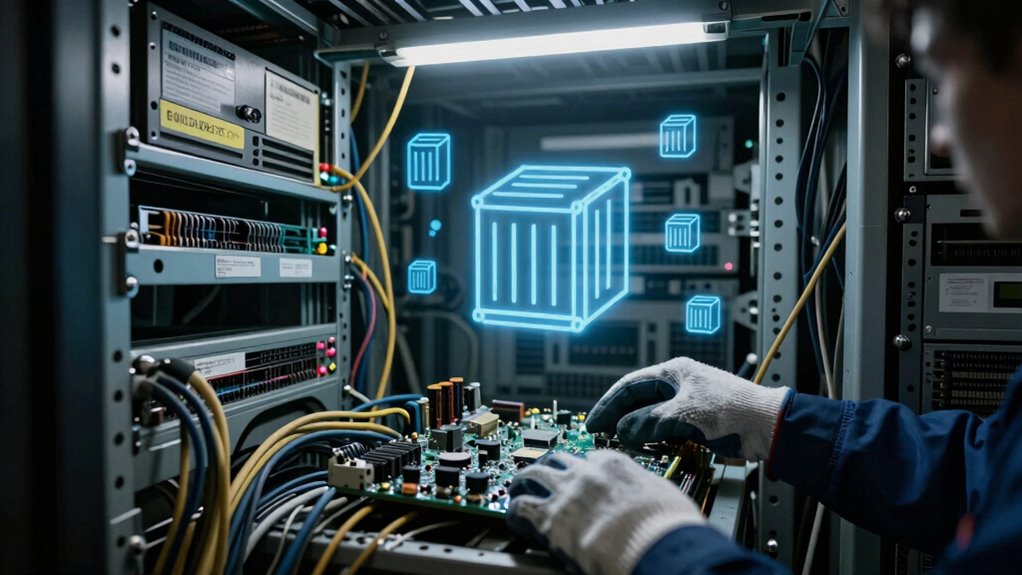
Migrating legacy applications to containers has become essential for modernizing IT infrastructure and improving deployment efficiency. But as you explore this process, it’s easy to overlook some critical aspects that can impact your success down the line. One of the most overlooked elements is container security. When you move legacy systems into containers, security isn’t just about locking down the container itself; it’s about understanding how these older applications interact within a new, more dynamic environment. Many engineers focus on the technical migration but neglect to implement robust security measures tailored for containers. This oversight can leave vulnerabilities open, especially if your legacy applications rely on outdated protocols or are still exposed to legacy authentication methods. You need to think about how to isolate containers properly, enforce least privilege access, and continuously monitor for anomalies. Without these precautions, your modern container environment could become a target for attacks, undermining your entire migration effort. Additionally, it’s crucial to recognize how legacy application dependencies can influence your security posture, ensuring that all components are accounted for during the transition. Recognizing and managing these dependencies is essential to prevent security gaps and maintain compliance. Furthermore, understanding how legacy code interacts with modern environments is key to preventing unexpected issues during migration and operation.
Another critical aspect you might miss is legacy integration. Legacy applications often have deep dependencies on specific hardware, operating systems, or middleware that aren’t immediately apparent. When you containerize these apps, you might think the transition is straightforward, but the reality is more complex. Legacy integration involves making sure that these applications can still communicate effectively with other systems, databases, or services that haven’t migrated yet. You may also overlook how the legacy code interacts with external APIs or internal data flows, which can cause unexpected failures or performance issues. To address this, you need thorough testing and validation, as well as strategies for bridging gaps between old and new systems—like using sidecars, proxies, or API gateways. Overlooking these integration challenges can result in broken workflows, data inconsistencies, or degraded application performance, all of which could negate the benefits of containerization. Proper planning for integration ensures continuity and helps avoid costly rework later.
Furthermore, many engineers underestimate the importance of planning for ongoing maintenance and updates. Once your legacy apps are inside containers, it’s tempting to assume everything will run smoothly without much intervention. However, containers require continuous security patches, updates, and health monitoring—especially when dealing with legacy code that might not be compatible with modern tooling. If you don’t establish a sustainable update process, the containerized apps could become outdated, insecure, or incompatible with future infrastructure changes. In essence, successful migration isn’t just about the initial move; it’s about creating a resilient, secure, and well-integrated environment that can adapt over time. By paying close attention to container security, legacy integration, and ongoing maintenance, you ensure your migration adds real value rather than creating new vulnerabilities or operational headaches. Incorporating automated management tools can greatly facilitate this ongoing process and help maintain stability. Recognizing these ongoing needs is vital for long-term success and should be part of your initial migration planning.
container security monitoring tools
As an affiliate, we earn on qualifying purchases.
As an affiliate, we earn on qualifying purchases.
Frequently Asked Questions
How Do Legacy Dependencies Affect Containerization Efforts?
Legacy dependencies can substantially challenge your containerization efforts by causing dependency conflicts and version mismatches. These issues make it tough to create a consistent environment across containers, leading to unpredictable behavior. You might spend extra time resolving conflicts or downgrading packages, which defeats the purpose of streamlined deployment. Addressing these dependencies upfront guarantees smoother migration, reduces bugs, and maintains stability in your containerized applications.
What Are Common Security Concerns During Migration?
Think of migrating your legacy apps to containers as moving valuables into a new safe—security concerns must be carefully managed. You might overlook container security risks or vulnerability management during the rush. Attackers could exploit misconfigurations or outdated dependencies, so you need to implement strong access controls and continuous vulnerability scanning. Paying attention to these aspects guarantees your containers stay secure and resilient against potential threats.
How to Handle Legacy Data Persistence in Containers?
To handle legacy data persistence in containers, you should implement effective persistence strategies like external volumes or bind mounts. During data migration, make certain you back up your legacy data and transfer it carefully to the container environment. Use persistent storage solutions that survive container restarts and migrations, maintaining data integrity. This approach guarantees continuous access and reliable data management, preventing data loss and streamlining your migration process.
What Are Performance Trade-Offs in Containerized Legacy Apps?
Imagine your app as a busy highway; moving it to containers is like adding new lanes. You might face resource allocation issues, where containers compete for CPU and memory, slowing down traffic. Network latency can also increase as data hops through virtual layers, causing delays. These trade-offs can hinder performance, making your legacy app feel like it’s stuck in traffic instead of racing smoothly.
How to Train Teams on New Container Management Practices?
You should foster team collaboration by organizing hands-on training sessions that emphasize real-world scenarios, making training more effective. Encourage open communication so team members can share challenges and solutions. Use interactive workshops and documentation to reinforce learning. Regularly update training materials to reflect new container management practices. By promoting teamwork and continuous learning, you guarantee your team adapts seamlessly, boosting overall training effectiveness and operational success.
legacy app dependency management software
As an affiliate, we earn on qualifying purchases.
As an affiliate, we earn on qualifying purchases.
Conclusion
As you sail through the container seas, remember that missing the nuances of legacy apps is like overlooking hidden reefs beneath calm waters. Keep your eyes sharp and your compass steady, for overlooked dependencies and overlooked configurations can send you off course. Embrace the voyage with thorough planning and mindful adjustments, turning potential storms into smooth sailing. With every careful step, you’ll transform the migration into a seamless voyage, where your legacy treasures shine anew in their containerized home.
container orchestration security solutions
As an affiliate, we earn on qualifying purchases.
As an affiliate, we earn on qualifying purchases.
As an affiliate, we earn on qualifying purchases.
Fall Picks
fall essentials
As an affiliate, we earn on qualifying purchases.