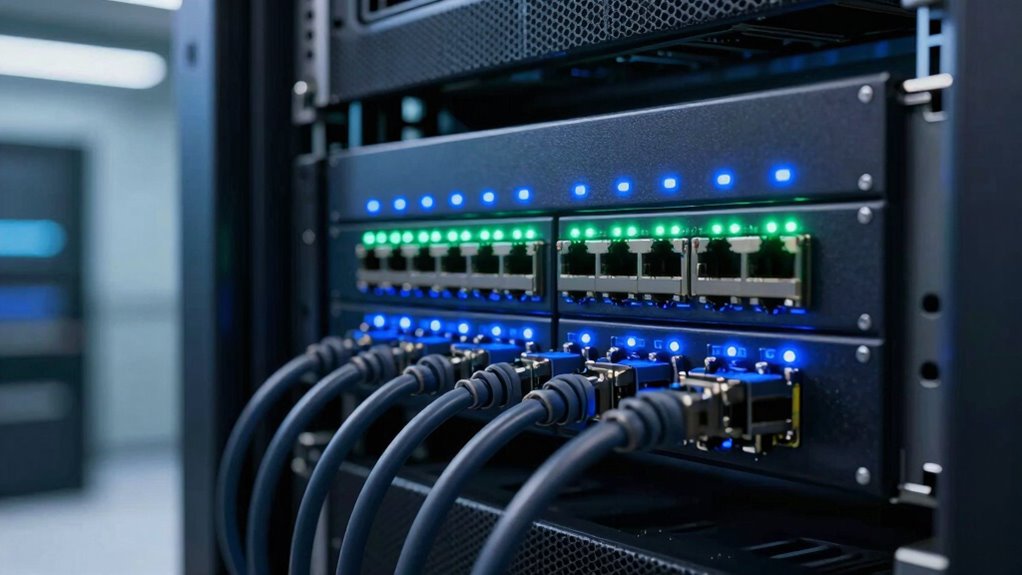

Using multi-gig switches before a full 10GbE upgrade makes sense because they offer a cost-effective way to boost your network’s performance now. They support existing cables like Cat5e or Cat6, making deployment quick and simple without major disruptions or expenses. These switches help you manage growing data demands and lay a solid foundation for future upgrades. To discover how this phased approach maximizes your network’s potential, keep exploring the benefits in detail.
Key Takeaways
- They offer a cost-effective, scalable upgrade path without replacing existing cabling or infrastructure.
- Multi-gig switches easily integrate with current setups, enabling quick deployment with minimal configuration.
- They support growing bandwidth demands and serve as a foundation for future 10GbE upgrades.
- These switches enhance performance for high-bandwidth applications like video editing and large data transfers.
- They enable gradual network expansion, reducing risks and aligning with budget constraints.
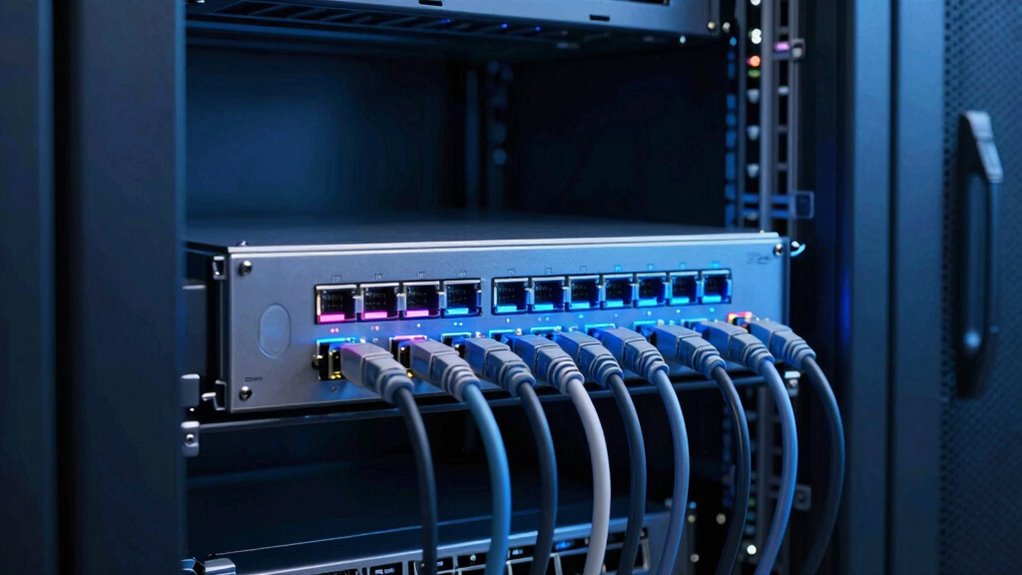
Upgrading your network infrastructure can be a significant investment, but jumping straight to full 10GbE speeds isn’t always the most practical first step. Instead, you might consider deploying multi-gig switches, which provide a smart bridge toward higher network performance. These switches deliver speeds of 2.5GbE or 5GbE, offering a cost-effective solution that enhances your existing setup without the need for a complete overhaul. This approach allows you to manage network scalability efficiently, accommodating growing data demands while avoiding unnecessary expenses. By integrating multi-gig switches, you enable your network to handle increased bandwidth needs now, setting the stage for future 10GbE upgrades when you’re ready.
Deploy multi-gig switches as a cost-effective, scalable step toward higher network performance and future 10GbE upgrades.
Multi-gig switches serve as a flexible, incremental upgrade path, giving you the ability to boost performance without the hefty price tag associated with full 10GbE implementations. They work seamlessly with your current infrastructure, often supporting existing network cables like Cat5e or Cat6, which means you don’t need to invest heavily in new cabling. This compatibility makes them an attractive choice for organizations seeking immediate improvements with minimal disruption. Plus, they’re easy to deploy, requiring little configuration, which means you can start seeing benefits quickly. Additionally, understanding network infrastructure can help you optimize your upgrade strategy for the best results.
Focusing on cost-effective solutions is crucial, especially if you’re managing a tight budget or want to maximize your investment. Multi-gig switches help you do just that, providing increased throughput for bandwidth-intensive applications such as video editing, large data transfers, or virtualized environments—all without the high costs that come with a full 10GbE upgrade. They also support a range of devices, ensuring your network remains versatile and adaptable as your needs evolve. This flexibility helps future-proof your infrastructure, giving you time to plan for a full 10GbE transition when it makes sense financially and operationally. Investing in network scalability is essential for long-term success, and multi-gig switches are a key component of that strategy.
Ultimately, embracing multi-gig switches before moving to full 10GbE speeds makes strategic sense. They improve your network’s performance now, support your growth, and help you avoid overspending on unnecessary upgrades. It’s a practical, scalable solution that aligns with your current demands while laying the groundwork for future expansion. With their ability to boost network scalability and offer cost-effective solutions, multi-gig switches are an intelligent choice—enabling you to enhance your network incrementally and efficiently, without rushing into a costly full-speed upgrade.

TP-Link TL-SG105S-M2, 5 Port Multi-Gigabit 2.5G Unmanaged Ethernet Switch
- Five 2.5Gbps Ports: Supports high-speed Multi-Gig bandwidth
- Auto-Negotiation: Adjusts speeds for device compatibility
- Versatile Use Cases: Ideal for gaming, streaming, and office
As an affiliate, we earn on qualifying purchases.
As an affiliate, we earn on qualifying purchases.
Frequently Asked Questions
Can Existing Network Cables Support Multi-Gig Speeds?
Your existing network cables might support multi-gig speeds if they’re at least Cat5e or higher, but cable compatibility varies. To guarantee peak performance, it’s crucial to check the specifications of your cables before upgrading. Infrastructure upgrading often involves replacing older cables that can’t handle multi-gig speeds, preventing bottlenecks. Upgrading cables alongside switches ensures your network runs smoothly and maximizes the benefits of multi-gig technology.
What Are the Cost Differences Between Multi-Gig and 10GBE Switches?
Jumping into multi-gig switches now can save you money in the long run, as they’re generally more affordable than full 10GbE switches. While the initial cost difference isn’t huge, multi-gig switches offer better network scalability and lower power consumption, helping you run a more efficient setup. Think of it as getting the most bang for your buck while ensuring your network’s future-proofed and ready to grow.
How Do Multi-Gig Switches Improve Network Performance?
Multi-gig switches improve network performance by increasing data transfer speeds, supporting higher bandwidth for demanding applications. They enhance network scalability, allowing you to add more devices without bottlenecks. Plus, they’re power-efficient, reducing energy costs while maintaining ideal performance. With these benefits, your network becomes more reliable and capable of handling future growth, all while saving you money on power and infrastructure upgrades.
Are Multi-Gig Switches Compatible With Current Devices?
Think of multi-gig switches like a universal adapter—they’re compatible with many current devices, including those supporting Wireless integration and Power over Ethernet. You’ll find most multi-gig switches work seamlessly with existing network gear, ensuring smooth upgrades. While some older devices might need adapters, many modern devices already support these switches’ speeds, making your network more flexible and ready for future growth without replacing every device right now.
What Is the Typical Lifespan of a Multi-Gig Switch?
A typical multi-gig switch lasts around 5 to 7 years, depending on usage and build quality. You can expect good network durability and hardware longevity if you choose reputable brands and perform regular maintenance. While technology advances quickly, well-maintained switches can serve your needs effectively during this period. Keep an eye on firmware updates and environmental conditions to prolong your switch’s lifespan and guarantee reliable network performance.

TP-Link TL-SG108S-M2, 8-Port Multi-Gigabit 2.5G Unmanaged Ethernet Switch
- 8x 2.5-Gigabit Ports: Supports high-speed Multi-Gig bandwidth
- Up to 40 Gbps Capacity: Provides high switching capacity for fast data transfer
- Auto-Negotiation Technology: Adjusts link speeds for optimal device compatibility
As an affiliate, we earn on qualifying purchases.
As an affiliate, we earn on qualifying purchases.
Conclusion
Wrapping up, upgrading to multi-gig switches makes wise, wallet-friendly sense before jumping to full-blown 10GbE. They provide a perfect, practical stepping stone, saving stress and sparing spending. Seamlessly switch to speed, simplify setups, and stay savvy with this strategic step. So, stay smart, skip the scramble, and smoothly shift your network’s speed with multi-gig switches—you’ll thank yourself later!

10Gbe Ethernet Switch Unmanaged with 2 x 10Gb RJ45 Ports + 4 x 2.5Gb Base-T Ports, Desktop/Wall Mount NICGIGA 6 Port 10Gbps Network Switch for Wireless AP, NAS, PC
- Number of Ports: 6 ports including 2x 10Gb and 4x 2.5Gb
- Port Speeds: Supports 10G, 5G, 2.5G, 1G, 100Mbps
- High Performance: 60Gbps switching capacity for fast data transfer
As an affiliate, we earn on qualifying purchases.
As an affiliate, we earn on qualifying purchases.
TP-Link TL-SG108S-M2, 8-Port Multi-Gigabit 2.5G Unmanaged Ethernet Switch
- 8x 2.5-Gigabit Ports: Supports high-speed Multi-Gig bandwidth
- Up to 40 Gbps Capacity: Provides high switching capacity for fast data transfer
- Auto-Negotiation Technology: Adjusts link speeds for optimal device compatibility
As an affiliate, we earn on qualifying purchases.
As an affiliate, we earn on qualifying purchases.