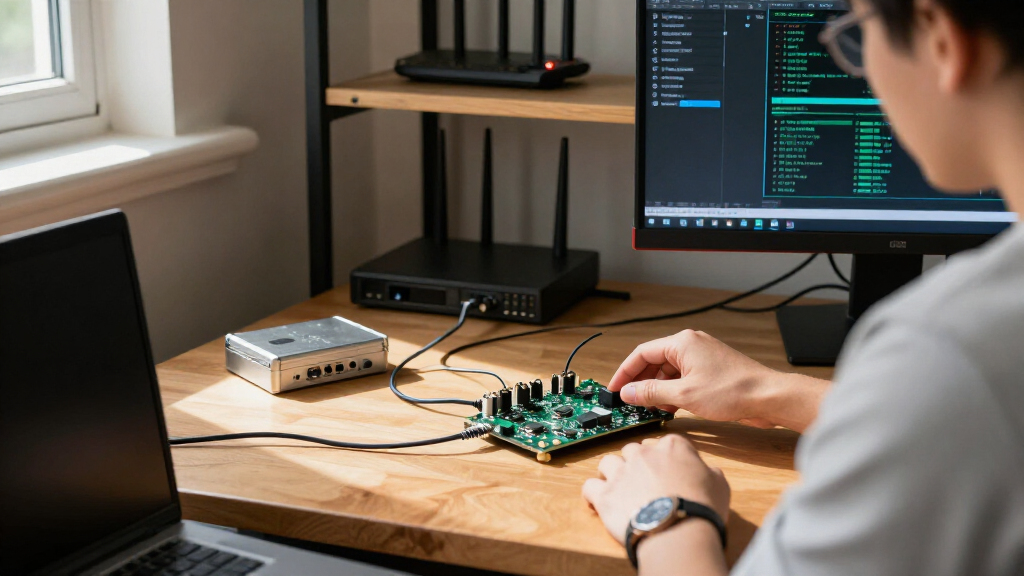

For most homelabs, I would start with the Orange Pi 5 Plus: its RK3588 processor and 8GB of RAM offer a capable base for running several services. The ZimaBoard 2 is a stronger fit if you want an x86 home-server platform, while the Raspberry Pi 5 Starter Kit is appealing if you value a familiar setup with cooling and a case included. The main tradeoffs are processing capacity, memory, connectivity, power use, and how much setup work you are willing to take on. Smaller boards can handle lightweight services, but limited RAM and storage can narrow their uses. Read on for my full comparison and recommendations by homelab workload.

Get business pricing on networking and server gear
- Business-only prices and quantity discounts
- Tax-exempt purchasing
- Multiple users, one account, clear invoices
Key Takeaways
- The Orange Pi 5 Plus is my best overall pick because its RK3588 processor and 8GB of RAM provide more headroom for multiple homelab services than the entry-level Pi Zero models.
- The ZimaBoard 2 and LattePanda 2 Alpha serve different x86 needs: the former is positioned as a home-server board, while the latter pairs an Intel Core i5 with 8GB of RAM and 64GB eMMC.
- RAM separates useful service hosts from lightweight nodes. The 1GB Orange Pi Zero 2W and Orange Pi Zero 3 are better suited to modest tasks than to a growing collection of containers.
- Orange Pi’s lineup offers a wide range of headroom. The 4GB and 12GB Orange Pi 4 Pro versions, 12GB Orange Pi Zero 3W, and 32GB Orange Pi 6 Plus target notably different workloads despite shared branding.
- A kit can reduce setup friction, but not workload planning. The Raspberry Pi 5 bundle includes active cooling and a case, while storage, networking, operating-system support, and service demands still need checking.
| Orange Pi 4 Pro Single-Board Computer, 4GB LPDDR5, Allwinner A733 Octa-Core, 3 TOPS NPU, Wi-Fi 6 and Bluetooth 5.4 |  | Best for Compact Networked Services | SoC: Allwinner A733 | CPU: 2× Cortex-A76 and 6× Cortex-A55, up to 2.0 GHz | Memory: 4GB LPDDR5 installed | VIEW LATEST PRICE | See Our Full Breakdown |
| ZimaBoard 2 Home Server, Intel N150 |  | Best for a Ready-Made Home Server Base | Processor: Intel N150, quad-core up to 3.6GHz | Memory: 8GB DDR5 | Internal storage: 32GB eMMC | VIEW LATEST PRICE | See Our Full Breakdown |
| Khadas VIM3 Basic Single-Board Computer, Amlogic A311D, 2GB RAM, 16GB Storage |  | Best for Low-Memory Edge-AI Projects | Processor: Amlogic A311D, with Cortex-A73 and Cortex-A53 cores | Memory: 2GB LPDDR4 | Storage: 16GB | VIEW LATEST PRICE | See Our Full Breakdown |
| Orange Pi 5 Plus Single-Board Computer, RK3588 8-Core Processor, 8GB RAM |  | Best Overall for Network-Heavy Homelabs | Processor: Rockchip RK3588, 4× Cortex-A76 and 4× Cortex-A55 | Memory: 8GB LPDDR4/4x | NPU: Up to 6 TOPS | VIEW LATEST PRICE | See Our Full Breakdown |
| Orange Pi 4 Pro 12GB Single-Board Computer with Allwinner A733, Wi-Fi 6, and Bluetooth 5.4 | | Best for RAM-Heavy ARM Services | Processor: Allwinner A733, 2× Cortex-A76 and 6× Cortex-A55 up to 2.0 GHz | Memory: 12GB LPDDR5 | NPU: 3 TOPS; supports INT8, INT16, FP16, and BF16 | VIEW LATEST PRICE | See Our Full Breakdown |
| Raspberry Pi 4 Model B Single-Board Computer, 8GB RAM |  | Best for Established Homelab Services | Processor: ARM Cortex-A72, 1.5 GHz | Memory: 8 GB DDR | Network: Gigabit Ethernet | VIEW LATEST PRICE | See Our Full Breakdown |
| Orange Pi Zero 2W 1GB LPDDR4 Quad-Core Single Board Computer with Allwinner H618 CPU, 1.5 GHz, Wi-Fi 5 & Bluetooth 5, 4K Support |  | Best for Low-Power Network and IoT Roles | Processor: Allwinner H618 quad-core Cortex-A53, up to 1.5 GHz | Memory: 1 GB LPDDR4 | Onboard flash: 16 MB SPI flash | VIEW LATEST PRICE | See Our Full Breakdown |
| Orange Pi Zero 3W Single-Board Computer, 12GB LPDDR5, Allwinner A733, Wi-Fi 6 and Bluetooth 5.4 |  | Best for Compact AI and Peripheral Experiments | Processor: Allwinner A733: 2 × Cortex-A76 up to 2.0 GHz and 6 × Cortex-A55 | Memory: 12 GB LPDDR5 | NPU: Up to 3 TOPS | VIEW LATEST PRICE | See Our Full Breakdown |
| Pi Zero W Single-Board Computer with Wi-Fi and Bluetooth |  | Best for Tiny, Single-Purpose Homelab Nodes | Processor: 1 GHz Broadcom ARM11 | Memory: 512 MB LPDDR2 | Wireless: 802.11 b/g/n Wi-Fi and Bluetooth 4.1 | VIEW LATEST PRICE | See Our Full Breakdown |
| Raspberry Pi 5 4GB Starter Kit with Active Cooler and ABS Case |  | Best Ready-to-Assemble Homelab Kit | Processor: Broadcom 64-bit quad-core Arm Cortex-A76 | Memory: 4 GB LPDDR4X-4266 | Network: Gigabit Ethernet | VIEW LATEST PRICE | See Our Full Breakdown |
| Orange Pi 6 Plus Single-Board Computer, 32GB LPDDR5 RAM, 12-Core 64-Bit Processor, 45 TOPS NPU, Cooling Fan |  | Best for AI-Heavy Homelabs | Processor: 12-core 64-bit CIX CD8180/CD8160 SoC | NPU: 45 TOPS | Memory: 32GB LPDDR5 | VIEW LATEST PRICE | See Our Full Breakdown |
| LattePanda 2 Alpha 864s Single-Board Computer, Intel Core i5, 8GB RAM, 64GB eMMC, Windows 11 Pro |  | Best for Windows-Based Homelabs | Processor: Intel Core i5-8200Y, dual-core; 1.3 GHz base, up to 3.9 GHz | Graphics: Intel UHD Graphics 615 | Memory: 8GB LPDDR3 | VIEW LATEST PRICE | See Our Full Breakdown |
| Orange Pi Zero 3 Single-Board Computer, Allwinner H618, 1GB RAM |  | Best Compact Homelab Utility Node | Processor: Allwinner H618 quad-core 64-bit Arm Cortex-A53, 1.5 GHz | Memory: 1GB LPDDR4 configuration; other listed options include 1.5GB, 2GB, and 4GB | Storage: 16MB SPI flash | VIEW LATEST PRICE | See Our Full Breakdown |
| single board computers for homelab | Memory | Processor | Wireless |
|---|---|---|---|
| Orange Pi 4 Pro Single-Board C | 4GB LPDDR5 installed | — | — |
| ZimaBoard 2 Home Server | 8GB DDR5 | Intel N150, quad-core up to 3.6GHz | — |
| Khadas VIM3 Basic Single-Board | 2GB LPDDR4 | Amlogic A311D, with Cortex-A73 and Cortex-A53 cores | Bluetooth 5.0 |
| Orange Pi 5 Plus Single-Board | 8GB LPDDR4/4x | Rockchip RK3588, 4× Cortex-A76 and 4× Cortex-A55 | — |
| Orange Pi 4 Pro 12GB Single-Bo | 12GB LPDDR5 | Allwinner A733, 2× Cortex-A76 and 6× Cortex-A55 up to 2.0 GHz | Bluetooth 5.4 and BLE |
| Raspberry Pi 4 Model B Single- | 8 GB DDR | ARM Cortex-A72, 1.5 GHz | Bluetooth 5.0 |
| Orange Pi Zero 2W 1GB LPDDR4 Q | 1 GB LPDDR4 | Allwinner H618 quad-core Cortex-A53, up to 1.5 GHz | Dual-band Wi-Fi 5 and Bluetooth 5.0 with BLE |
| Orange Pi Zero 3W Single-Board | 12 GB LPDDR5 | Allwinner A733: 2 × Cortex-A76 up to 2.0 GHz and 6 × Cortex-A55 | Wi-Fi 6 and Bluetooth 5.4 BLE |
| Pi Zero W Single-Board Compute | 512 MB LPDDR2 | 1 GHz Broadcom ARM11 | 802.11 b/g/n Wi-Fi and Bluetooth 4.1 |
| Raspberry Pi 5 4GB Starter Kit | 4 GB LPDDR4X-4266 | Broadcom 64-bit quad-core Arm Cortex-A76 | Dual-band 802.11ac Wi-Fi and Bluetooth 5.0 |
| Orange Pi 6 Plus Single-Board | 32GB LPDDR5 | 12-core 64-bit CIX CD8180/CD8160 SoC | — |
| LattePanda 2 Alpha 864s Single | 8GB LPDDR3 | Intel Core i5-8200Y, dual-core; 1.3 GHz base, up to 3.9 GHz | — |
| Orange Pi Zero 3 Single-Board | 1GB LPDDR4 configuration; other listed options include 1.5GB, 2GB, and 4GB | Allwinner H618 quad-core 64-bit Arm Cortex-A53, 1.5 GHz | — |
More Details on Our Top Picks
Orange Pi 4 Pro Single-Board Computer, 4GB LPDDR5, Allwinner A733 Octa-Core, 3 TOPS NPU, Wi-Fi 6 and Bluetooth 5.4
I’d choose the 4GB Orange Pi 4 Pro for a small homelab node that needs modern wireless, wired networking, and room for an NVMe drive without taking up much space. Its Gigabit Ethernet with PoE support can simplify placement near network gear, while the M.2 slot offers a faster storage route than relying on microSD alone. Compared with the Orange Pi 5 Plus, it has only one Gigabit port rather than dual 2.5GbE, so it is a weaker fit for routing or high-throughput storage. The A733’s NPU and camera connections also suit edge-AI experiments, but they matter less for ordinary file sharing or containers. The main constraint is 4GB RAM; eMMC is optional, so plan for separate storage and peripherals.
Pros:- PoE support and Gigabit Ethernet suit installations near network equipment.
- M.2 M-Key PCIe slot allows NVMe storage expansion.
- Wi-Fi 6 and Bluetooth 5.4 provide current wireless connectivity.
- A 3 TOPS NPU and camera interfaces support edge-computing projects.
Cons:- 4GB RAM limits workloads with multiple services or larger databases.
- eMMC storage is optional, so a boot and storage plan is needed.
- One Gigabit Ethernet port is less capable for network-heavy roles than the Orange Pi 5 Plus’s dual 2.5GbE.
Best for: Homelab builders seeking a compact, PoE-capable board for lightweight Linux services, edge-AI experiments, or a small NVMe-backed node.
Not ideal for: Users running many memory-heavy containers, virtual machines, or fast network storage who need more RAM and dual 2.5GbE.
- SoC:Allwinner A733
- CPU:2× Cortex-A76 and 6× Cortex-A55, up to 2.0 GHz
- Memory:4GB LPDDR5 installed
- NPU:3 TOPS at INT8
- Storage expansion:M.2 M-Key PCIe; microSD up to 128GB
- Networking:Gigabit Ethernet with PoE support; Wi-Fi 6
- USB:1× USB 3.0 host and 3× USB 2.0 host
- Operating systems:Android, Debian, Ubuntu, OpenHarmony
Our verdict“Pick this board for a compact, PoE-friendly Linux node, but choose the Orange Pi 5 Plus for faster dual-port networking or more demanding workloads.”
ZimaBoard 2 Home Server, Intel N150
The ZimaBoard 2 is the most server-oriented choice here: it pairs an x86 Intel N150 with dual 2.5GbE, dual SATA ports, and fanless operation. Those connections make it a better starting point for a small NAS, firewall, or virtualization host than the ARM-based Orange Pi boards, whose software and expansion choices can vary more by workload. It also arrives with ZimaOS and supports options such as Proxmox, TrueNAS, and Debian, giving homelab users room to change direction. The tradeoff is that its 8GB of RAM is fixed in the listed configuration, while the 32GB eMMC can fill quickly if the system image or logs grow. Drives and PCIe expansion cards are not specified as included, so the server base still needs add-ons.
Pros:- Dual 2.5GbE ports support faster networking and multi-interface setups.
- Two SATA ports provide direct connections for storage drives.
- Fanless design suits quiet, always-on home server use.
- Supports ZimaOS and a range of x86 server systems, including Proxmox and TrueNAS.
Cons:- The listed 8GB of DDR5 may constrain virtualization and memory-heavy services.
- 32GB eMMC can be limiting for server installations and accumulated data.
- SATA drives and PCIe expansion cards are not listed as included.
Best for: First-time home-server builders who want x86 compatibility, dual 2.5GbE, SATA drive connections, and a fanless appliance-style base.
Not ideal for: Homelab users who need substantial memory for several virtual machines or want a complete NAS with drives and expansion hardware included.
- Processor:Intel N150, quad-core up to 3.6GHz
- Memory:8GB DDR5
- Internal storage:32GB eMMC
- Storage connections:Dual SATA ports
- Networking:Dual 2.5GbE Ethernet
- Expansion:PCIe 3.0 x4 slot
- Operating system:ZimaOS preinstalled; also supports TrueNAS, Proxmox, Debian, Ubuntu Server, pfSense, and OpenWrt
- Form factor:Compact, fanless single-board server
Our verdict“Choose the ZimaBoard 2 when x86 software compatibility and built-in server connections matter more than upgradeable memory or an all-in-one package.”
Khadas VIM3 Basic Single-Board Computer, Amlogic A311D, 2GB RAM, 16GB Storage
The Khadas VIM3 Basic is a niche pick for a homelab that overlaps with maker and edge-AI work. Its up-to-5 TOPS NPU, camera connections, GPIO, and programmable MCU give it project potential beyond running routine services, and its dual-display support can help with a local monitoring or kiosk setup. Compared with the Orange Pi 4 Pro, the VIM3 lists a higher NPU throughput, but it has just 2GB RAM and 16GB storage, which leaves less headroom for containers, databases, or a general-purpose Linux host. Gigabit Ethernet and Wake-on-LAN are useful for an always-on node, though wireless is AC Wi-Fi rather than Wi-Fi 6. I’d pick it for a focused device, not as the most flexible foundation for a growing homelab.
Pros:- Up to 5.0 TOPS INT8 NPU supports compatible inference workloads.
- Dual independent display and camera support suits monitoring and vision projects.
- Gigabit Ethernet includes Wake-on-LAN for remote startup.
- GPIO, M.2 expansion, and a programmable MCU support custom builds.
Cons:- 2GB RAM is restrictive for multitasking and memory-heavy services.
- 16GB storage leaves limited space for system files, applications, and data.
- Some expansion functions require separately sourced compatible cards or peripherals.
Best for: Makers building a focused Linux edge-AI, camera, or display project who can keep services lightweight.
Not ideal for: People seeking a general-purpose homelab host for multiple containers, virtual machines, or large local data stores.
- Processor:Amlogic A311D, with Cortex-A73 and Cortex-A53 cores
- Memory:2GB LPDDR4
- Storage:16GB
- Neural processing:Up to 5.0 TOPS INT8
- Networking:Gigabit Ethernet with Wake-on-LAN; 2T2R AC Wi-Fi
- Wireless:Bluetooth 5.0
- Expansion:40-pin GPIO, M.2, MIPI-DSI, and MIPI-CSI
- Operating system:Linux
Our verdict“Choose the VIM3 Basic for a compact edge-AI or camera project, not for a homelab host that needs substantial memory and storage.”
Orange Pi 5 Plus Single-Board Computer, RK3588 8-Core Processor, 8GB RAM
For a homelab that needs several services and faster-than-Gigabit networking, I’d put the Orange Pi 5 Plus ahead of the other bare boards in this group. Its dual 2.5GbE ports are the clearest practical advantage over the Orange Pi 4 Pro, while 8GB RAM and an M.2 PCIe 3.0 x4 slot give it a stronger base for containers and NVMe storage. The RK3588’s A76/A55 cores and 6 TOPS NPU also leave room for compute and compatible AI tasks. This is not a turnkey server: listed storage is 16GB, eMMC is optional, and the Wi-Fi/Bluetooth module is optional too. The wide display and HDMI input features may be wasted in a headless rack, and the listing has inconsistent USB-C counts, so I would verify the exact board configuration before planning around ports.
Pros:- Dual 2.5GbE ports suit network-intensive services and multi-interface configurations.
- M.2 PCIe 3.0 x4 slot supports high-speed NVMe expansion.
- 8GB RAM offers more service headroom than the 4GB Orange Pi 4 Pro.
- RK3588 combines A76/A55 CPU cores with a 6 TOPS NPU.
Cons:- The listed 16GB storage is limited, and eMMC modules are optional.
- Wi-Fi 6 and Bluetooth require an optional module.
- The product listing gives conflicting USB-C counts, which complicates port planning.
Best for: Homelab builders running multiple Linux services, faster local networking, or NVMe-backed workloads on a single ARM board.
Not ideal for: Buyers who want a complete, quiet server setup with included wireless, substantial onboard storage, and clearly specified port configuration.
- Processor:Rockchip RK3588, 4× Cortex-A76 and 4× Cortex-A55
- Memory:8GB LPDDR4/4x
- NPU:Up to 6 TOPS
- Listed storage:16GB; microSD up to 128GB
- NVMe expansion:M.2 M-Key, PCIe 3.0 x4
- Networking:2× 2.5Gb Ethernet
- Video:Dual HDMI 2.1 output up to 8K at 60 FPS; HDMI input up to 4K at 60 FPS
- Operating systems:Orange Pi OS, Android 12, Debian 11, Ubuntu 22.04
Our verdict“Pick the Orange Pi 5 Plus for a capable ARM homelab node with dual 2.5GbE and NVMe expansion, provided you are comfortable sourcing storage and checking the port layout.”
Orange Pi 4 Pro 12GB Single-Board Computer with Allwinner A733, Wi-Fi 6, and Bluetooth 5.4
The 12GB Orange Pi 4 Pro takes the same compact, connected approach as the 4GB version but is aimed at workloads that need more memory. That extra capacity can help when running several services, keeping a larger cache, or handling applications that would strain the 4GB model; it does not change the board’s Gigabit Ethernet, 3 TOPS NPU, or optional-storage situation. Against the Orange Pi 5 Plus, this model offers more RAM than the listed 8GB configuration, but gives up dual 2.5GbE and the RK3588 platform’s stronger networking setup. Its M.2 slot and PoE support make it practical for a compact edge node, while the A733’s NPU may suit supported inference tasks. I’d avoid treating it as a finished server: eMMC and SPI flash are optional, and accessories are separate.
Pros:- 12GB LPDDR5 provides more memory headroom than the 4GB Orange Pi 4 Pro.
- M.2 NVMe support allows faster storage than microSD alone.
- PoE support and Gigabit Ethernet suit compact network installations.
- Wi-Fi 6, Bluetooth 5.4, and a 3 TOPS NPU broaden its connectivity and edge-computing uses.
Cons:- It has one Gigabit Ethernet port, unlike the Orange Pi 5 Plus’s dual 2.5GbE.
- eMMC and SPI flash storage are optional, so additional boot storage may be needed.
- The higher memory capacity does not remove software compatibility limits for ARM workloads.
Best for: ARM homelab users who prioritize memory for several lightweight services or caching in a compact PoE-capable node.
Not ideal for: Users whose main needs are high-throughput networking, x86 compatibility, or an out-of-box system with onboard server storage.
- Processor:Allwinner A733, 2× Cortex-A76 and 6× Cortex-A55 up to 2.0 GHz
- Memory:12GB LPDDR5
- NPU:3 TOPS; supports INT8, INT16, FP16, and BF16
- Storage options:M.2 NVMe, microSD up to 128GB, optional eMMC and SPI flash
- Networking:Gigabit Ethernet with PoE support; Wi-Fi 6
- Wireless:Bluetooth 5.4 and BLE
- USB:1× USB 3.0 and 3× USB 2.0
- Operating systems:Android, Debian, Ubuntu, OpenHarmony
Our verdict“Choose the 12GB Orange Pi 4 Pro when memory capacity matters more than dual 2.5GbE or x86 compatibility.”
Raspberry Pi 4 Model B Single-Board Computer, 8GB RAM
The Raspberry Pi 4 Model B with 8GB RAM suits homelab users who want room for several lightweight services on a familiar, well-supported board. Its Gigabit Ethernet and USB 3.0 make it a more practical always-on server than the wireless-first Pi Zero W, while the 8GB of memory gives it more headroom for containers and small databases than the Orange Pi Zero 2W. Dual 4K display support is useful for a desktop or media role, though it matters less for a headless server. The tradeoff is an older 1.5 GHz processor and a stated 5 V/3 A power requirement; this is not the strongest choice for compute-heavy workloads. I would also verify the port layout before planning around peripherals, since the supplied listing reports only two USB ports.
Pros:- 8GB RAM gives lightweight services and containers more memory headroom than the Orange Pi Zero 2W.
- Gigabit Ethernet and USB 3.0 support a wired server setup and faster external storage.
- Dual micro-HDMI outputs support up to dual 4K displays.
- Raspberry Pi OS and familiar hardware make it a straightforward starting point.
Cons:- The 1.5 GHz Cortex-A72 is less suited to compute-heavy workloads than the newer Cortex-A76 in the Raspberry Pi 5.
- Requires a 5 V/3 A USB-C power supply.
- The product data lists only two USB ports, which may limit directly connected peripherals.
Best for: Homelab beginners and hobbyists who want a well-known board for lightweight Linux services, containers, and network tools.
Not ideal for: Users running CPU-intensive services or connecting several USB devices directly; its older processor and limited listed USB count can constrain those setups.
- Processor:ARM Cortex-A72, 1.5 GHz
- Memory:8 GB DDR
- Network:Gigabit Ethernet
- Wireless:Bluetooth 5.0
- USB:USB 3.0; 2 total USB ports listed
- Display:Dual micro-HDMI; up to 4K at 60 Hz
- Power:USB-C, 5 V/3.0 A
- Operating system:Raspberry Pi OS
Our verdict“Choose this Pi 4 for a familiar, memory-rich home server running modest services, but pick the Pi 5 for more CPU headroom.”
Orange Pi Zero 2W 1GB LPDDR4 Quad-Core Single Board Computer with Allwinner H618 CPU, 1.5 GHz, Wi-Fi 5 & Bluetooth 5, 4K Support
The Orange Pi Zero 2W is a compact choice for a homelab satellite: a small DNS blocker, smart-home gateway, or lightweight network monitor. Its dual-band Wi-Fi and Bluetooth let it fit into wireless or sensor-heavy projects, while four USB 2.0 ports offer more peripheral connections than the Pi Zero W’s listed two. Against the Raspberry Pi 4 Model B, though, its 1GB of RAM and 100M Ethernet make it a poor fit for several containers or storage traffic. The 16MB SPI flash is not general-purpose capacity for a server, so a microSD or other external media is needed for an operating system and files. Video output also depends on an adapter or expansion board rather than a native HDMI port.
Pros:- Small footprint suits enclosures and space-constrained IoT installations.
- Dual-band Wi-Fi 5 and Bluetooth 5.0 support wireless devices and sensors.
- Four USB 2.0 ports provide multiple peripheral connections.
- Supports Debian, Ubuntu, Android, and Orange Pi OS.
Cons:- 1GB RAM limits multitasking and container workloads compared with the Raspberry Pi 4 Model B.
- 100M Ethernet is a bottleneck for file sharing and higher-throughput network services.
- Only 16MB of SPI flash is listed, and video output requires an adapter or expansion board.
Best for: Homelab tinkerers building a small smart-home gateway, sensor controller, or low-demand network appliance with external boot media.
Not ideal for: Buyers who need fast wired networking, multiple memory-hungry services, or a simple native HDMI connection.
- Processor:Allwinner H618 quad-core Cortex-A53, up to 1.5 GHz
- Memory:1 GB LPDDR4
- Onboard flash:16 MB SPI flash
- Ethernet:100M
- Wireless:Dual-band Wi-Fi 5 and Bluetooth 5.0 with BLE
- USB:4 × USB 2.0
- Expansion:40-pin header and 24-pin connector
- Dimensions:2.56 × 2.56 × 0.47 in
Our verdict“Pick the Zero 2W for a compact, low-demand wireless appliance, not as the main server for a busy homelab.”
Orange Pi Zero 3W Single-Board Computer, 12GB LPDDR5, Allwinner A733, Wi-Fi 6 and Bluetooth 5.4
For a compact homelab node that doubles as an embedded-computing test bed, the Orange Pi Zero 3W offers an unusual combination: 12GB LPDDR5, an eight-core A733, and an NPU rated up to 3 TOPS. That gives it far more memory and specialized inference potential than the Orange Pi Zero 2W, whose 1GB RAM and slower Ethernet suit simpler gateway tasks. Wi-Fi 6, Bluetooth 5.4, PCIe, and camera interfaces also make this board more flexible for experiments that connect sensors or accelerators. However, its listed storage is not a guarantee of a populated eMMC or UFS module, so verify the configuration and plan for TF-card storage. For a conventional wired homelab server, the Raspberry Pi 4’s Gigabit Ethernet is a clearer fit.
Pros:- 12GB LPDDR5 provides substantially more memory than the Orange Pi Zero 2W for concurrent workloads.
- A733 combines Cortex-A76 and Cortex-A55 cores with an NPU rated up to 3 TOPS.
- Wi-Fi 6, Bluetooth 5.4, PCIe, and two camera interfaces support varied experiments.
- Mini HDMI and USB-C DisplayPort Alt Mode offer multiple display connections.
Cons:- Onboard eMMC and UFS options may be absent, so storage configuration needs checking before setup.
- Requires a 5 V/3 A USB-C power supply.
- Its compact, interface-rich design is less straightforward for a conventional Ethernet-first server than the Raspberry Pi 4 Model B.
Best for: Advanced homelab makers prototyping compact AI inference, camera pipelines, or peripheral-heavy embedded Linux projects.
Not ideal for: Buyers seeking a simple, predictable wired server or those who need confirmed onboard eMMC/UFS storage without checking the configuration.
- Processor:Allwinner A733: 2 × Cortex-A76 up to 2.0 GHz and 6 × Cortex-A55
- Memory:12 GB LPDDR5
- NPU:Up to 3 TOPS
- Storage:32 GB listed; optional eMMC and UFS configurations; TF card support up to 128 GB
- Wireless:Wi-Fi 6 and Bluetooth 5.4 BLE
- Expansion:PCIe 3.0 1-lane FPC and 40-pin GPIO header
- Display:Mini HDMI 2.0 up to 4K at 60 fps; USB-C DisplayPort Alt Mode
- Power:USB-C, 5 V/3 A
- Dimensions:65 × 32 × 1.2 mm
Our verdict“Choose the Zero 3W for compact AI and embedded experiments, but confirm storage and networking needs before making it a primary server.”
Pi Zero W Single-Board Computer with Wi-Fi and Bluetooth
The Pi Zero W earns a place for jobs where size and simplicity matter more than throughput: a GPIO sensor bridge, basic status display, or narrowly scoped network utility. Built-in Wi-Fi and Bluetooth reduce the need for add-on radios, and the 40-pin interface makes it more adaptable to small hardware projects than the Raspberry Pi 4 Model B. But its 1 GHz ARM11 processor and 512MB of RAM sharply limit what it can host; it is not a substitute for a general-purpose server or a multi-container node. The Orange Pi Zero 2W is a stronger fit when more CPU capacity and USB connections matter, although it also has limited memory. The Zero W also needs a microSD card, adding a separate storage component.
Pros:- Very compact board for small enclosures and dedicated appliance roles.
- Built-in 802.11 b/g/n Wi-Fi and Bluetooth 4.1 reduce wireless add-ons.
- 40-pin GPIO interface supports sensors and other peripherals.
- Mini HDMI enables direct connection to a display.
Cons:- 512MB RAM and a 1 GHz ARM11 processor restrict it to light workloads.
- Requires a separate microSD card for operating system and storage.
- Limited processing capacity makes it less flexible than the Orange Pi Zero 2W for general-purpose services.
Best for: Makers adding one lightweight Linux task or a GPIO-connected sensor to a homelab with tight space constraints.
Not ideal for: Users hosting multiple services, databases, or containers, since its 512MB RAM and 1 GHz ARM11 processor leave little headroom.
- Processor:1 GHz Broadcom ARM11
- Memory:512 MB LPDDR2
- Wireless:802.11 b/g/n Wi-Fi and Bluetooth 4.1
- GPIO:40-pin interface
- Display:Mini HDMI
- USB:Micro USB On-The-Go and 2 USB ports listed
- Storage:MicroSD card slot
- Operating system:Linux
Our verdict“Choose the Pi Zero W for one small, well-defined task, not for workloads that need server-like memory or processing capacity.”
Raspberry Pi 5 4GB Starter Kit with Active Cooler and ABS Case
This Raspberry Pi 5 starter kit is the easiest route here from unboxed parts to a cooled, housed homelab node: it includes the board, active cooler, ABS case, and screwdriver. Its Cortex-A76 processor is a newer-generation step up from the Raspberry Pi 4 Model B’s Cortex-A72, making the Pi 5 a better choice when a service benefits from stronger CPU performance. The fan is useful for sustained workloads, while Gigabit Ethernet supports a wired network role. The catch is 4GB RAM, which leaves less room for memory-heavy services than the Pi 4’s 8GB. The case also cannot fit an M.2 HAT and SSD, limiting this kit for buyers planning compact local storage expansion. It is a convenient starting package, not a complete storage solution.
Pros:- Includes the Pi 5 board, active cooler, ABS case, and screwdriver for assembly.
- Cortex-A76 processor offers a newer CPU generation than the Raspberry Pi 4 Model B.
- Active cooling is intended to help manage heat during sustained workloads.
- Gigabit Ethernet, dual-band Wi-Fi, Bluetooth 5.0, GPIO, and 4K display output support varied roles.
Cons:- 4GB RAM provides less capacity for memory-heavy services than the 8GB Raspberry Pi 4 Model B.
- The supplied case does not fit an M.2 HAT and SSD.
- The included package does not specify storage, so a boot medium may need to be sourced separately.
Best for: Homelab newcomers who want a newer Raspberry Pi board with cooling and a case included for a wired Linux node.
Not ideal for: Users who need more than 4GB of RAM or plan to install an M.2 HAT and SSD inside the supplied case.
- Processor:Broadcom 64-bit quad-core Arm Cortex-A76
- Memory:4 GB LPDDR4X-4266
- Network:Gigabit Ethernet
- Wireless:Dual-band 802.11ac Wi-Fi and Bluetooth 5.0
- Display:HDMI, up to 3840 × 2160
- Cooling:Aluminum heatsink with PWM fan
- Case:ABS; does not fit an M.2 HAT and SSD
- Included items:Raspberry Pi 5 board, active cooler, ABS case, screwdriver
- Operating system:Pi OS (Raspbian)
Our verdict“Pick this kit for a ready-to-assemble Pi 5 node with cooling and a case, but choose a higher-memory or storage-ready setup for heavier services.”
Orange Pi 6 Plus Single-Board Computer, 32GB LPDDR5 RAM, 12-Core 64-Bit Processor, 45 TOPS NPU, Cooling Fan
I’d choose the Orange Pi 6 Plus when a homelab needs substantial local compute and fast storage more than a beginner-friendly setup. Its 32GB of LPDDR5, 12-core CIX processor, and 45 TOPS NPU give it a broader workload range than the Orange Pi 5 Plus, while two PCIe 4-lane M.2 slots let you add NVMe storage without relying on a single card. Dual 5G Ethernet is another standout for network-intensive services or lab experiments. The tradeoff is power and setup: it calls for a 100W USB-C PD supply, and Wi-Fi needs a separately installed M.2 KEY-E module. Compared with the compact Orange Pi Zero 3, this is a much more capable but less economical and less simple board to deploy.
Pros:- 45 TOPS NPU supports edge AI workloads.
- 32GB LPDDR5 provides more headroom for concurrent services than the Orange Pi Zero 3.
- Two M.2 PCIe 4-lane NVMe slots support fast, expanded storage.
- Dual 5G Ethernet and wide USB, display, camera, and GPIO connectivity suit varied lab projects.
Cons:- Requires a 100W USB-C PD power supply.
- Wi-Fi requires a separately installed M.2 KEY-E module.
- Its feature set may be excessive for simple DNS, monitoring, or lightweight server duties.
Best for: Homelab builders running local AI inference, several containers, or fast storage and network experiments on one board.
Not ideal for: Beginners or low-power always-on service hosts who do not need the NPU, dual NVMe, or 5G Ethernet and would rather avoid a high-capacity power supply and add-on Wi-Fi.
- Processor:12-core 64-bit CIX CD8180/CD8160 SoC
- NPU:45 TOPS
- Memory:32GB LPDDR5
- Storage expansion:2 x M.2 KEY-M 2280 PCIe 4-lane NVMe slots; SPI flash; TF card slot
- Ethernet:2 x 5G Ethernet
- USB:2 x USB 3.0 host, 2 x USB 2.0, 2 x full-function USB-C 3.0 host
- Operating systems:Debian, Ubuntu, Android, Windows, ROS2
- Power input:USB-C PD 20V, 100W
Our verdict“Choose the Orange Pi 6 Plus for a storage-rich, AI-capable homelab node, but skip it if your services need only modest compute and networking.”
LattePanda 2 Alpha 864s Single-Board Computer, Intel Core i5, 8GB RAM, 64GB eMMC, Windows 11 Pro
The LattePanda 2 Alpha 864s is the pick I’d make for a homelab project that depends on Windows software or x86 compatibility. It arrives with Windows 11 Pro activated, and Linux is also supported, so it can bridge desktop-oriented tools and Linux services more naturally than the Arm-based Orange Pi Zero 3. Its included 45W USB PD adapter and active fan also make the package more self-contained than the Orange Pi 6 Plus, which requires a separate 100W supply. But the dual-core i5-8200Y and 8GB RAM limit how many demanding services it can host at once; 64GB of eMMC also leaves less room for data and system growth than boards with M.2 slots. I’d treat it as a compact compatibility-focused node, not a high-density server.
Pros:- Windows 11 Pro is included and activated, with Linux support as an alternative.
- Intel x86 processor suits software that may not run on Arm boards such as the Orange Pi Zero 3.
- Includes an active cooling fan and 45W USB PD power adapter.
- Integrated graphics support 4K UHD video output.
Cons:- Dual-core processor is a constraint for heavily parallel server tasks.
- 8GB RAM can restrict concurrent services and memory-intensive applications.
- 64GB eMMC offers limited capacity compared with boards that accept NVMe storage.
Best for: Homelab users who need an x86 board for Windows-only utilities, light virtualization experiments, or software testing with Linux as an alternative.
Not ideal for: Buyers planning multiple memory-heavy containers, sustained multithreaded workloads, or substantial local data storage; the 8GB RAM and 64GB eMMC are limiting.
- Processor:Intel Core i5-8200Y, dual-core; 1.3 GHz base, up to 3.9 GHz
- Graphics:Intel UHD Graphics 615
- Memory:8GB LPDDR3
- Storage:64GB eMMC
- Operating system:Windows 11 Pro; Linux supported
- Power consumption:8 W
- Connectivity:HDMI, Bluetooth
- USB ports:4
- Included accessories:Active cooling fan and 45W PD power adapter
Our verdict“Pick this board for compact Windows and x86 compatibility work, not for a heavily loaded homelab server.”
Orange Pi Zero 3 Single-Board Computer, Allwinner H618, 1GB RAM
For a small, focused service such as a network monitor, lightweight DNS host, or GPIO-based controller, I’d favor the Orange Pi Zero 3 over larger boards in this roundup. Its quad-core Cortex-A53 processor, Gigabit Ethernet, Wi-Fi 5, and Bluetooth 5.0 put useful networking in a compact package, while Debian and Ubuntu support suit common Linux-based lab tasks. It is far less capable than the Orange Pi 6 Plus for AI, heavy containers, or fast multi-drive storage, but those features would be wasted on a simple utility node. The listed 1GB configuration is the main constraint: workloads with several services or larger caches may need more memory, and some USB, audio, TV-out, and infrared functions rely on an expansion board. I’d also compare the available RAM versions before choosing.
Pros:- Compact board combines Gigabit Ethernet with Wi-Fi 5 and Bluetooth 5.0.
- Quad-core 64-bit processor is suitable for lightweight Linux services.
- Debian and Ubuntu support fit common homelab software.
- 13-pin and 26-pin headers allow hardware expansion.
Cons:- The reviewed 1GB RAM configuration can restrict concurrent services.
- Some USB, audio, TV-out, and infrared functions require an expansion board.
- No M.2 NVMe storage expansion is listed, limiting fast local storage options.
Best for: Homelab beginners and tinkerers building a compact, low-demand network utility, simple controller, or lightweight Linux service.
Not ideal for: Users running multiple memory-hungry containers, local AI, or storage-intensive services; the 1GB configuration and lack of listed NVMe expansion limit growth.
- Processor:Allwinner H618 quad-core 64-bit Arm Cortex-A53, 1.5 GHz
- Memory:1GB LPDDR4 configuration; other listed options include 1.5GB, 2GB, and 4GB
- Storage:16MB SPI flash
- Network and wireless:Gigabit Ethernet, Wi-Fi 5, Bluetooth 5.0
- Video output:Micro HDMI; supports 4K
- USB ports:3 total
- Expansion:13-pin and 26-pin headers
- Supported operating systems:Android 12 TV, Debian 11/12, Ubuntu 20.04/22.04
Our verdict“Choose the Orange Pi Zero 3 for a compact, low-demand utility node, and choose a higher-memory board for services that need room to grow.”
How We Picked
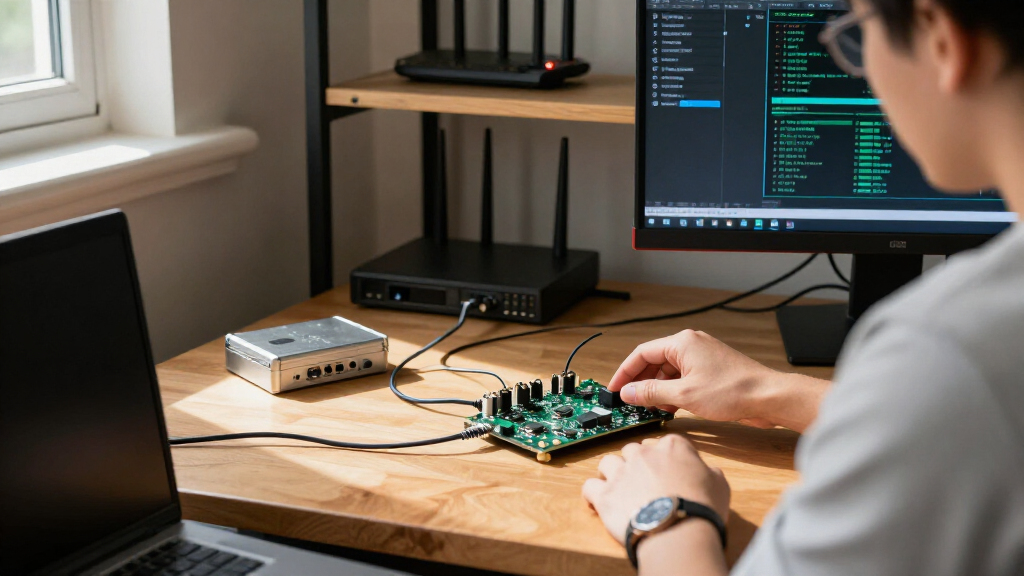
I ranked these boards by how well their stated hardware suits common homelab jobs: hosting services, running containers, handling network tasks, and acting as a small server or always-on node. I weighed processor class and memory against the practical needs of sustained workloads, along with connectivity, onboard storage, cooling or included accessories, and the likely setup burden. A board’s headline compute figure mattered less than whether its complete configuration looked useful for a realistic home deployment.
The ordering reflects role and fit, not a claim that one board is best for every lab. Boards with stronger general-purpose processing or more memory rank ahead for mixed workloads; compact and low-memory models remain relevant for single-purpose services, but rank lower as all-around servers. I also separated the x86 options from ARM boards because software compatibility can matter as much as raw specifications. Product names and listed specifications were used as the basis for comparison, so I avoid assuming unlisted ports, storage options, or software support.
Factors to Consider When Choosing Single Board Computers For Homelabs
Choosing a homelab board starts with the work you expect it to do, not the largest processor number on the spec sheet. I would plan for memory, storage, network needs, and software compatibility together, then decide how much setup and maintenance you want to handle.
Match Memory to the Number of Services
Memory is often the limit that shows up before processor speed when a small server runs several services at once. A single lightweight DNS or monitoring service can fit a modest board, while containers, databases, and a larger operating system stack need more room. Leave capacity for the operating system and temporary workload spikes rather than assigning every gigabyte to planned services. A low-memory board may still make sense when it has one job and a small software footprint. A common mistake is buying the smallest configuration and expecting it to grow into a general-purpose server without limits. I would choose memory based on the services you intend to keep running together.
Check Software Compatibility Before Choosing ARM or x86
Homelab software may be available for both ARM and x86, but support can vary by application, container image, and operating system. An ARM board can be a strong fit for supported services, yet a required image or tool may be built only for x86. Conversely, an x86 platform can simplify compatibility for software that expects a conventional PC environment. Check the architecture requirements for your must-have applications before treating a processor as a universal upgrade. Also verify that the operating system you want supports the board and its key hardware. This step can save more time than comparing processor benchmarks.
Plan Storage for Writes, Backups, and Recovery
Storage capacity is only part of the decision: the interface, reliability, and ease of replacing or restoring a drive matter in a server that runs continuously. Logs, databases, and frequent writes can put different demands on storage than a simple boot image. Confirm the board’s actual storage options rather than assuming a particular connector or expansion path from its name. Keep a separate backup destination for important data; a second service on the same board is not a backup. If a product lists onboard eMMC, check whether that capacity suits your operating system and data plan. I would decide how the system will recover from a failed boot device before putting valuable services on it.
Treat Networking as a Workload Requirement
A board intended for a network appliance, file service, or virtualized lab has different networking needs from one hosting a small dashboard. Wireless connectivity can be convenient for experiments, but a wired connection is often a more predictable choice for services that should stay reachable. Verify the actual network interfaces and speeds in the full specifications; wireless generation alone does not establish wired capability. Consider whether the board will connect to a switch, router, or separate access point, and whether that placement is practical. A fast processor cannot compensate for a network bottleneck in a storage or routing workload. Match the network setup to the job before choosing a board.
Account for Cooling, Power, and Always-On Operation
Homelab boards often run for long stretches, so cooling and power behavior affect reliability, noise, and operating convenience. A kit with an active cooler and case can reduce assembly work, but it does not prove that every workload will stay cool under sustained load. High-performance boards may call for more attention to airflow than a small service node. Check what power supply and cooling components are included, and identify anything you need to buy separately. Think about the board’s location: a fan may be acceptable in a utility area but distracting beside a desk. Planning the physical setup early can prevent a capable board from becoming an awkward server.
Pay for Headroom Only When Your Lab Needs It
More memory and processing capacity can delay a replacement, but unused performance adds little to a board running one simple service. Before paying for a higher-end model, list the workloads you expect to add over the next year and identify which ones need more resources. A compact low-memory board may be the better choice for an isolated task, while a stronger board can consolidate several services and reduce device sprawl. Avoid selecting a premium model solely because its AI or processor figures are larger; those capabilities matter only when your software can use them. Also account for storage, cooling, and network needs, which may add to the full setup. The best value is the configuration that meets your real workload with reasonable room to grow.
Frequently Asked Questions
Which board in this roundup is the safest starting point for a mixed homelab?
I would start with the Orange Pi 5 Plus if you want one ARM board for a varied set of services, since its listed RK3588 processor and 8GB of RAM give it more general-purpose headroom than the 1GB Zero models. That does not guarantee every service will support its architecture, so check your required software first. If x86 compatibility is the priority, compare the ZimaBoard 2 with the LattePanda 2 Alpha instead. The best starting point depends on the applications you plan to run, not just the board’s processing figures. Keep important data on a separate backup destination.
Should I choose the ZimaBoard 2 or the LattePanda 2 Alpha for an x86 homelab?
Both are worth comparing if your workload needs x86, but their listed configurations point to different priorities. The ZimaBoard 2 is presented as a home-server board with an Intel N150, while the LattePanda 2 Alpha lists an Intel Core i5, 8GB of RAM, 64GB eMMC, and Windows 11 Pro. Confirm the exact ports, storage expansion, operating-system support, and power requirements before deciding, since those details affect server use. The LattePanda may appeal when its bundled Windows environment fits your plan; the ZimaBoard’s home-server focus may fit a dedicated appliance better. Do not infer a full server feature set from the product name alone.
Is a 1GB Orange Pi Zero model enough to run homelab services?
It can be enough for a small, focused job, such as a lightweight network or monitoring service, if the software and operating system fit within its limits. I would not choose a 1GB board as the foundation for several containers, a database-heavy setup, or a lab expected to grow. The Orange Pi Zero 2W and Orange Pi Zero 3 share the 1GB memory constraint in their listed configurations, so compare their other specifications and software support rather than assuming one solves the memory limit. Keep the workload simple and monitor how much memory it uses. If you already expect multiple services, a higher-memory model is a more suitable starting point.
Does the Raspberry Pi 5 Starter Kit make more sense than buying a board alone?
The kit makes sense if the included active cooler and ABS case match what you need and you prefer fewer separate setup decisions. Those parts can help with assembly and cooling, but the kit listing does not answer every question about storage, power supply, or network connections. Check the complete package contents before purchase and compare them with the accessories you already own. If you need a different case or cooling arrangement, a board-only option may give you more control. Also compare the Pi 5’s 4GB of RAM with the 8GB Raspberry Pi 4 listing based on the services you plan to run.
When is the Orange Pi 6 Plus worth choosing over the Orange Pi 5 Plus?
The Orange Pi 6 Plus is the more ambitious option on paper, with 32GB of LPDDR5 RAM, a 12-core processor, a 45 TOPS NPU, and a cooling fan listed. That larger resource pool may suit workloads that can use its capabilities, but it does not automatically make it a better homelab purchase. Check operating-system and application support for the board, especially if you expect to use the NPU. For a general set of services, the Orange Pi 5 Plus may be a simpler fit without the same listed hardware scale. Choose the 6 Plus when your planned workload can make practical use of its extra capacity.
Conclusion
For a balanced ARM homelab, my best overall recommendation is the Orange Pi 5 Plus; it offers a stronger mixed-workload starting point than the low-memory compact boards. My best value for a focused, small service is the Orange Pi Zero 3, provided its 1GB of RAM fits the job. For best premium capacity, look at the Orange Pi 6 Plus, but only if your software can use its listed hardware. The best for beginners is the Raspberry Pi 5 Starter Kit, whose included cooler and case reduce some setup work. For x86-specific needs, compare the ZimaBoard 2 and LattePanda 2 Alpha against your software and connectivity requirements; for a compact wireless node, consider the Pi Zero W. My final choice would follow the workload first, architecture and memory second, and convenience of setup third.