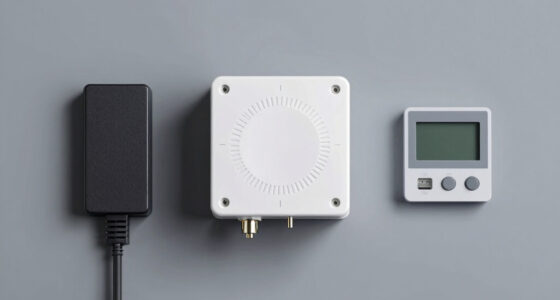
For most small and midsize server racks, I’d start with the CyberPower CP1500PFCRM2U: its rackmount design, 1500VA capacity, and PFC-compatible sine-wave output make it a balanced choice for common server loads. The Eaton 9PX6K stands out for higher-capacity infrastructure, while the APC SRTL2K2RM1UNC offers online power protection for deployments that need tighter control over power quality. The tradeoff is between capacity and runtime, power-conversion design, rack space, and the cost and complexity of larger systems. A 1500VA unit may suit a modest network closet, but it is not a substitute for sizing backup around measured server load and required shutdown time. Read on for the full comparison, selection criteria, and guidance for matching a UPS to your server environment.

Get business pricing on networking and server gear
- Business-only prices and quantity discounts
- Tax-exempt purchasing
- Multiple users, one account, clear invoices
Key Takeaways
- The CyberPower CP1500PFCRM2U is the most balanced small-rack pick in this group, pairing 1500VA/1000W capacity with rackmount construction and PFC sine-wave output.
- Capacity changes the job the UPS can do: the Eaton 9PX6K and 10kW-class APC models address heavier infrastructure, but call for more planning around input power, rack space, and installation.
- Online and double-conversion models serve a different purpose from the more accessible 1500VA units; the APC SRTL2K2RM1UNC and Eaton SmartOnline 3000VA are better candidates when power conditioning carries extra weight.
- Rack format is not a detail to leave until checkout. The lineup spans 2U and 3U rack units, rack/tower designs, and large modular power systems, so available rack space can rule out otherwise capable options.
- The largest nameplate capacity does not automatically make the best server UPS. A smaller unit matched to actual load and shutdown needs can be a more workable fit than a 10kW system intended for a larger installation.
| CyberPower CP1500PFCRM2U 1500VA/1000W PFC Sinewave Rackmount UPS |  | Best Compact Rackmount Pick | Capacity: 1500 VA / 1000 W | Output voltage: 120 V | Outlets: 8 NEMA 5-15R | VIEW LATEST PRICE | See Our Full Breakdown |
| APC BX1500M 1500VA/900W UPS Battery Backup and Surge Protector |  | Best Entry-Level Server-Room Backup | Capacity: 1500 VA / 900 W | Outlets: 10 total: 5 battery backup and surge protection, 5 surge protection only | Output waveform: Stepped approximation to a sine wave | VIEW LATEST PRICE | See Our Full Breakdown |
| CyberPower CP1500AVRLCD3 1500VA/900W LCD UPS Battery Backup |  | Best for Small Server-and-Network Bundles | Capacity: 1500 VA / 900 W | Topology: Line interactive | Output waveform: Simulated sine wave | VIEW LATEST PRICE | See Our Full Breakdown |
| Eaton Tripp Lite SMART1500LCD 1500VA 900W 2U Rack-Mount UPS | 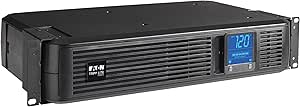 | Best Flexible Rack-or-Tower Pick | Capacity: 1500 VA / 900 W | Outlets: 8 NEMA 5-15R | Form factor: 2U rack-mount or tower | VIEW LATEST PRICE | See Our Full Breakdown |
| APC SRTL2K2RM1UNC Online Rack-Mount UPS, 120 V, 2200 W, Smart Connect |  | Best Premium Online Option | UPS type: Online | Maximum power: 2200 W | Input and output voltage: 120 V | VIEW LATEST PRICE | See Our Full Breakdown |
| APC SRT10KXLT 10,000-Watt Rack-Mountable UPS |  | Best for High-Capacity Server Loads | Maximum output: 10,000 W | Output voltage: 208 V AC | Output current: 48 A | VIEW LATEST PRICE | See Our Full Breakdown |
| APC SMX2000RMLV2U Smart-UPS X 2000 Rack/Tower LCD |  | Best for Midrange 120 V Server Racks | Maximum output: 1,800 W | Capacity: 1,920 VA | Output voltage: 120 V AC | VIEW LATEST PRICE | See Our Full Breakdown |
| APC Symmetra PX 10 kW High-Efficiency Power Module, 208 V (SYPM10KF2) |  | Best for Symmetra PX Modular Systems | Model: SYPM10KF2 | Power: 10,000 W | Input/output voltage: 208 V | VIEW LATEST PRICE | See Our Full Breakdown |
| Eaton 9PX6K 6000 VA UPS, 5.4 kW, 3U |  | Best for 5.4 kW Enterprise Loads | Capacity: 6,000 VA | Maximum output: 5,400 W | Voltage range: 200–240 V AC | VIEW LATEST PRICE | See Our Full Breakdown |
| APC SRT10KRMXLT Rack-Mountable UPS |  | Best for Rack-Mounted 10 kW Protection | Maximum output: 10,000 W | Input voltage: 120 V | Output voltage: 208 V AC | VIEW LATEST PRICE | See Our Full Breakdown |
| Eaton Tripp Lite SmartOnline 3000VA Double-Conversion UPS, 2700W, 2U Rackmount |  | Best for Server Racks Needing Online Power Protection | Model: SU3000RTXLCD2UN | Capacity: 3000VA / 2700W | Topology: Online double-conversion | VIEW LATEST PRICE | See Our Full Breakdown |
| Vertiv Liebert PowerUPS 200 PSA6-1500LVT 1500VA/935W UPS |  | Best for Small Servers and Network Closets | Capacity: 1500VA | Maximum power: 935W | Input voltage: 120V | VIEW LATEST PRICE | See Our Full Breakdown |
| APC Symmetra 3.2 kW, 4000 VA UPS Power Module (SYPM4KP) |  | Best for Existing Symmetra Installations | Model: SYPM4KP | Capacity: 4000VA | Maximum power: 3200W | VIEW LATEST PRICE | See Our Full Breakdown |
| uninterruptible power supplies for server | Outlets | Capacity | Form factor |
|---|---|---|---|
| CyberPower CP1500PFCRM2U 1500V | 8 NEMA 5-15R | 1500 VA / 1000 W | 2U rackmount |
| APC BX1500M 1500VA/900W UPS Ba | 10 total: 5 battery backup and surge protection, 5 surge protection only | 1500 VA / 900 W | — |
| CyberPower CP1500AVRLCD3 1500V | 12 NEMA 5-15R: 6 battery backup and surge protected, 6 surge protected | 1500 VA / 900 W | Mini-tower |
| Eaton Tripp Lite SMART1500LCD | 8 NEMA 5-15R | 1500 VA / 900 W | 2U rack-mount or tower |
| APC SRTL2K2RM1UNC Online Rack- | 6 | — | Rack-mountable |
| APC SRT10KXLT 10,000-Watt Rack | 13 | — | Rack |
| APC SMX2000RMLV2U Smart-UPS X | 7 | 1,920 VA | 2U rack/tower |
| APC Symmetra PX 10 kW High-Eff | 1 | — | — |
| Eaton 9PX6K 6000 VA UPS | 4 | 6,000 VA | 3U, 19-inch rack |
| APC SRT10KRMXLT Rack-Mountable | 7 | — | — |
| Eaton Tripp Lite SmartOnline 3 | 1 L5-30R and 6 managed 5-20R | 3000VA / 2700W | 2U rackmount; convertible to tower |
| Vertiv Liebert PowerUPS 200 PS | 10 | 1500VA | — |
| APC Symmetra 3.2 kW | — | 4000VA | Rack |
More Details on Our Top Picks
CyberPower CP1500PFCRM2U 1500VA/1000W PFC Sinewave Rackmount UPS
Short-depth fit and sinewave output make the CP1500PFCRM2U a strong match for server racks where space and power-supply compatibility matter more than long battery runtime. Its 10.5-inch depth leaves more room behind the rack than the Eaton Tripp Lite SMART1500LCD, while sinewave output is better suited to servers with active PFC power supplies than that model’s modified-sinewave battery output. AVR can correct minor voltage swings without drawing down the battery, and the color LCD makes local status checks straightforward. The tradeoff is limited ride-through time: the listed runtime is just three minutes, so this is better for brief outages and orderly shutdown than extended operation. Remote monitoring also requires an optional card.
Pros:- Sinewave output supports active PFC and conventional power supplies.
- 10.5-inch depth suits compact racks.
- AVR corrects minor voltage fluctuations without switching to battery.
- Color LCD shows power and battery conditions.
Cons:- Listed runtime is only three minutes.
- Remote management requires an optional network or cloud monitoring card.
Best for: Administrators fitting a single server or small network stack into a shallow rack who need sinewave output and local status monitoring.
Not ideal for: Teams that need extended battery runtime or built-in remote monitoring without purchasing an additional card.
- Capacity:1500 VA / 1000 W
- Output voltage:120 V
- Outlets:8 NEMA 5-15R
- Form factor:2U rackmount
- Depth:10.5 in
- Battery type:Lead acid
- Listed runtime:3 minutes
- Warranty:3 years, including battery
Our verdict“Choose this CyberPower for a shallow rack and sinewave compatibility, but not when your server needs more than brief battery ride-through.”
APC BX1500M 1500VA/900W UPS Battery Backup and Surge Protector
The APC BX1500M is the most approachable choice here for a small server closet that also powers routers, switches, or office equipment. Its 10 outlets split between battery-backed and surge-only connections let you reserve battery capacity for the server and network gear, while AVR helps manage voltage fluctuations without using the battery. The LCD reports load and estimated runtime, and the replaceable battery gives owners a maintenance path the CyberPower CP1500AVRLCD3 also offers. Its main limitation for server use is the stepped-approximation sinewave output, which may not suit every power supply; the CyberPower CP1500PFCRM2U provides sinewave output for a more compatibility-focused rack setup. This APC is a tower-style general-purpose unit, not a purpose-built rack UPS, and runtime depends heavily on load.
Pros:- Ten outlets include five battery-backup connections.
- AVR stabilizes output at 120V without switching to battery.
- LCD displays load, input voltage, battery charge, and estimated runtime.
- Replaceable internal battery.
Cons:- Stepped-approximation sinewave output may not suit all server power supplies.
- Only five outlets provide battery backup.
- Runtime varies with the connected load.
Best for: Small offices running a modest server and network equipment that want a replaceable-battery tower UPS with clear local status information.
Not ideal for: Server operators whose power supplies require sinewave battery output or who need a rackmount chassis.
- Capacity:1500 VA / 900 W
- Outlets:10 total: 5 battery backup and surge protection, 5 surge protection only
- Output waveform:Stepped approximation to a sine wave
- Voltage regulation:Automatic Voltage Regulation; stabilizes output at 120 V
- Surge protection:789 joules
- Data-line protection:Coaxial and Ethernet
- Replacement battery:APC APCRBC124
- Warranty:3-year UPS hardware warranty; 1-year battery warranty
Our verdict“Pick the BX1500M for a small mixed-use equipment setup, but choose a sinewave rackmount model if server power-supply compatibility is your priority.”
CyberPower CP1500AVRLCD3 1500VA/900W LCD UPS Battery Backup
For a small office where a server shares space with network hardware and peripherals, the CP1500AVRLCD3 offers 12 outlets and two USB charging ports in a mini-tower format. Six outlets provide battery backup, so you can prioritize a server and essential network devices while leaving less critical equipment on surge protection alone. Its color LCD and AVR add useful local visibility and help conserve battery during minor voltage shifts. Compared with the APC BX1500M, this CyberPower provides more total outlets and USB charging, but it shares a key caveat: simulated sinewave output may not suit every server power supply. Its listed runtime is three minutes, making it a short-ride-through option rather than a way to keep a loaded server running through a prolonged outage. The plastic enclosure and tower design are also less suited to a rack-first installation.
Pros:- Twelve outlets, including six with battery backup.
- AVR corrects minor power fluctuations without switching to battery.
- Color LCD displays battery and power conditions.
- Three-year warranty includes the battery.
Cons:- Simulated sinewave output may not suit every connected device.
- Listed runtime is only three minutes.
- Mini-tower form and plastic enclosure are not rackmount-focused.
Best for: Small-office administrators who need one tower UPS for a compatible server, networking devices, and nearby peripherals.
Not ideal for: Rack-focused installations, high-load servers, or equipment that calls for pure sinewave battery output.
- Capacity:1500 VA / 900 W
- Topology:Line interactive
- Output waveform:Simulated sine wave
- Outlets:12 NEMA 5-15R: 6 battery backup and surge protected, 6 surge protected
- USB ports:1 Type-A and 1 Type-C
- Form factor:Mini-tower
- Battery type:Lead acid
- Battery charge time:8 hours
- Warranty:3 years, including battery
Our verdict“Choose the CP1500AVRLCD3 for a compact office equipment bundle if your server accepts simulated sinewave output and only needs brief backup.”
Eaton Tripp Lite SMART1500LCD 1500VA 900W 2U Rack-Mount UPS
The SMART1500LCD earns its place for installations that may shift between rack and tower layouts. Included installation hardware supports either configuration, while USB and RS-232 communications can trigger automatic shutdown through PowerAlert software—a practical safeguard when an outage outlasts the battery. Its AVR handles a broad input range, and the user-replaceable battery helps with ongoing maintenance. Against the CyberPower CP1500PFCRM2U, the Eaton offers more placement flexibility and serial connectivity, but its modified-sinewave battery output is a less suitable fit for some server power supplies. The listed runtime is four minutes, only slightly beyond the CyberPower’s three-minute figure, and its continuously running fans produce about 50 dBA. That noise can be a poor match for an office-adjacent rack.
Pros:- Supports rackmount or tower installation with included hardware.
- USB and RS-232 support automatic shutdown.
- AVR corrects input voltage from 75V to 147V without using battery power.
- User-replaceable battery and rotatable LCD.
Cons:- Fans run continuously at approximately 50 dBA.
- Battery-mode output is modified sine wave.
- Listed runtime is four minutes.
Best for: Small IT teams that need a 2U UPS usable in either a rack or tower setup and want USB or serial-based shutdown support.
Not ideal for: Quiet office installations or servers that require sinewave output while running on battery.
- Capacity:1500 VA / 900 W
- Outlets:8 NEMA 5-15R
- Form factor:2U rack-mount or tower
- Dimensions:10.5 x 17.25 x 3.5 in
- Input and output voltage:120 V
- Battery charge time:4.5 hours
- Communications:USB, RS-232, RJ45 Ethernet surge protection up to 100 Mbps
- Warranty:3-year limited manufacturer warranty
Our verdict“Choose the SMART1500LCD when flexible mounting and shutdown communications matter more than quiet operation or sinewave output.”
APC SRTL2K2RM1UNC Online Rack-Mount UPS, 120 V, 2200 W, Smart Connect
For a server that needs a higher power ceiling and online UPS architecture, the APC SRTL2K2RM1UNC is the standout in this group. Its 2200 W output exceeds the 900–1000 W class of the CyberPower CP1500PFCRM2U and Eaton Tripp Lite SMART1500LCD, giving buyers more capacity for a demanding server or a broader equipment load. Online operation is the differentiator for environments that favor continuous power conditioning, and Smart Connect adds a connected management feature. The tradeoffs are a six-outlet count and a comparatively deep 22-inch chassis, so cable layout and rack space need attention. Product data lists a plastic enclosure and does not provide runtime, battery charge time, or warranty details; buyers who need those figures for deployment planning should verify them before selecting it.
Pros:- Online UPS design for server-focused power conditioning.
- 2200 W maximum output exceeds the 1500VA models in this group.
- Rack-mountable form factor.
- Smart Connect included.
Cons:- Six outlets provide fewer connections than the 8- and 12-outlet alternatives.
- 22-inch depth may constrain rack placement and cable clearance.
- Product data does not specify runtime or battery charge time.
Best for: Server administrators who need an online rack UPS with substantially more output capacity than the 1500VA models in this roundup.
Not ideal for: Small racks with limited depth, deployments needing many separately powered devices, or buyers who require runtime and warranty details before selection.
- UPS type:Online
- Maximum power:2200 W
- Input and output voltage:120 V
- Outlets:6
- Connector types:5-20R and L5-20R NEMA
- Form factor:Rack-mountable
- Dimensions:1.7 x 17 x 22 in
- Battery type:Lithium ion
- Smart Connect:Yes
Our verdict“Choose the SRTL2K2RM1UNC for online operation and higher wattage capacity, provided its six outlets and rack depth fit your installation.”
APC SRT10KXLT 10,000-Watt Rack-Mountable UPS
For a server room drawing close to 10,000 watts at 208 V, this APC is the highest-capacity complete UPS in this group. Its automatic internal bypass can pass utility power to connected equipment during an overload or UPS fault, while hot-swappable batteries let technicians replace the battery set without shutting down protected loads. That makes it a stronger fit for a demanding rack than the APC SMX2000RMLV2U, which is aimed at a much smaller 1.8 kW load.
The tradeoff is the listed four-minute runtime: this is a bridge to generator power or an orderly shutdown, not extended backup. At 280 pounds, installation also calls for suitable rack capacity and handling equipment. Scalable runtime helps, but adds system planning and battery expense.
Pros:- 10,000 W output suits high-load server installations.
- Automatic bypass can maintain utility power to loads during certain UPS overloads or faults.
- Hot-swappable batteries allow battery replacement without interrupting protected equipment.
- Scalable runtime supports expansion with additional battery capacity.
Cons:- Listed runtime is only four minutes, limiting outage coverage without a generator.
- At 280 pounds, installation and rack loading require careful planning.
- 208 V output and the high-capacity design may not suit ordinary 120 V server circuits.
Best for: Data-center teams protecting high-draw 208 V server racks that have generator support or a defined shutdown plan.
Not ideal for: Small offices or light server closets that need a simple, easily installed UPS; the capacity, weight, and short listed runtime are poor matches.
- Maximum output:10,000 W
- Output voltage:208 V AC
- Output current:48 A
- Outlets:13
- Listed runtime:4 minutes
- Battery:Lead acid; hot-swappable
- Weight:280 lb
- Form factor:Rack
Our verdict“Choose this for a heavy 208 V server load with generator support, but skip it if you need long battery runtime or a manageable installation.”
APC SMX2000RMLV2U Smart-UPS X 2000 Rack/Tower LCD
The SMX2000RMLV2U is the more approachable rack choice for a 120 V server load up to 1.8 kW, well below the capacity of the APC SRT10KXLT or SRT10KRMXLT. Its 2U rack/tower format gives smaller IT rooms more installation flexibility, and the seven NEMA outlets are suited to distributing power across a modest server and network stack. USB and RS-232 connections support local monitoring and management.
This is a line-interactive UPS, not the high-capacity 10 kW class represented by the APC SRT units. The supplied information lists runtime as zero minutes, while the descriptive data also gives load-dependent runtime figures; buyers should verify runtime for their intended load before relying on it. At about 84.8 pounds, it is still a substantial rack component, and its 1.8 kW ceiling leaves little room for a growing rack.
Pros:- 1.8 kW output matches modest server and network racks.
- Rack/tower form factor supports more than one installation arrangement.
- Seven NEMA outlets provide several connection points for equipment.
- USB and RS-232 interfaces support UPS monitoring and communication.
Cons:- Listed runtime is inconsistent across the supplied product information and needs confirmation.
- 1.8 kW capacity is far below the APC SRT10KXLT and SRT10KRMXLT.
- Approximately 84.8 lb makes installation a two-person or rack-support task.
Best for: Small-business IT teams with a 120 V rack, a measured load below 1.8 kW, and a need for rack/tower installation flexibility.
Not ideal for: Operators with high-density 208 V racks or a requirement for clearly specified extended battery runtime; the APC SRT10KXLT is better suited to much larger loads.
- Maximum output:1,800 W
- Capacity:1,920 VA
- Output voltage:120 V AC
- Outlets:7
- Form factor:2U rack/tower
- Interfaces:USB and RS-232
- Battery:User-replaceable, hot-swappable sealed lead acid
- Weight:84.77 lb
Our verdict“Pick this for a modest 120 V server rack where flexible mounting matters, after confirming runtime at your actual load.”
APC Symmetra PX 10 kW High-Efficiency Power Module, 208 V (SYPM10KF2)
This 10 kW, 208 V power module is aimed at organizations building or servicing an APC Symmetra PX system, rather than buyers looking for a standalone rack UPS. Its rack form and metal enclosure suit infrastructure installations, and the 50/60 Hz specification gives it a broad operating-frequency range. Compared with the APC SRT10KXLT, which is presented as a complete UPS with batteries and 13 outlets, this item is a power module: compatibility with the right Symmetra PX chassis and system configuration is the central buying requirement.
That distinction limits its usefulness as a general server-room purchase. The supplied data lists one outlet, and it does not specify battery runtime or the full set of UPS functions. Buyers should confirm what the installed system provides before treating this as outage protection. Its 25.05 kg weight is easier to handle than the 280-pound SRT10KXLT, but the specialized fit makes it a poor substitute for a standalone UPS.
Pros:- Provides up to 10,000 W at 208 V for a compatible system.
- Rack-form design fits the intended infrastructure environment.
- Metal enclosure suits equipment-room installation.
- Specified for 50/60 Hz operation.
Cons:- Compatibility with a Symmetra PX system is required; it is not presented as a standalone UPS.
- Only one outlet is listed.
- The supplied data does not state battery runtime or battery details.
Best for: Data-center operators expanding or maintaining a compatible APC Symmetra PX installation with a 208 V, 10 kW power-module requirement.
Not ideal for: Server administrators seeking a standalone UPS with documented batteries, runtime, monitoring, and multiple equipment outlets.
- Model:SYPM10KF2
- Power:10,000 W
- Input/output voltage:208 V
- Output current:48.08 A
- Frequency:50/60 Hz
- Outlets:1
- Enclosure:Metal
- Weight:25.05 kg
Our verdict“Buy this as a compatible Symmetra PX component, not as a general-purpose server UPS.”
Eaton 9PX6K 6000 VA UPS, 5.4 kW, 3U
The Eaton 9PX6K fills the middle ground between the smaller APC SMX2000RMLV2U and the 10 kW APC SRT models. With 5.4 kW of output and support for 200–240 V AC, it can cover a substantial server installation without moving all the way to a 10 kW platform. Ethernet, RS-232, and USB interfaces also give administrators several routes for monitoring and control.
Its listed three-minute runtime makes this a short-bridge solution unless the site has generator power or a rapid shutdown process. Four NEMA outlets may also require a carefully planned distribution setup for a larger rack. There is a notable data-quality concern: the supplied dimensions are listed as 980 × 600 × 310 inches, an implausible figure for a 3U unit. I would verify the physical measurements and installation requirements before specifying it.
Pros:- 5.4 kW output bridges the gap between 1.8 kW and 10 kW UPS classes.
- Supports 200–240 V AC operation.
- Ethernet, RS-232, and USB interfaces support monitoring and management.
- 3U, 19-inch form factor is specified for rack installation.
Cons:- Listed runtime is only three minutes.
- Four outlets may mean additional power distribution equipment for a full rack.
- Listed dimensions are implausible for a 3U unit and should be verified.
Best for: IT teams with a measured load around 5.4 kW on 200–240 V circuits that need network and serial management options.
Not ideal for: Buyers who need long battery coverage, many direct equipment outlets, or dependable physical dimensions without checking the listing.
- Capacity:6,000 VA
- Maximum output:5,400 W
- Voltage range:200–240 V AC
- Listed output voltage:208 V AC
- Outlets:4
- Listed runtime:3 minutes
- Interfaces:Ethernet 10/100, RS-232, USB
- Form factor:3U, 19-inch rack
Our verdict“Choose the 9PX6K for a mid-to-high-load 208 V server installation with external runtime support, after confirming its dimensions.”
APC SRT10KRMXLT Rack-Mountable UPS
The SRT10KRMXLT brings the APC SRT family’s 10,000 W capacity into a rack-mountable package, with automatic internal bypass, scalable runtime, and hot-swappable batteries. Those features suit server environments where battery service should not force a planned shutdown and where utility power can carry equipment through certain UPS faults. Compared with the APC SRT10KXLT, it has a listed metal enclosure and weighs 150 pounds rather than 280, though both are heavy-duty 208 V units with a short stated runtime.
The four-minute runtime means this is best treated as a bridge to generator power or a controlled shutdown, not as prolonged outage coverage. Its 120 V input and 208 V output also call for a site-level electrical compatibility check. Seven outlets are listed, fewer than the SRT10KXLT’s 13, and the 150-pound chassis still requires careful rack and installation planning.
Pros:- 10,000 W output supports high-demand server installations.
- Automatic internal bypass can keep connected loads on utility power during certain overloads or faults.
- Hot-swappable batteries allow replacement without interrupting protected equipment.
- Scalable runtime and precision charging support battery-system planning.
Cons:- Listed runtime is only four minutes.
- At 150 pounds, installation still requires suitable rack capacity and handling.
- Seven outlets are fewer than the 13 listed for the APC SRT10KXLT.
Best for: Data-center teams needing a rack-mounted 10 kW UPS with serviceable batteries, bypass protection, and a generator-backed power plan.
Not ideal for: Small server rooms without heavy-duty rack support or buyers needing lengthy battery runtime; the listed four minutes is limited.
- Maximum output:10,000 W
- Input voltage:120 V
- Output voltage:208 V AC
- Output current:43.48 A
- Outlets:7
- Listed runtime:4 minutes
- Battery:Lead-acid AGM; hot-swappable
- Weight:150 lb
Our verdict“Choose this for rack-mounted 10 kW protection with hot-swappable batteries, provided your site can support its weight and short runtime.”
Eaton Tripp Lite SmartOnline 3000VA Double-Conversion UPS, 2700W, 2U Rackmount
The SmartOnline SU3000RTXLCD2UN is the strongest fit here for servers that need continuous power conditioning, not just battery backup. Its double-conversion topology supplies pure sine wave output with no transfer delay when utility power fails, while the included network card supports remote monitoring and automated recovery tasks. Compared with the Vertiv Liebert PowerUPS 200, this Eaton is designed more directly for rack servers and harsher power-quality problems; the Vertiv is a smaller-capacity line-interactive option for lighter equipment. Hot-swappable batteries reduce maintenance disruption, and optional modules can add runtime, but those modules are separate purchases. The 2U chassis also needs rack space, and its 2700W ceiling makes it less suitable than the much larger APC SRT10KXLT for dense, high-draw racks.
Pros:- Double-conversion topology and pure sine wave output protect sensitive servers without a battery-transfer delay.
- Included WEBCARDLXE enables remote monitoring and automatic rebooting when connectivity is lost.
- Hot-swappable batteries allow replacement without taking connected equipment offline.
- Supports up to four optional battery modules for longer runtime.
Cons:- Optional extended battery and environmental monitoring modules add separate equipment requirements.
- The 2U rackmount design needs dedicated rack space, even though it can also be used as a tower.
- At 2700W, it offers less capacity than large-rack options such as the APC SRT10KXLT.
Best for: Server administrators who need online double-conversion protection, remote management, and hot-swappable battery service in a 2U rack.
Not ideal for: Small offices with low-power equipment or racks without two units of free space; its capacity and rack format may be more than they need.
- Model:SU3000RTXLCD2UN
- Capacity:3000VA / 2700W
- Topology:Online double-conversion
- Output waveform:Pure sine wave
- Outlets:1 L5-30R and 6 managed 5-20R
- Form factor:2U rackmount; convertible to tower
- Network management:WEBCARDLXE included
- Battery:User-replaceable, hot-swappable VRLA modules; supports up to 4 optional BP72RT modules
- Warranty:2 years
Our verdict“Choose this Eaton for a rack server that needs online power conditioning and serviceable batteries, but skip it if rack space or higher capacity is the priority.”
Vertiv Liebert PowerUPS 200 PSA6-1500LVT 1500VA/935W UPS
The Liebert PowerUPS 200 suits a small server, network appliance, or point-of-sale system where automatic voltage regulation can handle routine fluctuations without switching to battery. Its 1500VA capacity and 935W output place it below the Eaton SmartOnline’s 2700W, so it is a more modest choice for a compact load rather than a growing server rack. The color LCD makes load and battery status easy to check locally, while hot-swappable batteries help simplify service. USB-A and USB-C charging ports add convenience, though they matter less to a server than shutdown support and power compatibility. The published specifications list 120V input and 230V output, so I would verify that the output suits the equipment before buying. Unlike the Eaton, this is line-interactive rather than online double-conversion.
Pros:- Automatic voltage regulation addresses power fluctuations without using battery capacity.
- Hot-swappable, user-replaceable batteries simplify routine service.
- Color LCD displays voltage, load, battery level, and alerts.
- Includes dataline surge protection and shutdown software.
Cons:- Its 935W maximum output is substantially below the Eaton SmartOnline’s 2700W capacity.
- The listed 120V input and 230V output require careful compatibility checks with connected servers.
- At 26.5 pounds, it may be awkward to move or install in a compact workspace.
Best for: Small-office IT operators protecting a single low-draw server or network appliance who want voltage regulation, a readable status display, and replaceable batteries.
Not ideal for: Administrators running high-load rack servers or equipment that requires verified 120V output; the capacity is limited and the listed voltage specifications need checking.
- Capacity:1500VA
- Maximum power:935W
- Input voltage:120V
- Output voltage:230V AC
- Outlets:10
- Battery:User-replaceable, hot-swappable
- Runtime:2 hours and 8 minutes
- Dimensions:16.93 × 4.72 × 11.42 inches
- Warranty:3 years, including battery coverage
Our verdict“Pick the Vertiv for a modest server or network load that benefits from voltage regulation and easy battery service, after confirming output-voltage compatibility.”
APC Symmetra 3.2 kW, 4000 VA UPS Power Module (SYPM4KP)
The APC Symmetra SYPM4KP is a specialized rack power module, not a fully described standalone UPS, which makes it most relevant to buyers expanding or servicing a compatible Symmetra system. Its 3200W / 4000VA rating gives it more stated output capacity than the Eaton SmartOnline, but the available product details do not establish its control interfaces, battery runtime, or installation requirements. That uncertainty matters for server deployments: a power rating alone does not confirm a safe fit with a particular rack or system. The 240V operating voltage also narrows compatibility compared with the Vertiv Liebert PowerUPS 200’s listed 120V input. I would choose this only when the host Symmetra platform and electrical setup are already confirmed; buyers seeking a complete, clearly specified UPS should favor the Eaton or another complete system.
Pros:- Provides a stated maximum output of 3200W, exceeding the Eaton SmartOnline’s 2700W rating.
- Rack form factor suits compatible rack-based power systems.
- Sealed lead-acid battery cell type is specified.
Cons:- The 240V operating voltage limits suitability for installations that require 120V.
- Product information provides little detail about installation and compatibility.
- The listing does not specify runtime, management features, or a complete standalone UPS configuration.
Best for: Data-center technicians replacing or adding a power module in a compatible APC Symmetra installation with a confirmed 240V supply.
Not ideal for: Buyers seeking a standalone server UPS or those without a verified Symmetra system, compatible installation details, and 240V power.
- Model:SYPM4KP
- Capacity:4000VA
- Maximum power:3200W
- Output wattage:3200W
- Voltage:240V
- Output current:13.33A
- Form factor:Rack
- Battery cell type:Sealed lead acid
Our verdict“Choose this module only for a verified compatible Symmetra system with 240V power; for a standalone server UPS, the Eaton SmartOnline is the clearer fit.”

How We Picked
I compared these 13 UPS options for server-specific needs, not just their VA figures. The main criteria were usable watt capacity, power-conversion approach where specified, rack or tower fit, monitoring and connectivity, and how readily each product’s listed design maps to a small server closet or a larger infrastructure deployment. I also weighed serviceability and system complexity: a compact UPS is easier to place and manage, while higher-capacity and modular models can require more planning around electrical supply, rack layout, and support.
The ranking favors balanced fit, clear use cases, and practical tradeoffs over raw capacity alone. That puts the CyberPower CP1500PFCRM2U first as a broadly suitable rackmount option, while larger Eaton and APC models earn their place for heavier loads or more demanding power needs. Products with limited listed details are positioned more cautiously, and buyers should verify exact runtime, battery configuration, output compatibility, and management features for their server load before purchasing.
Factors to Consider When Choosing Uninterruptible Power Supplies For Servers
Choosing a server UPS starts with the load and the failure scenario, not the biggest number on the front panel. I’d work through these factors before comparing models, since they can change which class of UPS makes sense.
Size for watts and the real server load
VA and watt ratings describe different limits, and a server can reach the watt ceiling before it reaches the VA ceiling. Add the measured or manufacturer-rated draw of the servers, switches, storage, and any other equipment that must stay online. Allow room for growth and for brief demand spikes instead of sizing the UPS to run at its limit. A common mistake is counting only server power supplies while overlooking network gear that must remain available for a clean shutdown. If the load is uncertain, measure it at the rack or use power-supply telemetry before choosing a capacity class. This step may point to a 1500VA unit for a small setup or a 6kVA-and-up system for a much larger load.
Set a runtime target and shutdown plan
Decide what the UPS needs to accomplish during an outage: bridge a short interruption, allow a generator to start, or give servers time to shut down safely. Runtime falls as load rises, so a headline capacity figure does not tell you how long a particular rack will stay up. Check runtime curves for the load you expect, and confirm whether the UPS supports the battery expansion you need. A shutdown plan also depends on operating-system support, management software, and whether one UPS can signal every connected host. Buying excess capacity without checking runtime can leave you with a larger unit that still does not meet your outage window. For many server rooms, coordinated shutdown is more useful than keeping a small load alive indefinitely.
Choose the power-conversion approach for your site
Standby or line-interactive designs can suit stable power environments where the goal is backup and basic voltage support. Online double-conversion models continuously condition output, which can be a better match for sensitive workloads or locations with frequent power irregularities. That added conditioning can bring more complexity, heat, and operating overhead, so it is not automatically the right choice for every office server. Check the output waveform and compatibility guidance for active PFC power supplies, especially when server hardware is involved. Do not infer topology from a product family name; verify the exact model specification. The practical choice depends on local power quality, equipment sensitivity, and how much support burden the site can handle.
Check rack fit, input power, and installation demands
Confirm rack width, mounting depth, weight limits, and available U-space before selecting a rackmount UPS. Large systems can consume substantial rack capacity and may need dedicated circuits or a particular voltage, so the room’s electrical service can determine what is feasible. Check whether rails, mounting hardware, and any required bypass or battery modules are included or sold separately. Rack/tower models offer placement flexibility, but that flexibility does not remove ventilation and clearance requirements. A frequent planning error is choosing a unit that fits the front of the rack but conflicts with rear cable clearance or the rack’s load rating. For high-capacity equipment, have a qualified electrician or facilities team review the installation plan.
Plan monitoring, batteries, and ongoing service
A UPS only helps if someone can see alarms, battery condition, and load status before a failure. Check how it connects to your server environment, whether network management is built in or optional, and whether the shutdown software supports your operating systems and virtualization platform. Battery life is finite, so confirm replacement procedures, battery availability, and how the unit reports degradation. Larger or modular systems may offer more service options, but they also ask for more maintenance planning than a compact office UPS. Include battery replacement and maintenance windows in the ownership plan rather than treating them as unexpected failures. For a remote or lightly staffed site, clear alerts and automated shutdown can matter more than a small increase in rated capacity.
Match the UPS scale to the cost of downtime
Paying for a larger or online UPS makes sense when downtime, data risk, or unstable power has a high operational cost. For a single small server, a manageable 1500VA rack unit may offer a better balance than a 10kW system whose installation and service needs exceed the site’s requirements. For a rack of critical equipment, a higher-capacity UPS can reduce the need to split loads across several small units, but it concentrates protection in one system. Consider whether redundancy is more valuable than a single large UPS, and check how maintenance affects protected equipment. Avoid buying purely for future expansion unless that growth is defined and the electrical infrastructure can support it. The right scale is the one that covers the planned load and outage response without adding complexity the team cannot maintain.
Frequently Asked Questions
Is a 1500VA UPS enough for a server rack?
It can be enough for a modest rack, but the VA rating alone cannot answer that. Check the combined watt draw of servers, storage, and network equipment, then compare it with the UPS’s watt limit and runtime curve. Leave headroom for load changes rather than running near the maximum rating. If the equipment needs to remain online through a longer outage, confirm that the UPS can meet the runtime target at your actual load. A 1500VA model is a poor fit if its watt limit or battery runtime falls short, even when the VA figure looks adequate.
Should I choose a line-interactive UPS or an online UPS for servers?
Choose based on power quality and the sensitivity of the equipment, not on a blanket rule that every server needs online conversion. Line-interactive models can suit sites with relatively stable power and a need for backup plus voltage regulation. Online double-conversion units continuously condition output and can make more sense where power irregularities are common or the workload is less tolerant of them. They can also add heat, operating complexity, and service demands. Check the exact model’s topology and server power-supply compatibility before deciding.
Do I need a rackmount UPS, or can I use a tower model?
A rackmount unit is convenient when the protected equipment already lives in a server rack and the rack has enough depth, space, and weight capacity. A tower model can work in a nearby equipment room or small office, provided its cables reach and it has adequate ventilation. Rack/tower designs offer more placement options, but buyers still need to check the mounting hardware and clearances for the chosen configuration. Do not put a heavy UPS on an unsuitable shelf or assume the rack can support it. The best format is the one that can be installed safely and serviced without obstructing the equipment it protects.
Is a 10kW UPS a sensible choice for a small server room?
Usually only if the measured load, planned growth, and required runtime justify that capacity. A 10kW-class system can bring more demanding electrical, rack, and maintenance requirements than a small room can support. Oversizing may also leave the site paying for installation and service complexity it does not need. Compare the total load with the unit’s usable watt rating, then have facilities staff confirm circuit and voltage compatibility. For a small server room, a right-sized UPS or a planned redundant arrangement may be easier to install and maintain.
What should I verify before buying a UPS for servers with active PFC power supplies?
Check the UPS manufacturer’s compatibility guidance and confirm the output waveform under battery operation, not only during normal utility power. Active PFC supplies can be sensitive to the shape and stability of the incoming power, so an unsuitable output may cause alarms or unexpected behavior. Also compare the UPS watt rating with the combined load and check how it handles load changes. Confirm that the model supports the monitoring and shutdown method used by your servers. If the manufacturer’s documentation is unclear, ask the vendor to confirm compatibility for the specific server power-supply model.
Conclusion
For most small and midsize server racks, I’d choose the CyberPower CP1500PFCRM2U as best overall for its balanced capacity, rack format, and PFC sine-wave output. The CyberPower CP1500AVRLCD3 or APC BX1500M are the best value direction when a simpler 1500VA-class backup fits the load and rack mounting is not the priority. For beginners, I’d start with a 1500VA option whose capacity, controls, and installation needs match the equipment, then verify runtime and shutdown support before ordering. For a premium, higher-capacity deployment, the Eaton 9PX6K is a stronger fit than the small units, while the APC SRTL2K2RM1UNC suits buyers prioritizing online power protection at a more moderate capacity. For large infrastructure, consider the APC SRT10KXLT, APC SRT10KRMXLT, or Symmetra systems only after confirming electrical service, rack capacity, and maintenance support; the right choice is the smallest system that safely meets the measured load and outage plan.