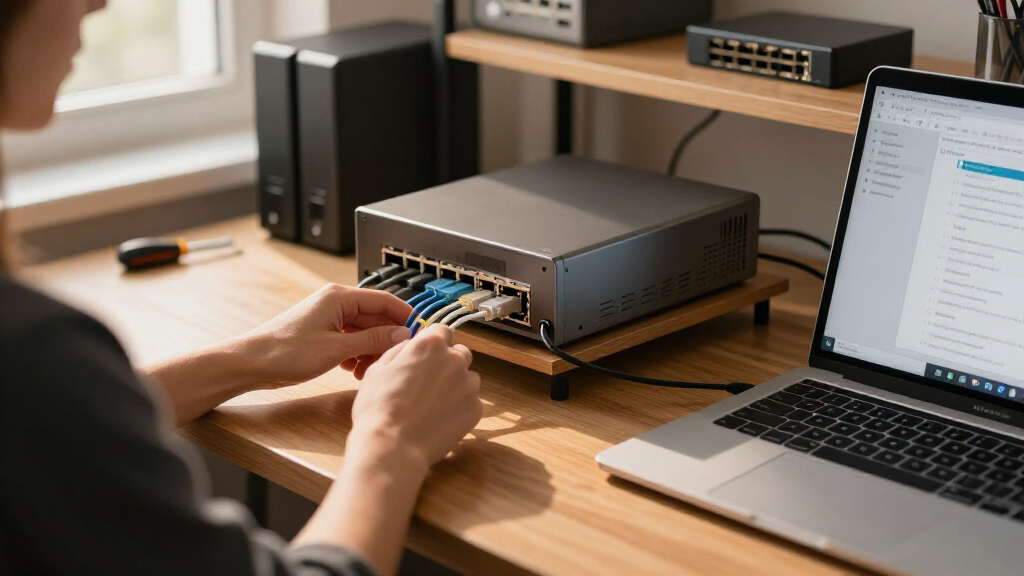
Shopping for hardware firewalls for home labs means balancing raw throughput, port density, and how much tinkering you actually enjoy. The FortiGate 60F stands out as the best overall pick because it bundles enterprise-grade threat management with a three-year UTP subscription, so you get real security features rather than just a packet-shunting box. If you prefer running your own software, the Glovary J6413 fanless appliance with 8GB RAM and four 2.5GbE ports offers a quiet, capable platform for pfSense or OPNsense, while the GLOVARY U6 rackmount covers multi-gig labs with 10GbE SFP+ uplinks. The core tradeoff in this category is turnkey security versus open-source flexibility, and a second one is fanless silence versus rackmount expandability. Keep reading for the full breakdown of all 15 options and who each one suits best.

Get business pricing on networking and server gear
- Business-only prices and quantity discounts
- Tax-exempt purchasing
- Multiple users, one account, clear invoices
Key Takeaways
- Turnkey appliances (FortiGate 30G, 60F, 91G) and barebone open-source boxes split this lineup roughly in half — your first decision is whether you want managed subscriptions or full control over pfSense/OPNsense.
- Several budget appliances here use decade-old CPUs (Atom D525, i7-3520M, Celeron N2940) that still route fine at gigabit speeds but choke on VPN encryption and IDS/IPS at multi-gig rates.
- The barebone picks (Glovary J6413 barebone, Wintertion RS1, i3 rackmount) are only bargains if you already own spare RAM and NVMe drives — otherwise the pre-built versions cost less overall.
- Fanless models dominate under 2.5GbE, but once you want 10GbE SFP+ the GLOVARY U6 i7 rackmount is essentially the only path in this lineup, and it needs rack space and active cooling.
- Fortinet‘s licensing model is the hidden cost: the FortiGate 60F’s 36-month UTP bundle is strong value upfront, but the 91G and 30G depend on renewals that can exceed hardware cost within a few years.
| Glovary J6413 Fanless Mini PC Firewall Appliance, 8GB RAM, 128GB SSD, 4 x 2.5GbE LAN |  | Best Overall | Processor: Intel Celeron J6413, 4 cores / 4 threads, up to 3.0 GHz | Memory: 8GB DDR4 SO-DIMM, up to 64GB | Storage: 128GB SSD | VIEW LATEST PRICE | See Our Full Breakdown |
| Fortinet FortiGate-30G Firewall with 4 Gigabit Ethernet Ports |  | Best Turnkey Security Appliance | Model: FortiGate FG-30G | Ethernet Ports: 4 x Gigabit RJ45 (1 WAN, 3 internal) | IPS Throughput: Up to 800 Mbps | VIEW LATEST PRICE | See Our Full Breakdown |
| GLOVARY U6 1U Rackmount Firewall Appliance with Intel Core i7-3520M, 2×10GbE SFP+ and 6×2.5GbE LAN |  | Best for Multi-Gig Racks | Processor: Intel Core i7-3520M, 2 cores / 4 threads, up to 3.6 GHz | Memory: 1 x DDR3 SO-DIMM, up to 8GB | Storage: 1 x mSATA SSD slot | VIEW LATEST PRICE | See Our Full Breakdown |
| 1U Rack Mount Firewall Appliance, 2nd Gen Intel Core i3, 6 x 2.5GbE I226-V LAN, Barebone |  | Best Budget Rack Project | Form Factor: 1U rack mount, 440 x 255 x 45 mm | Processor: Intel Core i3 2350M/2370M (2nd Gen) | LAN Ports: 6 x 2.5GbE Intel I226-V | VIEW LATEST PRICE | See Our Full Breakdown |
| HUNSN RJ08 1U Rack-Mount Firewall Network Security Appliance (Intel Atom D525, 6 LAN Ports, 4G RAM, 32G SSD) |  | Best Entry-Level Rack Firewall | Model: HUNSN RJ08 | Processor: Intel Atom D525 | Memory: 4GB RAM | VIEW LATEST PRICE | See Our Full Breakdown |
| Glovary J6413 Fanless Mini PC Firewall Appliance, 4 x 2.5GbE LAN, Barebone | | Best for Silent Multi-GBit Segmentation | Processor: Intel Celeron J6413, 4 cores, 4 threads, up to 3.0 GHz | Ethernet: 4 x i226V 2.5GbE LAN | Memory: 2 x DDR4 SO-DIMM slots, up to 64GB | VIEW LATEST PRICE | See Our Full Breakdown |
| GLOVARY U6 1U Rackmount Firewall Appliance, Intel Core i5-3320M, 6× 2.5GbE LAN |  | Best Port Density on a Budget | Processor: Intel Core i5-3320M, 2 cores/4 threads, up to 3.3 GHz, 35 W TDP | Network: 6 x i226V 2.5GbE LAN | Memory: 1 x DDR3 SODIMM, up to 8 GB | VIEW LATEST PRICE | See Our Full Breakdown |
| Fortinet FortiGate 60F Firewall Appliance with 36-Month Unified Threat Protection |  | Best Turnkey Enterprise Security | Model: FortiGate 60F | Product type: Firewall appliance | Security service: FortiGuard Unified Threat Protection (UTP) | VIEW LATEST PRICE | See Our Full Breakdown |
| Qotom 1U Rackmount Mini PC, Intel Core i3-5005U, 8GB RAM, 256GB SSD, 4x Intel i226-V 2.5GbE LAN Ports |  | Best Ready-to-Run Rackmount Pick | Processor: Intel Core i3-5005U, 2.00 GHz, 2 cores | RAM: 8 GB DDR3L SO-DIMM (max 8 GB) | Storage: 256 GB SSD; 1x mSATA slot, 1x 2.5-inch SATA bay | VIEW LATEST PRICE | See Our Full Breakdown |
| FortiGate 91G Firewall |  | Best Premium NGFW Platform | Ports: 10 total | Interfaces: RJ45, SFP | Data transfer rate: 10 gigabits per second | VIEW LATEST PRICE | See Our Full Breakdown |
| Healuck N6005 Fanless Firewall Appliance Mini PC |  | Best Modular Barebone Pick | Processor: Intel Pentium N6005, 4 cores/4 threads, up to 3.3 GHz, 10W TDP | Memory: 2x DDR4 SO-DIMM slots, max 32GB (not included) | Storage: 2x M.2 NVMe slots, 1x SATA 3.0, 1x TF card slot (not included) | VIEW LATEST PRICE | See Our Full Breakdown |
| Wintertion RS1 Fanless Firewall Appliance |  | Best Budget Learning Box | Processor: Intel Celeron N2940 quad-core, up to 2.25 GHz | Memory: 1x DDR3L SODIMM slot, max 8GB (not included) | Storage: 1x mSATA slot, 1x 2.5-inch SATA bay (not included) | VIEW LATEST PRICE | See Our Full Breakdown |
| Fanless Firewall Appliance with Intel Pentium J3710, 8GB RAM, 128GB SSD |  | Best Plug-and-Play Value | Processor: Intel Pentium J3710, 4 cores/4 threads, up to 2.64 GHz, 6W TDP | Memory: 8GB DDR3 (maximum) | Storage: 128GB mSATA SSD, up to 512GB supported | VIEW LATEST PRICE | See Our Full Breakdown |
| Alta Labs Route10 10 Gigabit Multi-WAN Router |  | Best Premium Managed Router | Processor: Quad-core Qualcomm with hardware acceleration | Network Ports: 2x 10 Gbps SFP+, 4x 2.5 Gbps Ethernet | WAN: Multi-WAN with failover and load balancing | VIEW LATEST PRICE | See Our Full Breakdown |
| GLOVARY 1U Rackmount Firewall PC with Intel Core i7-3520M |  | Best for Multi-Port Rack Builds | Processor: Intel Core i7-3520M, 2 cores/4 threads, up to 3.6 GHz, 35W TDP | Memory: 1x DDR3 SODIMM slot, max 8GB | Storage: 1x mSATA SSD slot | VIEW LATEST PRICE | See Our Full Breakdown |
| hardware firewalls for home lab | Processor | Storage | Memory | Cooling |
|---|---|---|---|---|
| Glovary J6413 Fanless Mini PC | Intel Celeron J6413, 4 cores / 4 threads, up to 3.0 GHz | 128GB SSD | 8GB DDR4 SO-DIMM, up to 64GB | Fanless aluminum alloy chassis |
| Fortinet FortiGate-30G Firewal | — | — | — | — |
| GLOVARY U6 1U Rackmount Firewa | Intel Core i7-3520M, 2 cores / 4 threads, up to 3.6 GHz | 1 x mSATA SSD slot | 1 x DDR3 SO-DIMM, up to 8GB | Dual fans, aluminum alloy case |
| 1U Rack Mount Firewall Applian | Intel Core i3 2350M/2370M (2nd Gen) | None (barebone) | — | Dedicated turbo silent fan |
| HUNSN RJ08 1U Rack-Mount Firew | Intel Atom D525 | 32GB SSD | 4GB RAM | — |
| Glovary J6413 Fanless Mini PC | Intel Celeron J6413, 4 cores, 4 threads, up to 3.0 GHz | 2 x M.2 2280 NVMe slots; 2 x SATA 3.0 for 2.5-inch drives | 2 x DDR4 SO-DIMM slots, up to 64GB | — |
| GLOVARY U6 1U Rackmount Firewa | Intel Core i5-3320M, 2 cores/4 threads, up to 3.3 GHz, 35 W TDP | 1 x mSATA SSD slot | 1 x DDR3 SODIMM, up to 8 GB | Dual fans; aluminum alloy case |
| Fortinet FortiGate 60F Firewal | — | — | — | — |
| Qotom 1U Rackmount Mini PC | Intel Core i3-5005U, 2.00 GHz, 2 cores | 256 GB SSD; 1x mSATA slot, 1x 2.5-inch SATA bay | — | — |
| FortiGate 91G Firewall | — | — | — | — |
| Healuck N6005 Fanless Firewall | Intel Pentium N6005, 4 cores/4 threads, up to 3.3 GHz, 10W TDP | 2x M.2 NVMe slots, 1x SATA 3.0, 1x TF card slot (not included) | 2x DDR4 SO-DIMM slots, max 32GB (not included) | Fanless passive cooling |
| Wintertion RS1 Fanless Firewal | Intel Celeron N2940 quad-core, up to 2.25 GHz | 1x mSATA slot, 1x 2.5-inch SATA bay (not included) | 1x DDR3L SODIMM slot, max 8GB (not included) | Fanless |
| Fanless Firewall Appliance wit | Intel Pentium J3710, 4 cores/4 threads, up to 2.64 GHz, 6W TDP | 128GB mSATA SSD, up to 512GB supported | 8GB DDR3 (maximum) | Fanless aluminum chassis |
| Alta Labs Route10 10 Gigabit M | Quad-core Qualcomm with hardware acceleration | — | — | — |
| GLOVARY 1U Rackmount Firewall | Intel Core i7-3520M, 2 cores/4 threads, up to 3.6 GHz, 35W TDP | 1x mSATA SSD slot | 1x DDR3 SODIMM slot, max 8GB | Dual fans, aluminum alloy case |
More Details on Our Top Picks
Glovary J6413 Fanless Mini PC Firewall Appliance, 8GB RAM, 128GB SSD, 4 x 2.5GbE LAN
This option stands out for balancing modern networking, quiet operation, and headroom to grow — the three things a home lab firewall genuinely needs. The quad-core J6413 paired with four Intel i226-V 2.5GbE ports handles OPNsense comfortably at multi-gig speeds, and unlike the barebone Wintertion RS1, it arrives ready to boot with RAM and storage installed. The fanless aluminum chassis means it can sit on a shelf next to your desk without a whisper, something no 1U option in this lineup can claim. Compared with the HUNSN RJ08, the upgrade path here is far better: two NVMe slots, two SATA bays, and 64GB maximum memory mean this box can later double as a Proxmox virtualization node. The tradeoff is that 8GB of RAM out of the box is the bare minimum for firewall-plus-VMs, so budget for a memory upgrade if virtualization is the plan.
Pros:- Four Intel i226-V 2.5GbE ports for fast multi-segment routing
- Fanless aluminum build runs silent for desk or shelf placement
- Two NVMe slots, two SATA bays, and 64GB max RAM give real expansion headroom
- Runs OPNsense, Proxmox, and ESXi out of the box with RAM and SSD included
Cons:- 8GB RAM and a 128GB SSD are minimal if you plan to run VMs alongside the firewall
- Display output specs are listed inconsistently (USB-C 3 vs. USB-C), which creates uncertainty about the exact port configuration
Best for: Home lab owners who want a silent, ready-to-run OPNsense firewall that can later grow into a light virtualization host
Not ideal for: Anyone needing 10GbE uplinks or more than four network interfaces — the four-port limit caps complex segmented networks
- Processor:Intel Celeron J6413, 4 cores / 4 threads, up to 3.0 GHz
- Memory:8GB DDR4 SO-DIMM, up to 64GB
- Storage:128GB SSD
- Networking:4 x Intel i226-V 2.5GbE LAN
- Expansion:2 x M.2 2280 NVMe, 2 x SATA 3.0
- Cooling:Fanless aluminum alloy chassis
- Dimensions:17.7 x 12.5 x 5.5 cm, 1.2 kg
- OS Support:OPNsense, Proxmox, ESXi
Our verdict“The most balanced pick for a typical home lab: quiet, modern, expandable, and ready to run from day one.”
Fortinet FortiGate-30G Firewall with 4 Gigabit Ethernet Ports
This model takes a completely different philosophy from everything else here: instead of an open blank slate, it delivers commercial-grade threat protection with zero-touch deployment and centralized management. For a lab builder who wants to learn enterprise security tooling — or actually protect a small office — the FortiGate-30G offers 500 Mbps threat protection and SD-WAN features that OPNsense on the Glovary J6413 can only approximate with plugins and manual tuning. The tradeoff is real, though. With only four gigabit ports and no 2.5GbE, it lags behind every Glovary and Qotom option on raw bandwidth, and the Wi-Fi controller function manages access points rather than including wireless itself. You are also buying into Fortinet’s ecosystem, which means subscription-based features rather than the free-and-open model of pfSense-style platforms.
Pros:- Integrated firewall, SD-WAN, and threat protection in one managed platform
- Zero-touch deployment and centralized policy management dramatically reduce setup effort
- Compact, fanless chassis suits desks, closets, or small racks
- Vendor-supported security updates rather than community-maintained packages
Cons:- Only four gigabit ports — no 2.5GbE or SFP+ for faster networks
- Full security features depend on Fortinet subscriptions, unlike free open-source alternatives
- Wi-Fi functionality is controller-based; built-in wireless is not specified
Best for: Home labbers studying enterprise security stacks, or small-office admins who want vendor-supported unified threat management instead of DIY open-source routing
Not ideal for: Multi-gig home networks and open-source tinkerers — gigabit-only ports and a closed ecosystem clash with high-bandwidth, self-managed lab setups
- Model:FortiGate FG-30G
- Ethernet Ports:4 x Gigabit RJ45 (1 WAN, 3 internal)
- IPS Throughput:Up to 800 Mbps
- Threat Protection:Up to 500 Mbps
- Deployment:Zero-touch
- Management:Centralized visibility and policy management
- Design:Compact and fanless
Our verdict“The right pick if your goal is learning or deploying real enterprise security tooling rather than building a DIY router.”
GLOVARY U6 1U Rackmount Firewall Appliance with Intel Core i7-3520M, 2×10GbE SFP+ and 6×2.5GbE LAN
This is the only option in the entire lineup with 10GbE SFP+ ports, and that alone defines who it is for. If your lab backbone runs fiber or you want a firewall that won’t bottleneck a 10G storage network, this U6 makes sense where the Glovary J6413 and FortiGate-30G simply top out at 2.5GbE or gigabit. The eight total ports (two SFP+ via an 82599ES chip plus six i226-V 2.5GbE) give generous room for VLAN segmentation, DMZs, and lab subnets. Compared with the barebone 1U Core i3 appliance, this one ships ready to configure and adds auto power-on, which matters for rack-mounted gear after a power cut. The honest tradeoffs: the i7-3520M is a decade-old laptop chip, and the platform caps out at 8GB of DDR3 on a single slot with one mSATA drive — fine for routing, tight for anything else.
Pros:- Two 10GbE SFP+ ports, unique in this lineup, remove the bandwidth ceiling for fiber backbones
- Six additional 2.5GbE ports support complex multi-VLAN lab topologies
- Auto power-on and dual-fan cooling suit unattended rack operation
- Broad OS support covering OPNsense, ESXi, Proxmox, and OpenWRT
Cons:- Capped at 8GB DDR3 on a single slot — restrictive for firewall-plus-services builds
- Legacy i7-3520M and single mSATA slot make the platform feel dated despite the networking
- Dual fans mean it is not silent like the fanless mini PC options
Best for: Rack-based home labs with 10GbE backbones that need a port-dense firewall for heavy segmentation and multi-gig traffic
Not ideal for: Buyers wanting a silent desk-side firewall or a dual-purpose virtualization host — the fans are audible and 8GB of DDR3 rules out serious VM work
- Processor:Intel Core i7-3520M, 2 cores / 4 threads, up to 3.6 GHz
- Memory:1 x DDR3 SO-DIMM, up to 8GB
- Storage:1 x mSATA SSD slot
- Networking:2 x 10GbE SFP+ (82599ES), 6 x 2.5GbE (i226-V)
- Form Factor:1U rackmount, 44 x 25.5 x 4.5 cm, 5.4 kg
- Cooling:Dual fans, aluminum alloy case
- Power:AC 100–220 V, 50/60 Hz, auto power-on
- OS Support:OPNsense, Linux, OpenWRT, ESXi, PVE
Our verdict“Buy it for the SFP+ ports and port density, not the compute — this is a network-first appliance for multi-gig racks.”
1U Rack Mount Firewall Appliance, 2nd Gen Intel Core i3, 6 x 2.5GbE I226-V LAN, Barebone
This barebone 1U is built for the builder who already has spare RAM and an SSD in a drawer. Compared with the ready-to-run Glovary J6413, you trade convenience for a lower entry cost and six 2.5GbE ports in a standard rack chassis — two more interfaces than the mini PC, at gigabit-plus speeds the HUNSN RJ08’s older NICs can’t match. The modern Intel I226-V controllers are the real story here: they are current-generation silicon attached to a very old 2nd-gen Core i3, an odd but workable pairing for pure routing duty. The tradeoff is straightforward: you must source memory, storage, and an OS yourself, and the aging CPU will strain if you stack VPN encryption, IDS, and packages onto one box. For a straightforward OPNsense router in a rack, it gets the job done on a budget; as an all-in-one lab server, it falls short.
Pros:- Six modern Intel I226-V 2.5GbE ports for flexible multi-segment networks
- Standard 1U rack-mount form factor at an accessible component cost
- Low power draw with quiet turbo fan suits always-on operation
- Compatible with OPNsense, other FreeBSD-based systems, Linux, and Windows
Cons:- Barebone only — RAM, SSD, and OS must be sourced and installed separately
- 2nd-generation Core i3 limits throughput with VPN, IDS, or other heavy packages
- Depends on quality-brand memory and SSD for stable long-term operation
Best for: DIY-oriented lab builders with spare components who want six 2.5GbE ports in a 1U rack chassis without paying for included RAM and storage
Not ideal for: Anyone wanting plug-and-play setup or heavy package loads — the barebone config and dated CPU both demand compromises
- Form Factor:1U rack mount, 440 x 255 x 45 mm
- Processor:Intel Core i3 2350M/2370M (2nd Gen)
- LAN Ports:6 x 2.5GbE Intel I226-V
- RAM:None (barebone)
- Storage:None (barebone)
- Console:Yes, plus VGA and 2 x USB 2.0
- Power:ATX with power cord
- Cooling:Dedicated turbo silent fan
- OS Compatibility:OPNsense, FreeBSD-based systems, Linux, Windows
Our verdict“A sensible project box for component-hoarding builders who need port count on a rack, provided routing stays its only job.”
HUNSN RJ08 1U Rack-Mount Firewall Network Security Appliance (Intel Atom D525, 6 LAN Ports, 4G RAM, 32G SSD)
The RJ08 is the cheapest path into a rack-mounted, ready-to-run firewall, and that is its entire identity. Unlike the barebone 1U Core i3 appliance, it arrives with 4GB of RAM and a 32GB SSD installed, so an OPNsense or pfSense install can happen the same evening it arrives. Six LAN ports on Intel 82583V/82574L controllers allow plenty of network segmentation for a learning lab. But honesty is required here: the Atom D525 is genuinely ancient, and its gigabit-era NICs mean this box belongs on sub-gigabit internet connections and light internal traffic. Compared with the Glovary J6413, the performance and speed gap is dramatic — but so is the concept difference: the J6413 is a desk appliance, while this fits a 19-inch rack for builders assembling a full rack on a shoestring. At roughly 50W and silent cooling, it runs cheap once installed.
Pros:- Ships complete with 4GB RAM and 32GB SSD, ready for an immediate pfSense or OPNsense install
- Six LAN ports enable serious VLAN and subnet segmentation practice
- Standard 1U 19-inch rack mount with low ~50W power draw
- Silent turbo fan and broad open-source firewall software compatibility
Cons:- The dated Atom D525 processor limits throughput, especially with VPN or IDS enabled
- Only 4GB RAM and 32GB storage constrain advanced package installs and logs
- Gigabit-class Intel 82583V/82574L NICs lack any multi-gig capability
Best for: First-time rack builders on tight budgets who want a complete, bootable firewall appliance for basic routing and segmentation practice
Not ideal for: Multi-gig networks or VPN-heavy setups — the Atom D525 and gigabit NICs will bottleneck fast connections and encrypted traffic
- Model:HUNSN RJ08
- Processor:Intel Atom D525
- Memory:4GB RAM
- Storage:32GB SSD
- LAN Ports:6 x Intel 82583V / 82574L
- Form Factor:1U 19-inch rack mount, 440 x 255 x 45 mm
- Power Consumption:Approx. 50W
- Interfaces:Console, VGA, 2 x USB 2.0, AC power socket
- Compatible Software:pfSense, Untangle, OPNsense, FreeBSD-based systems, Linux, Windows
Our verdict“A low-cost, ready-to-run rack starter for learning firewall basics — as long as your bandwidth expectations stay modest.”
Glovary J6413 Fanless Mini PC Firewall Appliance, 4 x 2.5GbE LAN, Barebone
This barebone option stands out for home labbers who want to hand-pick every component. The J6413 quad-core CPU paired with four i226V 2.5GbE ports gives it enough headroom to run OPNsense with multiple VLANs and a VPN tunnel without choking. Compared with the Qotom i3-5005U rackmount, the J6413 trades rack mounting for a fanless aluminum chassis, which matters if your lab shares a room with you. Dual NVMe slots also open the door to running the firewall and a small VM store on one box. The tradeoff is obvious: unlike the pre-configured Glovary 8GB/128GB sibling, you are sourcing RAM and an SSD yourself, which adds cost and a build step before anything routes a single packet.
Pros:- Four i226V 2.5GbE ports with solid open-source firewall driver support
- Headroom for up to 64GB of RAM across two DDR4 slots
- Dual NVMe plus dual SATA bays for storage flexibility
- Fanless build keeps it completely silent for desk or shelf placement
Cons:- Barebone configuration requires separately purchased RAM and storage
- Compact passive cooling may throttle under sustained heavy VPN or IDS workloads
Best for: Tinkerers who want to choose their own RAM and SSD capacity and need silent operation in a shared space
Not ideal for: Buyers who want a plug-and-play appliance out of the box — the barebone config means extra purchases and assembly
- Processor:Intel Celeron J6413, 4 cores, 4 threads, up to 3.0 GHz
- Ethernet:4 x i226V 2.5GbE LAN
- Memory:2 x DDR4 SO-DIMM slots, up to 64GB
- Storage:2 x M.2 2280 NVMe slots; 2 x SATA 3.0 for 2.5-inch drives
- Design:Fanless aluminum alloy body
- Dimensions:17.7 x 12.5 x 5.5 cm, 1.2 kg
- Included configuration:Barebone; no RAM or SSD
Our verdict“A silent, customizable foundation for a serious multi-VLAN home lab — as long as you are comfortable sourcing and installing the memory and storage yourself.”
GLOVARY U6 1U Rackmount Firewall Appliance, Intel Core i5-3320M, 6× 2.5GbE LAN
Six 2.5GbE ports in a 1U chassis is the headline here, and it is a compelling one for labs with segmented networks — think WAN, LAN, IoT, management, and a DMZ all on dedicated interfaces. The i5-3320M is dated, but its x86 architecture means OPNsense, RouterOS, PVE, and ESXi all install cleanly, something ARM appliances cannot always promise. The tradeoff sits in the platform age: 8GB of DDR3 is the ceiling, which rules out bundling heavy virtualization onto this box. Compared with the Glovary J6413, you gain two ports and a rack form factor but lose the silent fanless operation — the dual fans are audible in a quiet room. Compared with the i7-3520M version of the U6, this is the value play, giving up clock speed while keeping the same port count.
Pros:- Six i226V 2.5GbE LAN ports for heavily segmented networks
- Broad OS support including OPNsense, RouterOS, PVE, and ESXi
- Auto power-on and wide operating temperature range suit server-closet installs
- Rackmount 1U chassis fits standard lab racks
Cons:- RAM capped at 8GB on a single DDR3 SODIMM slot
- Older dual-core processor limits throughput on VPN or IDS-heavy setups
- Dual-fan cooling produces audible noise unlike fanless alternatives
Best for: Rack-equipped home labbers who need six segregated network zones without paying for the i7 variant
Not ideal for: Anyone planning to co-locate the firewall in a living space or virtualize additional services — the fans make noise and 8GB caps headroom
- Processor:Intel Core i5-3320M, 2 cores/4 threads, up to 3.3 GHz, 35 W TDP
- Network:6 x i226V 2.5GbE LAN
- Memory:1 x DDR3 SODIMM, up to 8 GB
- Storage:1 x mSATA SSD slot
- Expansion:1 x Mini PCIe slot
- Cooling:Dual fans; aluminum alloy case
- Operating systems:RouterOS, OpenWRT, OPNsense, Linux, ESXi, PVE
- Dimensions:44 x 25.5 x 4.5 cm, 5.4 kg
Our verdict“The cheapest route to six 2.5GbE interfaces in a rack, ideal for port-hungry segmentation where CPU muscle is secondary.”
Fortinet FortiGate 60F Firewall Appliance with 36-Month Unified Threat Protection
This is the pick for labbers who want to learn enterprise-grade security tooling rather than assemble it. Where the Glovary and Qotom boxes arrive as blank slates, the FortiGate 60F includes 36 months of FortiGuard Unified Threat Protection — web filtering, anti-botnet, IPS, and antivirus feeds that would otherwise require subscriptions or manual configuration on an OPNsense build. FortiCare Premium support is bundled too, which is rare in this price category. The philosophical tradeoff is real: this is a closed ecosystem. You manage it through FortiOS rather than the full open-source freedom of a Qotom running pfSense, and once the three-year UTP term ends, renewals are a recurring cost. There is also no DIY path — no swapping in more RAM or repurposing the hardware as a hypervisor later.
Pros:- Three years of FortiGuard Unified Threat Protection included upfront
- FortiCare Premium support covers service continuity
- Integrated web filtering and anti-botnet protection without manual setup
- Industry-standard FortiOS environment valuable for career-relevant skills
Cons:- Subscription services require ongoing cost after the initial 36-month term
- Closed ecosystem with no hardware upgrade path or alternative OS support
Best for: IT professionals studying enterprise security platforms or running a business-grade network who want managed threat protection out of the box
Not ideal for: Open-source purists and tinkerers — the closed FortiOS ecosystem, subscription model, and non-upgradeable hardware leave no room for experimentation
- Model:FortiGate 60F
- Product type:Firewall appliance
- Security service:FortiGuard Unified Threat Protection (UTP)
- Support plan:FortiCare Premium
- Service term:36 months
- Intended business size:Medium-sized businesses
Our verdict“The right choice if your goal is running — and learning — a true enterprise security stack with support, rather than building your own from open-source parts.”
Qotom 1U Rackmount Mini PC, Intel Core i3-5005U, 8GB RAM, 256GB SSD, 4x Intel i226-V 2.5GbE LAN Ports
Unlike the barebone Glovary J6413, this Qotom arrives ready to image and deploy — 8GB of RAM and a 256GB SSD are already installed, so you go from box to bootable OPNsense in under an hour. The four Intel i226-V NICs are the same silicon found in pricier appliances, meaning native driver support in pfSense and OPNsense without workarounds. A serial COM port is a small detail that matters for headless console access and industrial-style setups. The compromises mirror the GLOVARY U6: the i3-5005U is an aging dual-core, and the DDR3L platform tops out at 8GB, so this belongs at the network edge, not as a combined firewall-plus-hypervisor. Buyers should also verify the exact CPU in the listing, since the title and description disagree on the processor model.
Pros:- Ships complete with 8GB RAM and 256GB SSD — no assembly required
- Four i226-V 2.5GbE ports with native pfSense, OPNsense, and OpenWrt support
- mSATA plus 2.5-inch SATA bays allow storage expansion later
- Serial COM port for console access and headless troubleshooting
Cons:- DDR3 platform with RAM hard-capped at 8GB
- Low-power dual-core i3 limits heavier routing and inspection workloads
- Listing shows processor inconsistency between i3 and i5 that needs verifying before purchase
Best for: Home labbers with a rack who want a complete, ready-to-configure firewall today rather than a parts list
Not ideal for: Power users planning VPN-heavy routing, IDS/IPS at line rate, or co-located VMs — the dual-core CPU and 8GB ceiling will bite
- Processor:Intel Core i3-5005U, 2.00 GHz, 2 cores
- RAM:8 GB DDR3L SO-DIMM (max 8 GB)
- Storage:256 GB SSD; 1x mSATA slot, 1x 2.5-inch SATA bay
- Network:4x Intel i226-V 2.5GbE LAN ports
- Form factor:1U rackmount, active cooling
- I/O:1x RS232 COM, 1x HDMI, 4x USB
- Dimensions:17.32 x 4.41 x 1.73 inches
Our verdict“The most convenient way to get a rackmount OPNsense box running tonight — just accept that its ceiling is a modest one.”
FortiGate 91G Firewall
This sits at the top of the stack for home labs that have outgrown hobbyist gear. The 91G is not just a firewall — it bundles SD-WAN, ZTNA, and a Wi-Fi controller into one managed Layer 3 appliance, capabilities an OPNsense build on a Glovary or Qotom box can only approximate with plugins. The SP5 ASIC is the differentiator: purpose-built silicon for encryption throughput means IPsec and TLS inspection happen without the CPU tax that slows general-purpose x86 appliances. With 10 ports including SFP, it also handles fiber uplinks that none of the 2.5GbE-only boxes in this roundup can touch. The flip side versus the FortiGate 60F is complexity — ZTNA and FortiManager integration assume real configuration skill — and the listed specs omit concrete firewall throughput figures, so sizing expectations require research before committing.
Pros:- Combines NGFW, SD-WAN, ZTNA, and Wi-Fi controller in a single appliance
- SP5 ASIC accelerates encryption with better energy efficiency than software routing
- 10 ports including SFP for fiber uplinks beyond 2.5GbE copper
- Centralized management via FortiOS and FortiManager scales across devices
Cons:- Advanced features demand significant configuration expertise
- No published firewall throughput figures beyond the headline data rate, making capacity planning harder
- Full security feature set depends on Fortinet licensing renewals
Best for: Advanced homelab and small-business operators who want ASIC-accelerated NGFW features, SD-WAN, and fiber-ready SFP ports in one chassis
Not ideal for: Beginners or casual home networks — the configuration depth of FortiOS ZTNA and SD-WAN is overkill and the learning curve is steep
- Ports:10 total
- Interfaces:RJ45, SFP
- Data transfer rate:10 gigabits per second
- Switch type:Managed, Layer 3
- Capabilities:NGFW, SD-WAN, ZTNA, Wi-Fi controller
- Management:FortiOS with FortiManager support
- Accelerator:SP5 ASIC
Our verdict“A genuinely enterprise-class platform for labs that need ASIC speed, SFP fiber, and modern zero-trust features — provided someone on the team knows FortiOS well.”
Healuck N6005 Fanless Firewall Appliance Mini PC
This option stands out for lab builders who want to control every component. The N6005 quad-core CPU paired with four Intel i226V 2.5GbE ports delivers enough throughput for firewall, VPN, and light virtualization duties, and the barebone format means memory and storage can be matched to the workload. Compared with the Glovary J6413, which ships with RAM and an SSD already installed, the Healuck demands more setup but offers dual NVMe slots and up to 32GB of RAM — far more headroom for running Proxmox or ESXi alongside OPNsense. The tradeoff is cost and effort: buyers must source DDR4 and an SSD separately, and the 10W Pentium will struggle with aggressive VPN encryption at multi-gigabit speeds.
Pros:- Four Intel i226V 2.5GbE ports ready for multi-WAN routing
- Dual M.2 NVMe slots and up to 32GB RAM support for VMs
- Fanless passive cooling for silent 24/7 operation
- Broad OS compatibility including OPNsense, OpenWrt, and ESXi
Cons:- Barebone configuration requires separately purchased RAM and storage
- Low-power Pentium CPU limits heavy VPN and multi-gigabit throughput
Best for: Home lab builders who want to hand-pick RAM and storage and run virtualized firewall workloads
Not ideal for: Anyone wanting a plug-and-play box on day one — it arrives with no memory, storage, or OS
- Processor:Intel Pentium N6005, 4 cores/4 threads, up to 3.3 GHz, 10W TDP
- Memory:2x DDR4 SO-DIMM slots, max 32GB (not included)
- Storage:2x M.2 NVMe slots, 1x SATA 3.0, 1x TF card slot (not included)
- Network:4x Intel i226V 2.5GbE LAN
- Cooling:Fanless passive cooling
- Display:Triple display via HDMI, DisplayPort, USB-C
- Mounting:Wall mountable, 12V DC input
- Compatible OS:OPNsense, OpenWrt, Linux, ESXi
Our verdict“This pick makes the most sense for tinkerers who want maximum flexibility and are willing to build out the platform themselves.”
Wintertion RS1 Fanless Firewall Appliance
For someone learning pfSense or OPNsense on a spare VLAN, this model is better suited to experimentation than production traffic. The four Intel I210 Gigabit ports are genuinely server-grade NICs, and the fanless aluminum chassis runs silently on a desk or shelf. Compared with the Healuck N6005, the RS1 gives up 2.5GbE entirely and lacks AES-NI, which rules out hardware-accelerated VPN encryption — a real limitation if OpenSSH tunneling or IPsec is on the roadmap. The trade is simplicity and price: a single SODIMM slot, an mSATA bay, and a mini-PCIe slot with SIM support for optional 4G make it a forgiving first firewall. Just don’t expect it to route gigabit while running IDS.
Pros:- Four Intel I210 Gigabit server-class NICs
- Silent fanless aluminum chassis
- Mini PCIe with SIM slot for optional 4G/Wi-Fi expansion
- Runs FreeBSD-based router systems, Linux, and Windows
Cons:- No AES-NI support, limiting hardware-accelerated VPN performance
- Aging Celeron N2940 caps throughput under IDS/IPS loads
- Barebone system needs separate memory, storage, and OS
Best for: Students and hobbyists building a first firewall lab on a tight budget
Not ideal for: VPN-heavy users or multi-gigabit households — no AES-NI and only 1GbE ports
- Processor:Intel Celeron N2940 quad-core, up to 2.25 GHz
- Memory:1x DDR3L SODIMM slot, max 8GB (not included)
- Storage:1x mSATA slot, 1x 2.5-inch SATA bay (not included)
- Network:4x Intel I210 1GbE LAN
- Expansion:Mini PCIe slot with SIM slot for Wi-Fi/4G
- Cooling:Fanless
- Power:12V 3A DC input
- Operating Temperature:0°C to 70°C
Our verdict“A low-risk entry point for learning firewall fundamentals, provided VPN encryption speed isn’t a priority.”
Fanless Firewall Appliance with Intel Pentium J3710, 8GB RAM, 128GB SSD
Unlike the barebone options surrounding it in this roundup, this appliance arrives ready to image with 8GB of RAM and a 128GB mSATA SSD already installed — a genuine convenience for anyone who wants to flash OPNsense and be routing within the hour. The four 2.5GbE i226-v ports punch above the unit’s modest footprint, matching the Healuck N6005 on connectivity while skipping the component shopping. Compared with the Wintertion RS1, the J3710 trades down on CPU horsepower in some workloads but gains modern NICs and a complete configuration. The catches: 8GB is the hard memory ceiling, HDDs aren’t supported, and the older Pentium will feel the strain under heavy IDS plus VPN simultaneously. For a dedicated firewall, though, those limits rarely bite.
Pros:- Ships with 8GB RAM and 128GB SSD pre-installed
- Four 2.5GbE Intel i226-v ports
- 6W fanless aluminum chassis for silent 24/7 running
- Optional Wi-Fi and 3G/4G module expansion
Cons:- Memory capped at 8GB with no upgrade path
- No HDD support — mSATA only
- Older J3710 CPU limits combined IDS and VPN throughput
Best for: First-time firewall owners who want a complete, ready-to-configure 2.5GbE box
Not ideal for: Virtualization enthusiasts — the 8GB RAM ceiling prevents meaningful VM hosting
- Processor:Intel Pentium J3710, 4 cores/4 threads, up to 2.64 GHz, 6W TDP
- Memory:8GB DDR3 (maximum)
- Storage:128GB mSATA SSD, up to 512GB supported
- Network:4x 2.5GbE Intel i226-v
- Expansion:Optional Wi-Fi and 3G/4G modules
- Cooling:Fanless aluminum chassis
- Compatibility:pfSense, OPNsense, Ubuntu, Proxmox VE
- Warranty:12-month hardware warranty
Our verdict“The easiest path from cardboard box to running 2.5GbE firewall for buyers who don’t want to shop for parts.”
Alta Labs Route10 10 Gigabit Multi-WAN Router
This option stands out by taking a fundamentally different approach from every white-box appliance here: instead of installing OPNsense yourself, the Route10 ships as a managed, hardware-accelerated platform with 2x 10G SFP+ and 4x 2.5GbE ports. Compared with the FortiGate 60F, it trades subscription-based threat management for a one-time purchase model with real-time monitoring, VLANs, QoS, and multi-WAN failover built in. The quad-core Qualcomm silicon offloads routing, so multi-gigabit forwarding doesn’t tax the CPU the way a Pentium-based build would. The tradeoffs are philosophical and practical: no open-source OS flexibility, no built-in Wi-Fi, and PoE+ only on select ports. Buyers locked into pfSense plugins or IDS customization should look elsewhere; buyers wanting reliability without maintaining an OS will appreciate it.
Pros:- 2x 10G SFP+ plus 4x 2.5GbE ports for multi-gigabit networks
- Hardware-accelerated quad-core Qualcomm routing
- Multi-WAN failover and load balancing out of the box
- PoE+ output reduces cabling for access points
Cons:- No built-in Wi-Fi — separate access points required
- Closed ecosystem with no open-source firewall OS option
- PoE+ limited to select ports only
Best for: Multi-gigabit households and small offices wanting turnkey routing with 10G uplinks and multi-WAN resilience
Not ideal for: Tinkerers who want to install OPNsense or pfSense and customize every layer of the stack
- Processor:Quad-core Qualcomm with hardware acceleration
- Network Ports:2x 10 Gbps SFP+, 4x 2.5 Gbps Ethernet
- WAN:Multi-WAN with failover and load balancing
- VPN:IPsec and WireGuard
- Network Features:VLAN, QoS, NAT, firewall rules, DHCP
- PoE:PoE+ output on select ports
- Wireless:None — requires separate access points
Our verdict“The right pick when the goal is polished, subscription-free multi-gigabit routing rather than a DIY firewall project.”
GLOVARY 1U Rackmount Firewall PC with Intel Core i7-3520M
Six 2.5GbE ports in a 1U rackmount chassis make this the port-density play of the batch, ideal for segmenting a lab into multiple VLANs and DMZ zones without a switch. Compared with the Qotom 1U i3-5005U build, the GLOVARY offers two more LAN ports but relies on an older dual-core i7 — higher single-thread clocks, fewer modern instructions. Against the Alta Labs Route10, it wins on flexibility (OPNsense, RouterOS, Proxmox all installable) while lacking 10G uplinks and hardware acceleration. The dual fans mean this is not a silent desk unit, and the 8GB single-slot memory limit constrains virtualization plans. For a rack-based lab needing many routed interfaces on a budget, though, the port count does the heavy lifting.
Pros:- Six i226V 2.5GbE LAN ports for dense network segmentation
- Standard 1U 19-inch rackmount form factor
- Installs RouterOS, OPNsense, OpenWRT, ESXi, and PVE
- AC 100–220V input simplifies rack power distribution
Cons:- Older dual-core i7-3520M limits modern throughput and efficiency
- Single DDR3 SODIMM slot capped at 8GB
- Dual-fan cooling creates noise unlike fanless alternatives
Best for: Rack-equipped home labs that need six routed network segments for VLANs, DMZs, and lab zones
Not ideal for: Quiet desk setups — dual fans produce audible noise, and 8GB caps VM ambitions
- Processor:Intel Core i7-3520M, 2 cores/4 threads, up to 3.6 GHz, 35W TDP
- Memory:1x DDR3 SODIMM slot, max 8GB
- Storage:1x mSATA SSD slot
- Network:6x i226V 2.5GbE LAN
- Form Factor:1U 19-inch rackmount, 44 x 25.5 x 4.5 cm
- Cooling:Dual fans, aluminum alloy case
- Power:AC 100–220V, 50/60 Hz
- Operating Systems:RouterOS, OpenWRT, OPNsense, Linux, ESXi, PVE
Our verdict“Choose this when interface count matters more than CPU muscle — it’s a segmentation workhorse, not a speed demon.”
How We Picked
I evaluated each firewall through the lens of a home lab: throughput headroom (can it run IDS/IPS and VPN without becoming the bottleneck?), port density and speed (gigabit versus 2.5GbE versus 10GbE SFP+), thermal design (fanless silence versus rackmount airflow), and software model (subscription-backed enterprise firmware versus open platforms like pfSense, OPNsense, and OpenWrt). Processor generation mattered more than core count — a modern low-wattage N-series chip often outperforms an aging laptop-class i7 for packet processing and encryption.
The ranking also reflects total cost of ownership. Barebone units were judged on realistic built-out pricing, not sticker price, and Fortinet appliances were weighed against the reality of subscription renewals. Finally, I favored platforms with active community documentation, because in a home lab the difference between a fun project and a frustrating weekend is usually whether someone else has already solved your problem.
Factors to Consider When Choosing Hardware Firewalls For Home Labs
Before clicking buy on any of these appliances, step back and think about what your lab will look like in two years, not just next month. These are the factors that separate a satisfying purchase from a regrettable one.Match Throughput to Your Actual WAN Speed — Then Add Headroom
The most common mistake in this category is buying exactly to your current internet plan. Firewall throughput ratings assume ideal conditions with no inspection enabled; once you turn on IDS/IPS, VPN encryption, or DNS filtering, real-world throughput can drop by half or more. If you have a 1Gbps connection, you want a box rated comfortably above that with inspection on, which rules out the oldest CPUs in this lineup for anything beyond light duty. Conversely, paying for 10GbE SFP+ capability you’ll never use ties up money better spent elsewhere. A good rule of thumb: buy for the connection speed you expect in three years, since firewall hardware tends to outlive every other component in a home lab.
Subscription Appliances vs. Open-Source Platforms
Fortinet’s appliances deliver genuinely enterprise-grade threat protection, but they operate on a subscription model — once the bundled license expires, advanced features stop updating or stop working entirely, and renewals for even entry-level units can approach the hardware’s original cost. Open platforms like pfSense and OPNsense have no recurring fees, give you complete control over features and updates, and benefit from enormous community documentation. The tradeoff is that you become your own security team: you handle rule tuning, update cadence, and troubleshooting. If your lab exists partly to learn firewall administration itself, open source is the point, not the compromise. If it exists to protect the rest of your network while you lab on other things, a licensed appliance earns its keep.
Barebone Math: The Price Trap Hiding in Plain Sight
Three products in this lineup ship as barebone units without RAM or storage, and their sticker prices flatter to deceive. DDR4 SODIMMs and an NVMe drive can add meaningful cost, and older-generation platforms like the i3 and i7-3000-series rackmounts may need specific, sometimes discontinued memory configurations. The barebone Glovary J6413 and its pre-built 8GB/128GB sibling illustrate this well: unless you have parts in a drawer, the pre-built version usually wins on convenience and often on price. My advice is to price the complete build before comparing. The exception is tinkerers who want to install a specific SSD or max out RAM from day one — for them, barebone flexibility is a feature, not a shortcut.
Fanless vs. Rackmount: Where Will It Actually Live?
Fanless appliances like the J6413 and N6005 models are silent, dust-resistant, and happy on a shelf — ideal if your lab shares space with an office or bedroom. But passive cooling caps CPU performance, which is why every 10GbE option in this roundup is a rackmount with airflow. Rackmount units (the GLOVARY U6, Qotom 1U, HUNSN RJ08) assume you have a rack or at least a ventilated closet; a 1U chassis in an enclosed cabinet without airflow will thermal-throttle. Also check depth and rail compatibility — short-depth 1U boxes fit wall-mount racks, but deeper units with SFP+ cages often don’t. Choose the form factor your physical space dictates, not the other way around.
CPU Generation Matters More Than the Name Badge
An Intel Core i7 badge from 2012 will underperform a modern low-power N-series chip at the packet-processing and AES-NI encryption tasks firewalls actually do. Older chips also draw more idle power — a 24/7 appliance running 10 extra watts costs real money over a year. Look for Intel i226-V 2.5GbE NICs, which have better driver support and lower CPU overhead than older controllers, and check that AES-NI is present if you plan to run WireGuard or IPsec at speed. The i7-3520M-based GLOVARY units get away with their age because of port count and 10GbE options, not raw processing power. When in doubt, a newer modest CPU beats an older flagship for this workload.
WAN Redundancy and VLAN Support for Lab Segmentation
Home labs quickly outgrow a single flat network — you’ll want VLANs for IoT, lab VMs, and trusted clients, and every option here supports them, but not equally easily. Multi-WAN capability matters if you’re testing failover scenarios or genuinely run dual ISPs; the Alta Labs Route10 exists specifically for this niche. Count your physical ports against your segmentation plan: four ports means WAN plus three segments, which runs out fast once you add a DMZ or dedicated lab trunk. SFP+ ports on the U6 double your flexibility because they can be fiber for long runs or DAC cables for switch uplinks. Plan ports the way you plan IP space — one more than you think you need.
Frequently Asked Questions
Can I just run pfSense or OPNsense on any of these appliances, including the FortiGate units?
The barebone and pre-built whitebox appliances in this roundup — the Glovary, Qotom, HUNSN, Healuck, Wintertion, and unbranded models — are all designed for exactly this and install pfSense or OPNsense without issue, provided the NICs are Intel-based (which most here are). The FortiGate appliances are the exception: Fortinet hardware runs proprietary FortiOS and does not support third-party firewall operating systems, so you’re locked into Fortinet’s ecosystem and its licensing. If open-source flexibility is your priority, cross the FortiGate models off your list entirely and focus on the whitebox options. Conversely, if you want vendor-managed threat intelligence out of the box, that lock-in is the product.
Is an old Core i7 firewall appliance a bad buy compared to a newer Celeron or N-series?
Not automatically — it depends on your workload. The i7-3520M-based GLOVARY rackmounts offer port counts and SFP+ options that cheaper modern chips don’t, and for basic routing and VLAN work the older CPU is perfectly adequate. Where it falls behind is sustained VPN encryption and IDS/IPS at multi-gig speeds, plus idle power draw that runs higher than modern efficient cores. If your internet connection is gigabit or slower and you value ports over inspection throughput, the older i7 is defensible. If you’re pushing 2.5GbE with inspection enabled, a newer N100-class or i3-5005U platform will run cooler and faster where it counts.
How many LAN ports do I actually need for a home lab firewall?
Four is workable but tight: one goes to WAN, leaving three for a trusted LAN, an IoT VLAN, and a lab segment — and that’s before you add a DMZ or dedicated trunk. Six ports, as on the GLOVARY U6 and HUNSN RJ08, gives comfortable room for segmentation experiments, which is half the fun of a home lab. That said, port count is less critical if you run a managed switch behind the firewall and handle VLAN tagging there; in that setup, two or three ports suffice. The real question is whether you’ll trunk VLANs through a switch (fewer ports fine) or physically isolate segments (more ports needed). Buy for the second approach if you’re unsure, because ports can’t be added later.
What happens when the FortiGate subscription expires?
The FortiGate 60F in this roundup includes 36 months of Unified Threat Protection, which covers intrusion prevention, malware filtering, web filtering, and firmware updates beyond basic support. Once that term ends, the hardware keeps routing and basic NAT/firewall rules continue to work, but the advanced security features stop receiving signature updates — which arguably makes them worse than nothing, since stale threat signatures create false confidence. Renewal pricing for FortiGate units is substantial and typically recurring forever. If you’re comfortable with that model for genuine enterprise-grade protection, it’s fair value; if a surprise renewal bill would bother you, choose an open-source whitebox appliance with zero recurring cost instead.
Is a fanless appliance powerful enough, or will it throttle?
Conclusion
For the best overall pick, the FortiGate 60F with its 36-month UTP bundle delivers the most complete security package here — genuine enterprise threat management with no assembly required, as long as you accept the eventual renewal. The best value goes to the pre-built Glovary J6413 with 8GB RAM and 128GB storage: modern efficient silicon, four 2.5GbE ports, and silent operation make it the smartest open-platform foundation for pfSense or OPNsense. Best premium is the GLOVARY U6 i7 rackmount with dual 10GbE SFP+ — nothing else in this lineup can anchor a multi-gig lab the same way. Beginners should start with the FortiGate 30G or the turnkey J6413 build rather than a barebone unit, since both work out of the box while you learn. For specific needs: the Alta Labs Route10 handles multi-WAN failover testing, the Qotom i3 rackmount balances price and proven community support, and the HUNSN RJ08 and barebone i3 1U serve budget rack owners who already have drives and RAM sitting idle. Whatever you choose, buy for the network you’ll have in three years — firewall boxes have a long, useful life, and that’s the one upgrade you won’t regret.
Fall Picks
fall essentials
As an affiliate, we earn on qualifying purchases.


![Rails World 2026 Opening Keynote [Video]](https://vpshostingdiscount.com/wp-content/uploads/2026/09/rails-world-2026-opening-keynote-video-featured-2-260x140.jpg)