If you’re exploring the top IPMI server motherboards for 2026, I recommend considering options like the ASUS Pro WS W680-ACE, Asrock Rack ROMED8-2T/BCM, ASUS Pro WS W790 SAGE SE, SUPERMICRO X9SCM-F-O, SUPERMICRO MBD-X12SCA-5F-O, and Supermicro X11SPI-TF. These boards offer powerful processors, extensive expandability, and robust remote management features. To find out which one best fits your needs, stick around as I highlight their key features and what makes each standout.
Key Takeaways
- Leading motherboards like ASUS Pro WS W680-ACE and ASUS Pro WS W790 SAGE SE offer advanced IPMI remote management features.
- High expandability with multiple PCIe 5.0/4.0 slots and M.2 options supports demanding enterprise workloads.
- Security features such as hardware authentication and encrypted remote console access enhance system protection.
- Designs prioritize thermal management and power efficiency for system stability and longevity.
- Compatibility with latest Intel and AMD processors ensures future-proof performance for various server applications.
| ASUS Pro WS W680-ACE Motherboard with IPMI | 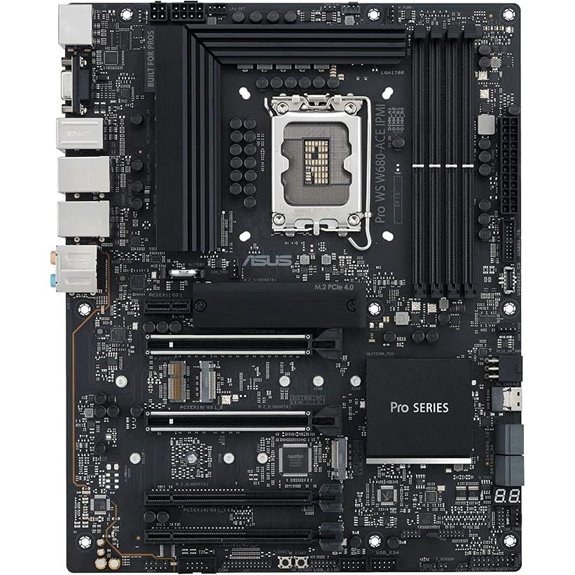 | Professional Workstation | Processor Support: Up to 13th/12th Gen Intel Core, Pentium Gold, Celeron (LGA 1700) | Memory Type: DDR5 ECC | Expansion Slots: PCIe 5.0×16, PCIe 3.0 | VIEW LATEST PRICE | See Our Full Breakdown |
| Asrock Rack ROMED8-2T/BCM AMD EPYC Server Motherboard | 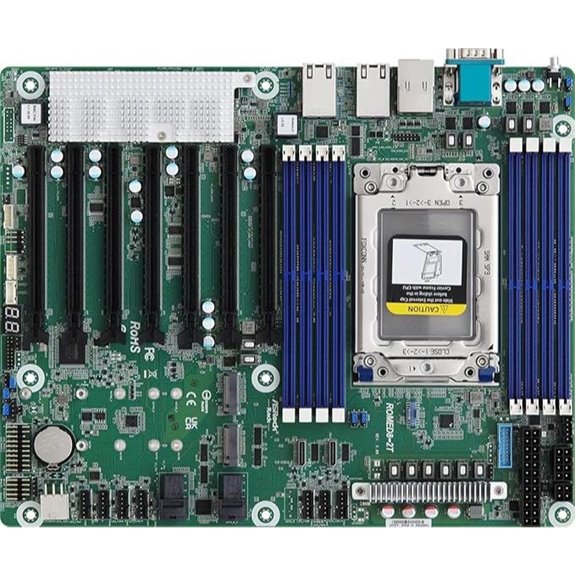 | High-Performance Server | Processor Support: AMD EPYC 7002/7003 series (LGA 4094) | Memory Type: DDR4 RDIMM/LRDIMM, NVDIMM-N | Expansion Slots: 7 PCIe 4.0 x16, 2 OCuLink | VIEW LATEST PRICE | See Our Full Breakdown |
| ASUS Pro WS W790 SAGE SE Motherboard |  | Enterprise-Grade Power | Processor Support: Intel Xeon W-3400/W-2400 series (LGA 4677) | Memory Type: DDR5 ECC R-DIMM | Expansion Slots: 7 PCIe 5.0 x16 | VIEW LATEST PRICE | See Our Full Breakdown |
| SUPERMICRO X9SCM-F-O Micro ATX Server Motherboard | 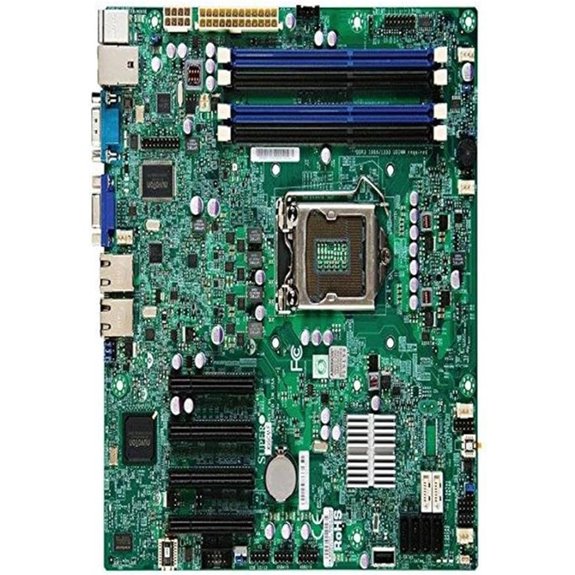 | Compact Reliability | Processor Support: Intel Xeon E3-1200 family, 2nd Gen Core (LGA 1155) | Memory Type: DDR3 ECC/unbuffered | Expansion Slots: PCIe 2.0 x8, x8, x4 | VIEW LATEST PRICE | See Our Full Breakdown |
| SUPERMICRO MBD-X12SCA-5F-O ATX Server Motherboard LGA 1200 Intel W580 | 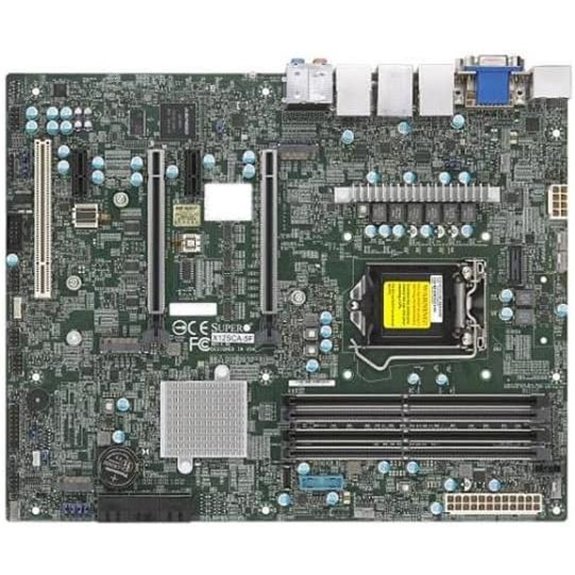 | Future-Proof Expansion | Processor Support: 10th/11th Gen Intel Core, Xeon W-1200/W-1300 (LGA 1200) | Memory Type: DDR4 ECC/non-ECC | Expansion Slots: 2 PCIe 4.0 x16, 2 PCIe 3.0 x1 | VIEW LATEST PRICE | See Our Full Breakdown |
| Supermicro X11SPI-TF Server Motherboard |  | Specialized Server Edge | Processor Support: Intel Xeon Scalable, 3rd Gen Xeon (LGA 3647-1) | Memory Type: DDR4 ECC/non-ECC | Expansion Slots: PCIe 3.0/4.0, PCIe x4, SATA | VIEW LATEST PRICE | See Our Full Breakdown |
More Details on Our Top Picks
ASUS Pro WS W680-ACE Motherboard with IPMI
If you’re looking for a server motherboard that combines robust management features with high-performance capabilities, the ASUS Pro WS W680-ACE with IPMI is an excellent choice. It supports 13th and 12th Gen Intel Core processors, offering flexibility for demanding workloads. With dual PCIe 5.0 slots and multiple M.2 PCIe 4.0 slots, expansion is versatile and future-proof. It also includes advanced connectivity options like dual 2.5 Gb Ethernet, Thunderbolt 4 headers, and USB 3.2 Gen2x2 Type-C. Security features such as USB port controls and software blacklisting, combined with exhaustive thermal management, make this motherboard ideal for professional, reliable, and secure server environments.
- Processor Support:Up to 13th/12th Gen Intel Core, Pentium Gold, Celeron (LGA 1700)
- Memory Type:DDR5 ECC
- Expansion Slots:PCIe 5.0×16, PCIe 3.0
- Network Interfaces:Dual 2.5 Gb Ethernet, Thunderbolt, IPMI
- Storage Support:3 M.2 PCIe 4.0, SlimSAS
- Remote Management:IPMI, ASUS Control Center
- Additional Feature:DDR5 ECC Memory Support
- Additional Feature:Thunderbolt 4 Header
- Additional Feature:Multiple M.2 PCIe 4.0 Slots
Asrock Rack ROMED8-2T/BCM AMD EPYC Server Motherboard
The Asrock Rack ROMED8-2T/BCM is an excellent choice for data centers and enterprise environments that require robust hardware support and high-speed networking. It features an ATX form factor, a single SP3 socket compatible with AMD EPYC 7002 and 7003 series processors with AMD 3D V-Cache. With 8 DDR4 DIMM slots, it supports various memory modules for peak performance. The motherboard offers seven PCIe 4.0 x16 slots and two OCuLink ports, providing extensive expansion options. Dual 10GbE ports ensure fast network connectivity, making it ideal for demanding server applications and high-throughput workloads.
- Processor Support:AMD EPYC 7002/7003 series (LGA 4094)
- Memory Type:DDR4 RDIMM/LRDIMM, NVDIMM-N
- Expansion Slots:7 PCIe 4.0 x16, 2 OCuLink
- Network Interfaces:Dual 10GbE ports
- Storage Support:2 OCuLink, PCIe 4.0 x4
- Remote Management:No
- Additional Feature:Dual 10GbE Ports
- Additional Feature:AMD 3D V-Cache Support
- Additional Feature:8 DIMM Slots
ASUS Pro WS W790 SAGE SE Motherboard
For professionals demanding high reliability and advanced remote management, the ASUS Pro WS W790 SAGE SE Motherboard stands out as an ideal choice. It supports Intel LGA 4677 socket processors, including Xeon W-3400 and W-2400, and allows overclocking of CPU and memory. With up to 2TB ECC R-DIMM DDR5 memory, it handles demanding workloads. Its seven PCIe 5.0 x16 slots and dual 10G LAN ports ensure fast data transfer and networking. The robust power design, thermal management features, and server-grade IPMI remote management make it highly dependable for 24/7 operation, providing both performance and stability for enterprise environments.
- Processor Support:Intel Xeon W-3400/W-2400 series (LGA 4677)
- Memory Type:DDR5 ECC R-DIMM
- Expansion Slots:7 PCIe 5.0 x16
- Network Interfaces:Dual 10GbE LAN, IPMI
- Storage Support:3 M.2, SATA, heatsinks
- Remote Management:IPMI, remote monitoring
- Additional Feature:Supports Overclocking
- Additional Feature:7 PCIe 5.0 Slots
- Additional Feature:Server-Grade IPMI Management
SUPERMICRO X9SCM-F-O Micro ATX Server Motherboard
The SUPERMICRO X9SCM-F-O Micro ATX Server Motherboard stands out as an excellent choice for small-scale servers and workstation setups that require robust remote management. I appreciate its support for Socket 1155 CPUs, including Xeon E3-1200 and 2nd Gen Intel Core i3 processors. Its four DDR3 ECC memory slots allow up to 32GB, while the four PCIe 2.0 x8 slots offer flexible expansion. Storage is versatile with four SATA2 and two SATA3 ports supporting various RAID configurations. Plus, the dedicated IPMI LAN port ensures seamless remote management, making it a reliable, compact solution for demanding server environments.
- Processor Support:Intel Xeon E3-1200 family, 2nd Gen Core (LGA 1155)
- Memory Type:DDR3 ECC/unbuffered
- Expansion Slots:PCIe 2.0 x8, x8, x4
- Network Interfaces:Dual Gigabit LAN, IPMI
- Storage Support:4 SATA2, 2 SATA3, PCIe x4 NVMe
- Remote Management:IPMI, remote management
- Additional Feature:ECC DDR3 Support
- Additional Feature:IPMI Remote Management
- Additional Feature:Multiple SATA Ports
SUPERMICRO MBD-X12SCA-5F-O ATX Server Motherboard LGA 1200 Intel W580
If you’re building a high-performance server with robust processing and memory support, the SUPERMICRO MBD-X12SCA-5F-O ATX motherboard stands out. It supports 10th and 11th Gen Intel Core processors, Xeon W-1200 and W-1300 series, with a TDP up to 125W. You can install up to 128GB of DDR4-3200MHz ECC or non-ECC RAM across four DIMMs. Its expansion options include two PCIe 4.0 x16 slots, two PCIe 3.0 x1, and multiple M.2 slots for NVMe storage. Networking features include dedicated IPMI LAN, Intel Ethernet, and additional LAN ports, making it ideal for demanding enterprise environments.
- Processor Support:10th/11th Gen Intel Core, Xeon W-1200/W-1300 (LGA 1200)
- Memory Type:DDR4 ECC/non-ECC
- Expansion Slots:2 PCIe 4.0 x16, 2 PCIe 3.0 x1
- Network Interfaces:1 GbE, multiple LANs including IPMI
- Storage Support:M.2 PCIe 4.0, SATA, RAID
- Remote Management:IPMI, remote management
- Additional Feature:PCIe 4.0 x16 Slots
- Additional Feature:High Memory Capacity
- Additional Feature:Multiple M.2 NVMe Slots
Supermicro X11SPI-TF Server Motherboard
Supermicro’s X11SPI-TF server motherboard stands out with its robust Intel chipset and support for high-performance Socket P LGA-3647-1 processors, making it an excellent choice for enterprise environments that demand reliable and scalable server solutions. It supports 2280 and 22110 M.2 SSDs with PCIe 3.0 x4 and SATA interfaces, providing flexible storage options. The board features 10 SATA3 ports via the C622 chipset and multiple USB connections, including five USB 3.0 ports and six USB 2.0 ports. Additional I/O options like VGA, COM ports, and a TPM header ensure extensive connectivity for demanding server applications.
- Processor Support:Intel Xeon Scalable, 3rd Gen Xeon (LGA 3647-1)
- Memory Type:DDR4 ECC/non-ECC
- Expansion Slots:PCIe 3.0/4.0, PCIe x4, SATA
- Network Interfaces:Multiple GbE, IPMI support
- Storage Support:M.2 PCIe 3.0, SATA3, NVMe
- Remote Management:IPMI, extensive I/O options
- Additional Feature:Supports NVMe SSDs
- Additional Feature:Multiple USB 3.0 Ports
- Additional Feature:VGA and COM Ports
Factors to Consider When Choosing an IPMI Server Motherboard

When selecting an IPMI server motherboard, I consider how well it matches my existing hardware and the management features it offers. I also look at expandability options, thermal and power efficiency, and the security measures for remote access. These factors help guarantee the motherboard fits my needs and provides reliable, efficient operation.
Compatibility With Hardware
Choosing the right IPMI server motherboard requires careful attention to hardware compatibility to guarantee seamless integration with your existing or planned components. First, verify the motherboard supports your specific processor socket and generation to prevent compatibility issues. Check that it offers the right PCIe, M.2, and other expansion slots for your peripherals and future upgrades. Memory compatibility is also critical; confirm the supported RAM types, speeds, and capacities match your requirements. Additionally, review the available I/O ports—USB, SATA, and network interfaces—to meet your connectivity needs. Ultimately, confirm that the motherboard supports the remote management features offered by IPMI, including network compatibility and management protocols. This ensures smooth operation and efficient server management.
Management Features Offered
Selecting the right IPMI server motherboard involves not only hardware compatibility but also evaluating its management features. These features include remote management capabilities through dedicated LAN ports, allowing me to control and monitor the server from anywhere. Hardware monitoring is vital, with real-time data on temperature, voltages, fan speeds, and power supply status, helping prevent failures. Many boards offer remote KVM access, giving me console control regardless of the OS state. Advanced options like automatic alerts, event logs, and remote firmware updates boost system stability and security. Compatibility with management tools such as ASUS Control Center, Supermicro IPMI View, or ASRock Rack IPMI utilities simplifies remote administration and integration. These management features guarantee efficient, secure, and reliable server operation, making them essential considerations when choosing an IPMI motherboard.
Expandability Options Available
To guarantee my server can grow with my needs, I focus on motherboards that offer a variety of expansion options. I look for multiple PCIe slots, including PCIe 5.0×16 and PCIe 4.0 slots, to support high-performance expansion cards. High-speed storage is essential, so I check for M.2 slots and SlimSAS connectors to add fast SSDs. Additional expansion options like OCuLink ports and PCIe x1 slots help me connect peripherals easily. Headers for PCIe and USB expansion cards are also important, enhancing connectivity and functionality. Finally, I verify that the motherboard supports flexible memory configurations and extra network interface cards, ensuring my server can adapt and scale as my needs evolve over time.
Thermal and Power Efficiency
Efficient thermal and power management are essential for guaranteeing my IPMI server motherboard runs reliably under heavy workloads. Features like large VRM heatsinks, M.2 heatsinks, and hybrid fan headers help prevent overheating and maintain ideal temperatures. Stable power delivery is supported by alloy chokes, durable capacitors, and ProCool connectors, which reduce heat and improve efficiency. Proper airflow design, combined with multiple fan headers, allows me to customize cooling setups for different environments. Using advanced power phases, such as 14+1+1 stages, ensures even power distribution, lowering thermal stress and boosting energy efficiency. By focusing on thermal and power management, I can reduce energy consumption, extend component lifespan, and keep my system reliable during continuous operation.
Security and Remote Access
Since remote access is crucial for managing servers efficiently and securely, I pay close attention to the security features of an IPMI motherboard. I look for hardware-based authentication and encrypted remote console access to prevent unauthorized intrusions. Secure firmware updates are indispensable to patch vulnerabilities and keep the system resilient. Configuring strong, unique passwords and enabling network-level security like VLAN segmentation considerably reduces exposure to cyber threats. Remote management capabilities allow me to monitor hardware health and troubleshoot issues without physical presence, minimizing security risks during on-site visits. Regular firmware updates and patches are essential for maintaining security against emerging vulnerabilities. Overall, a combination of robust security features and proper configuration ensures safe and reliable remote server management.
Frequently Asked Questions
How Does IPMI Enhance Remote Server Management Capabilities?
IPMI enhances remote server management by giving me full control over my servers regardless of their power state or OS status. I can monitor hardware health, perform firmware updates, and troubleshoot issues from anywhere, saving me time and reducing downtime. With features like remote console access and alert notifications, I stay proactive, ensuring my servers run smoothly without needing physical access every time a problem arises.
What Security Features Are Crucial for Ipmi-Enabled Motherboards?
Did you know that 60% of data breaches involve weak server security? That’s why I focus on vital features like strong encryption, multi-factor authentication, and secure BIOS updates for IPMI-enabled motherboards. These measures protect remote access from unauthorized threats. When selecting a motherboard, I guarantee it offers thorough logging and firmware integrity checks, because staying ahead of cyber risks is essential for maintaining secure, reliable server management.
Can IPMI Motherboards Support Virtualization and Containerization?
Yes, IPMI motherboards can support virtualization and containerization. I’ve found that many modern boards include hardware virtualization features like Intel VT-x or AMD-V, enabling efficient VM operation. They also support container technologies by providing robust network and storage options. Just verify the specific motherboard you choose lists these features, and you’ll be able to run virtual machines and containers smoothly, making your server setup flexible and scalable.
How Do IPMI Firmware Updates Impact Server Stability?
Updating IPMI firmware considerably boosts server stability by fixing bugs, closing security vulnerabilities, and improving hardware compatibility. I’ve seen firsthand how regular updates prevent crashes and reduce downtime, ensuring reliable remote management. Neglecting these updates can lead to glitches, security risks, and system instability. So, I always recommend keeping your IPMI firmware current to maintain peak performance and safeguard your server infrastructure.
Are There Compatibility Concerns With Specific Server Chassis and IPMI Motherboards?
Yes, there can be compatibility concerns with certain server chassis and IPMI motherboards. I always recommend checking the motherboard’s specifications against your chassis to make sure proper fit and support. Some chassis might lack the necessary headers or space for specific IPMI features. I suggest consulting manufacturer documentation and verifying compatibility before making a purchase to avoid issues during installation and operation.
Conclusion
Choosing the right IPMI server motherboard feels like finding a sturdy anchor in a stormy sea—reliable, poised, and ready to keep everything steady. Each of these top picks offers a solid foundation, whether you’re steering through complex workloads or building a resilient data center. Trust your instincts and envision your setup as a lighthouse guiding you safely through the digital fog. With the right motherboard, you’ll have a steadfast beacon for years to come.